

 11 hours ago
6
11 hours ago
6
ARTICLE AD BOX
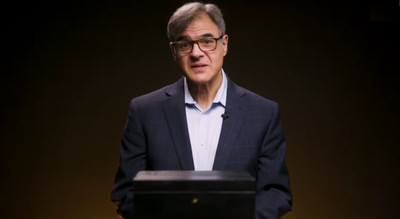
Kiriakou said the CIA ran secret prisons that made detainees disappear/ Image: Screengrab Ladbible Youtube
Before John Kiriakou ever became a whistleblower, he was the kind of CIA officer Hollywood turns into a franchise. Between 1990 and 2004, he moved through the agency’s ranks and across the world, working in 72 countries and, after 9/11, becoming the CIA’s Chief of Counterterrorist Operations in Pakistan.
His job was to hunt al-Qaeda leaders, run high-stakes operations, and understand the shadows most people only encounter through films like Jason Bourne. But Kiriakou became famous for something else entirely. He was the first US official to confirm the CIA’s use of torture on detainees, a revelation that cost him his career, his freedom, and, as he often says, parts of his life he’ll never get back. After speaking publicly, he was charged with passing classified information to the media and served almost two years in federal prison.
Since his release, he has become a leading advocate for civil liberties and whistleblower protections. In a recent episode of the LADbible Honesty Box, Kiriakou answered a set of questions most intelligence officials never touch. And he answered them with the bluntness of someone who has already paid the highest price for telling uncomfortable truths.
Can the CIA make someone disappear?
Among the many questions he pulled from LADbible’s black Honesty Box, one card asked the thing most people only whisper about: Can the CIA make someone disappear? He didn’t hesitate.
“You bet they can. And they do all the time,” he said. “In the immediate aftermath of the 9/11 attacks, the CIA created, for example, an archipelago of secret prisons and they would just disappear people.” He went on to describe how detainees were taken from al-Qaeda safe houses, “let’s say in Pakistan or Afghanistan,”and moved to off-the-books facilities run through intelligence partnerships that weren’t always transparent to the host country’s leadership. “And when I say secret prisons, I mean in many cases they were so secret that even the presidents and prime ministers of the countries where the prisons were based didn’t know that there were secret CIA prisons in their countries. So the CIA can make people disappear in that respect.” He then added another, more stark version of the same idea: “They can kill people and just bury them, you know, in some crazy foreign land, and nobody would ever know.” But “disappearing” someone does not always involve detention or death. Sometimes it involves giving a person a way out — a new life, a new name, and no trace of their old identity. “If you're a CIA officer, or better yet, let’s say you are a KGB officer and you wanna defect, the CIA will give you a completely new identity, more money than you can ever count, and you and your family can live happily ever after, you know, under the name John Smith and nobody would be the wiser.
They use something called the terrorist matrix.”
Does The CIA Make People Disappear? CIA Spy Reveals | LADbible Stories
Since Edward Snowden revealed how far US intelligence could reach into private lives, many people have learned to question what is dismissed as conspiracy theory. His leaks set a precedent for uncomfortable truths. Hearing Kiriakou detail how the CIA could “disappear” people felt like another piece of that larger, long-suspected reality.
Why he spoke out about torture
Another question from the Honesty Box asked what pushed him to become a whistleblower, a decision that reshaped his life. “At the CIA, we are trained to believe that everything in life is a shade of grey. And that is just simply not true,” he said. “Some things are black and white, they're, they're right or wrong.” He followed that with a summary of the laws the US already had in place: “And the United States has laws that ban torture. We have the Federal Torture Act of 1946. We are not just signatories to the United Nations Convention Against Torture.
We wrote the United Nations Convention Against Torture.” He then offered the historical examples that shaped his view of legality: “In 1946, the United States executed Japanese soldiers who waterboarded American POWs. In 1968, an American soldier waterboarded a North Vietnamese prisoner, and was given 20 years at hard labour in a military prison after being convicted of torture. The law never changed.” That led him to the contradiction he couldn’t reconcile internally: “So how is it then that from 2002 to 2005, torture was somehow magically legal? It wasn’t legal.
We were committing crimes against humanity.” Knowing the details, he said, made silence impossible. “And so it was something that I, I, having known the details, I couldn't sleep at night. And I believed, and, and in retrospect, I was right that the American people had a right to know what their government was doing in their name.” He notes that his disclosures contributed to the McCain-Feinstein amendment, which formally and permanently banned torture.
Can a spy keep a moral compass?
One of the final questions asked whether a CIA officer can hold on to a sense of right and wrong. Kiriakou answered with the same matter-of-fact tone: “What a great question that is. I'm gonna say yes because I had a moral compass.” The consequences were significant. “It cost me my freedom, it cost me my job, it cost me my family, but it was worth it.” And he added a line about the reality of intelligence work that rarely makes it into films: “There are some things that you are tasked to do as a CIA counter-intelligence officer that you just have to say no to.
There are some things that are so immoral, so unethical, in many cases so illegal that you just should not do it.”
A rare moment of candour from inside the system
Across the Honesty Box questions, Kiriakou’s answers were consistent: direct, unembellished, and grounded in the years he spent inside the CIA at a pivotal moment in modern American intelligence. And while many former officers now speak in guarded phrases or technical euphemisms, he has little incentive to soften anything.
His life changed the moment he went public, losing his job, his freedom, and the protections that once came with the badge, and he has continued speaking openly ever since. In the years following his release from federal prison, Kiriakou has become a regular commentator on civil liberties, government transparency and whistleblower rights. He writes, lectures, records podcasts, and appears at public forums where he talks about intelligence oversight, human rights, and the structural problems he believes must be confronted rather than hidden.Today, he works as an author, broadcaster and advocate, often collaborating with organisations focused on whistleblower protection and government accountability. Those wanting to explore his work further can find his books, interviews and commentary on his website, where he continues to document the parts of the intelligence world he feels citizens deserve to understand.







 English (US) ·