

 1 day ago
7
1 day ago
7
ARTICLE AD BOX
India proposed banning carbendazim in 2020 after acknowledging its health risks, but reversed course in 2023, dropping it from the prohibition list despite global bans and its own safety concerns. Critics allege the policy U-turn reflected the influence of the agrochemical lobby over public health priorities.
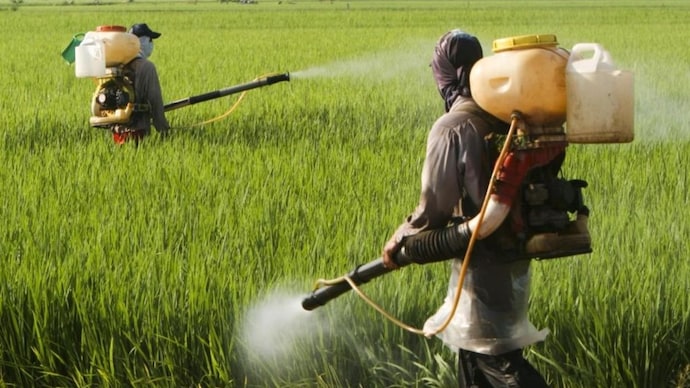
India proposed banning carbendazim in 2020 after acknowledging its health risks, but reversed course in 2023.

New Delhi,UPDATED: Jun 26, 2026 19:31 IST
This is nothing short of a cruel joke being played with the health of 1.4 billion Indians and the future of unborn children—and it is happening with the approval of Indian law. A chemical that 29 developed nations have declared a threat to human health after rigorous scientific evaluation and subsequently banned continues to be sold openly across Indian markets. That chemical is carbendazim.
Its hazardous nature is acknowledged even in official government documents. Yet when the profits of agrochemical companies are at stake, the entire regulatory system appears to bend under pressure.
The story dates back to the 1960s, when laboratories of the American chemical giant DuPont developed a breakthrough fungicide. Around 1973–74, carbendazim entered the commercial market and was hailed as an effective solution for protecting crops against fungal diseases.
Carbendazim is a systemic fungicide, meaning that once sprayed on a plant, it is absorbed throughout its tissues. It works by preventing fungal cell division, effectively stopping the spread of fungal infections in crops.
BANNED ACROSS THE DEVELOPED WORLD
However, as scientific scrutiny increased, concerns over its safety also grew. During the 1980s and 1990s, European environmental organizations accused companies such as DuPont of suppressing toxicology data highlighting the chemical's health risks. Independent researchers concluded that once carbendazim enters the human body through food, it can cause long-term health damage.
As a result, all 27 European Union member states, the United Kingdom, the United States and Australia imposed strict restrictions or bans on its agricultural use. In August 2022, Brazil—one of the world's largest agricultural producers—also chose to prioritize public health by imposing a complete ban on carbendazim.
France has gone a step further, announcing that from January 2026 it will prohibit imports of food products containing even trace residues of carbendazim.
India, however, tells a different story. The fungicide remains legal, widely available and continues to be sprayed on crops across the country. Most farmers remain unaware of the potential health risks associated with its use.
DOCUMENTED HEALTH RISKS
Health and environmental regulators around the world have repeatedly raised concerns about carbendazim.
According to Australia's Department of Health, carbendazim induces oxidative stress in the human body, damaging liver cells and increasing creatinine levels, which can impair kidney function.
The US Environmental Protection Agency (EPA) has classified carbendazim as a potential human carcinogen. Consequently, its use on food crops has been prohibited in the United States.
Scientific studies have also found that carbendazim can severely damage male sperm. Under the Globally Harmonized System (GHS), it is classified as a Category 1B mutagen and is considered teratogenic, meaning it can interfere with fetal development during pregnancy and cause congenital birth defects.
BANNED FOR FOOD, ALLOWED FOR GRASS SPRAY
Perhaps the most striking contradiction comes from the United States.
While carbendazim is completely banned on food crops—including fruits, vegetables and grains—the law still permits its extremely limited use for certain non-food applications.
It may still be used on golf course turf, selected ornamental plants and for wood preservation.
In other words, a chemical considered unsafe enough to keep out of Americans' food is still manufactured for maintaining the lush green fairways of golf courses. American companies continue to exploit this regulatory loophole by producing the chemical for export, even while preventing its presence in their own food supply.
INDIA'S PAPER TRAIL AND POLICY REVERSAL
It is not as though the Indian government was unaware of the risks.
In a notification issued in May 2020, the Ministry of Agriculture acknowledged that carbendazim posed a serious threat to human health, particularly due to its harmful effects on fetal development and reproductive health.
The Fungicide Resistance Action Committee (FRAC) has also categorised carbendazim as a high-risk fungicide because of increasing fungal resistance.
In 2020, the government proposed banning 27 hazardous pesticides, including carbendazim. However, agrochemical industry associations, representing a business worth billions of rupees, began lobbying against the move.
Their argument was straightforward: banning such an inexpensive fungicide would increase farming costs and threaten food production.
The government subsequently constituted an expert committee headed by agricultural scientist Dr. T.P. Rajendran to review the proposal.
The outcome followed a familiar pattern. Files moved through bureaucratic channels for months. Finally, in October 2023, when the Insecticides Prohibition Order, 2023 was issued, the government made a complete U-turn.
Only four of the proposed 27 chemicals were ultimately banned. Carbendazim quietly disappeared from the prohibition list, despite the government's own earlier assessment of its health risks.
Because carbendazim is an off-patent generic chemical, it is inexpensive to manufacture while generating substantial profit margins. Critics argue that this profitability has made the agrochemical lobby powerful enough to influence policy decisions.
A DOUBLE STANDARD
Another contradiction is visible within India itself.
States such as Punjab, Haryana and Uttar Pradesh have imposed partial or temporary restrictions on carbendazim in basmati rice-growing regions.
However, these restrictions were not introduced primarily to protect Indian consumers.
They came after the European Union began rejecting Indian basmati rice shipments containing carbendazim residues.
In other words, swift action was taken when export earnings worth millions of dollars were at risk.
But the vegetables, grains and fruits consumed daily by ordinary Indians—including pregnant women and children—continue to receive far less regulatory attention.
THE COST OF HUMAN LIFE
Taken together, the scientific evidence, international regulatory decisions, American policy contradictions and India's own documented assessment raise a disturbing question:
Are the lives of citizens in developed countries considered more valuable than those of Indians?
If science continues to warn that carbendazim may endanger future generations, allowing its continued use simply because it is inexpensive represents a profound failure of both public policy and ethical governance.
- Ends
Published By:
Akshat Trivedi
Published On:
Jun 26, 2026 19:31 IST








 English (US) ·