

 5 days ago
16
5 days ago
16
ARTICLE AD BOX
The government is likely to issue draft rules for E85, a fuel blend containing up to 85% ethanol and just 15% petrol. E85 could mark India's boldest fuel transition yet, turning sugarcane and grain into energy sources.
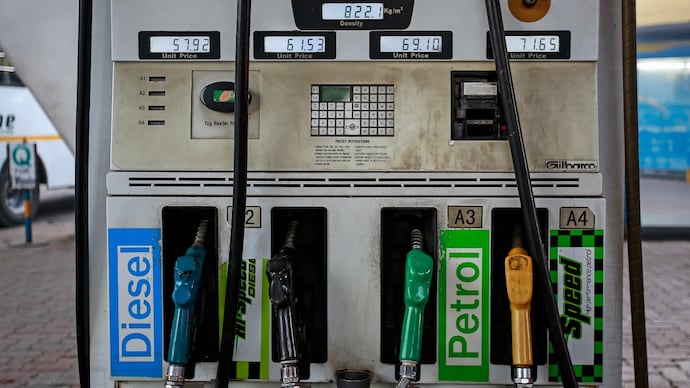
E85 will be introduced as a separate fuel grade, distinct from the existing E20 petrol. (Image: Reuters)
New Delhi,UPDATED: Apr 21, 2026 13:38 IST
Move over E20, which is 20% ethanol in petrol. Cars in India could soon run on fuel that is mostly alcohol. The government is reportedly set to issue draft rules for E85, a blend containing up to 85% ethanol and 15% petrol. The plan, envisaged in 2016, is likely to be put to action even as an oil crisis grips the world because of the conflict in the Middle East.
Multiple media outlets have reported on the E85 development.
A senior government official told The Hindu that the government will "very soon" issue draft rules on the roll-out of Ethanol 85 (E85). "Draft regulations will be notified very soon. There is consensus within the government. There is also market consensus and preliminary testing too has been carried out," the official, whom The Hindu didn't name, was quoted as saying.
E85, or flex fuel, needs engine tweaks, and the roll-out is expected "in a couple of years".
Another senior official confirmed to ET Auto that "a draft notification to allow 85% ethanol blending in fuel is ready and will be issued shortly."
The official told ET Auto that "market consensus has already been achieved, even preliminary testing of vehicles for E85 has been done."
Mint and Team-BHP have also covered the government's plans for E85 fuel.
Reports suggest that E85 will be introduced as a separate fuel grade, distinct from the existing E20 petrol. In the E20 variant, ethanol blending can go up to 27%.
The sale of E20 petrol became mandatory across all states and union territories in India from April 1, 2026.
The move comes amid a global energy crisis sparked by the US and Israeli military operations against Iran. It is being touted as a way to reduce oil imports by India. The country imports around 90% of its oil requirements.
Ethanol, produced domestically from sugarcane, maize or grains, is renewable and burns cleaner than pure petrol.
It must be noted that Union Road Transport Minister Nitin Gadkari has been riding in a flex-fuel car in India, and had demonstrated during a drive in Delhi how the Toyota vehicle ran on 100% ethanol.
NEW AUTOMOBILE ENGINES WILL HAVE TO BE MANUFACTURED FOR 85% ETHANOL IN FUEL
However, new engines will have to be made for E85. Standard petrol engines and fuel systems are not designed to handle such high alcohol content.
Using E85 in a non-flex-fuel vehicle can cause corrosion, damage seals and hoses, lead to poor performance and create starting issues. Only vehicles specifically designed as flex-fuel vehicles (FFVs) should use E85. An engine built for E85 can safely run on lower blends such as E60, E50 or regular E20, according to Autoland USA.
The rollout of E85 fuel in India will also require dedicated dispensing infrastructure at fuel pumps, with separate nozzles and storage systems for it alongside E20.
SINCE WHEN HAS INDIA BEEN PLANNING ETHANOL BLENDING?
The government has talked about higher ethanol blends for around a decade.
The Niti Aayog's Roadmap for Ethanol Blending in India 2020-25 explicitly mentioned E85 in 2021.
Use of E85 fuel was notified as early as 2016 for two-, three- and four-wheelers, along with emission standards for E85 and even pure ethanol (E100).
In December 2022, the Ministry of Road Transport and Highways notified test requirements for vehicles running on blends from E5 up to E85. A draft notification issued in June 2025 proposed updating the norms to "E85 or more" to support flex-fuel vehicles and near-100% ethanol compatibility.
Officials have claimed there is now surplus ethanol available in the country. This surplus can meet demand not only for road transport but also for the 1% blending target in aviation turbine fuel for international flights, as part of the International Civil Aviation Organization's net-zero plan by 2050.
The benefits of higher ethanol blends include reduced crude imports, lower pollution, and support for farmers growing ethanol feedstock.
But there are plenty of challenges too. Flex-fuel vehicles may offer slightly lower fuel efficiency. Carmakers will need to develop compatible engines very quickly, while oil companies would have to invest in new infrastructure at a very short notice. Consumer education will also be crucial to prevent accidental use of E85 in non-flex vehicles.
- Ends
Published By:
Anand Singh
Published On:
Apr 21, 2026 13:38 IST









 English (US) ·