

 6 days ago
8
6 days ago
8
ARTICLE AD BOX
Highlighting the challenges before democracies across the world, the head of an intergovernmental organisation of 35 member countries said Wednesday that the cause of democracy needed new champions as those who led the charge in the past 80 years were no longer doing so.
Speaking at the Election Commission’s (EC) International Conference on Democracy and Election Management in Delhi, Kevin Casas-Zamora, the secretary-general of International Institute of Democracy and Electoral Assistance (International IDEA), said India’s leadership on the issue was welcome. India, represented by Chief Election Commissioner (CEC) Gyanesh Kumar, is the chair of International IDEA for 2026. India is a founding member of the Stockholm-based organisation.
During the inaugural function of the three-day international conference for election management bodies and experts, Casas-Zamora cited examples of democratic backsliding and challenges facing democracies. “Perhaps, most concerning, outright election denialism has spread around the world, with politicians from the United States to Peru, and from Georgia to Bangladesh, using spurious arguments to question credible results,” he said.
He added that the context in which elections are held has changed dramatically, with trust in elections being eroded, falling voter turnout, and disputes erupting in over 40 per cent of elections. However, he said the way to renew democracy was also through elections.
“The global spread of democracy, which was once viewed as inevitable, has not just stalled, but is regressing. International-IDEA’s data show that more countries have declined in democratic performance than have improved for nine straight years. Meanwhile, the headlines of the past months have belied any presumption that the cause of democracy will be sustained by the same countries that led the charge for the past 80 years or so. If democracy is to be resilient, if democracy is to be renewed, then we need new champions to carry the torch. That’s why India’s leadership is so welcome,” he said.
In fact, the Global State of Democracy 2025 report published by International-IDEA found that 94 countries, representing 54 per cent of those assessed, had a decline in at least one criteria of democratic performance compared to their performance five years earlier. India, too, was among the countries that declined on five measures, including free political parties and judicial independence, from 2019 to 2024, the report said.
“Contrary to pre-election concerns, independent observers considered the election to have been well-organised and fair, and all political actors involved immediately accepted the results,” the report noted.
Story continues below this ad
Giving the inaugural address, CEC Kumar highlighted two facets of elections – the preparation of the electoral rolls and conduct of polls. “Pure electoral rolls, including each and every eligible elector as per law, is essential to strengthen the democracy and elections which will be held on the basis of that electoral roll,” he said.
While not mentioning the Special Intensive Revision (SIR) of electoral rolls, which the EC started with Bihar in 2025 and is now conducting in 12 other states/Union territories, the CEC gave the example of the Bihar elections.
“The first step was purification of the electoral rolls, including eligible electors. That stage got completed and under electoral laws there is a provision for the elector of any Assembly segment to file appeals so that no wrong name gets included and no right name gets excluded. You will be amazed with the efficiency of the Booth Level Officers, the Electoral Registration Officers and the Chief Electoral Officer of Bihar, that out of 75 million electors, the number of appeals were zero,” he said.
He said the electoral rolls were finalised under “tight public scrutiny” and under watch of citizens. After that, he said the elections were held on November 6 and November 11, 2025, with no re-polls required. “I mentioned these Bihar elections to you to give you a feel of the level of contestation and precision required by the electoral management bodies not only in India, but globally,” he said.
Story continues below this ad
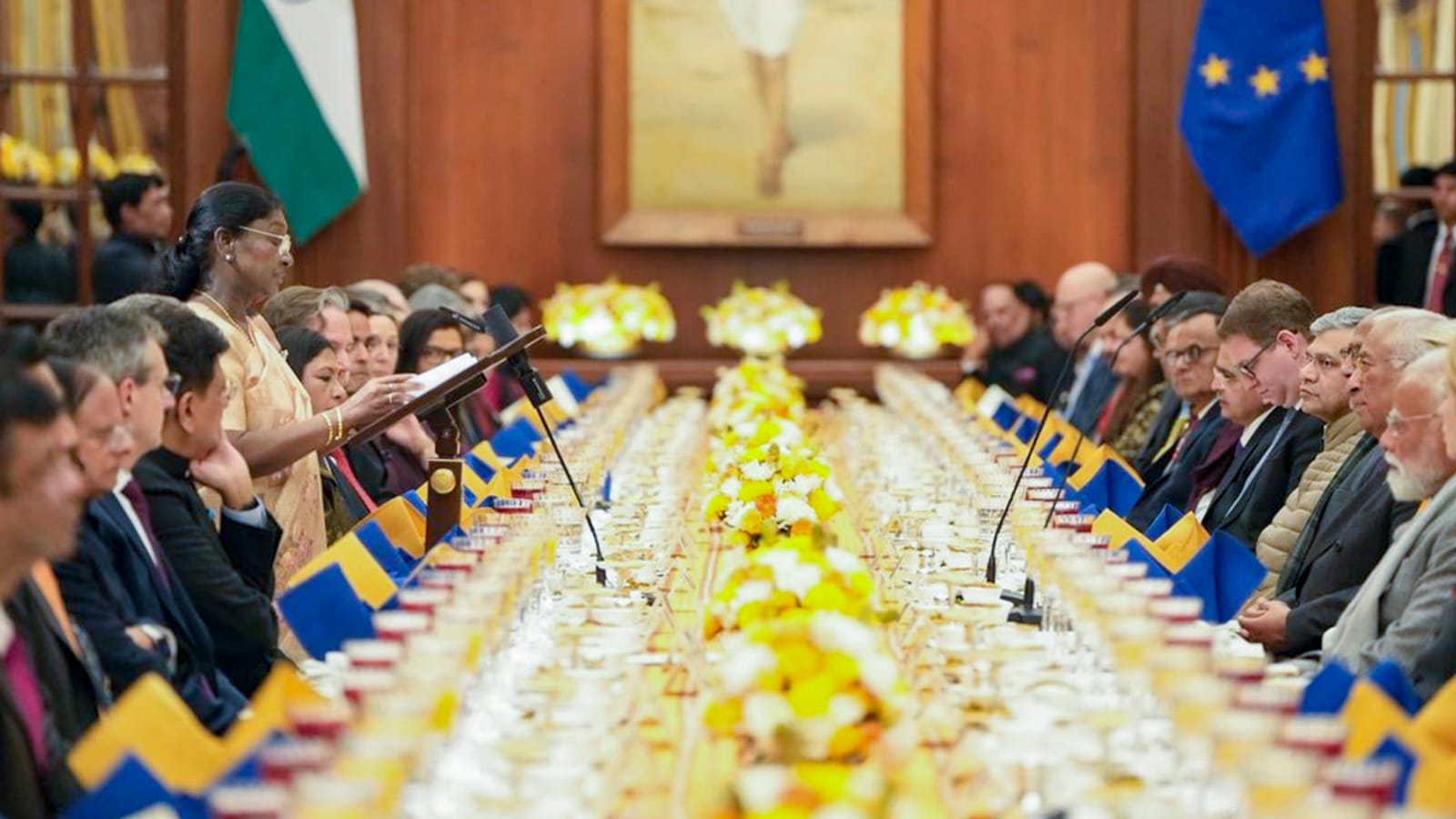
Earlier in the day, the CEC and Election Commissioners Sukhbir Singh Sandhu and Vivek Joshi welcomed the international delegates, which included representatives from 42 election management bodies and the ambassadors or high commissioners of 27 countries.



 English (US) ·