

 2 days ago
6
2 days ago
6
ARTICLE AD BOX
Last Updated:June 23, 2026, 15:46 IST
Now, foreign nationals, except those of Indian origin, will ordinarily not be eligible to hold key positions in NGOs seeking registration or prior permission under the Act


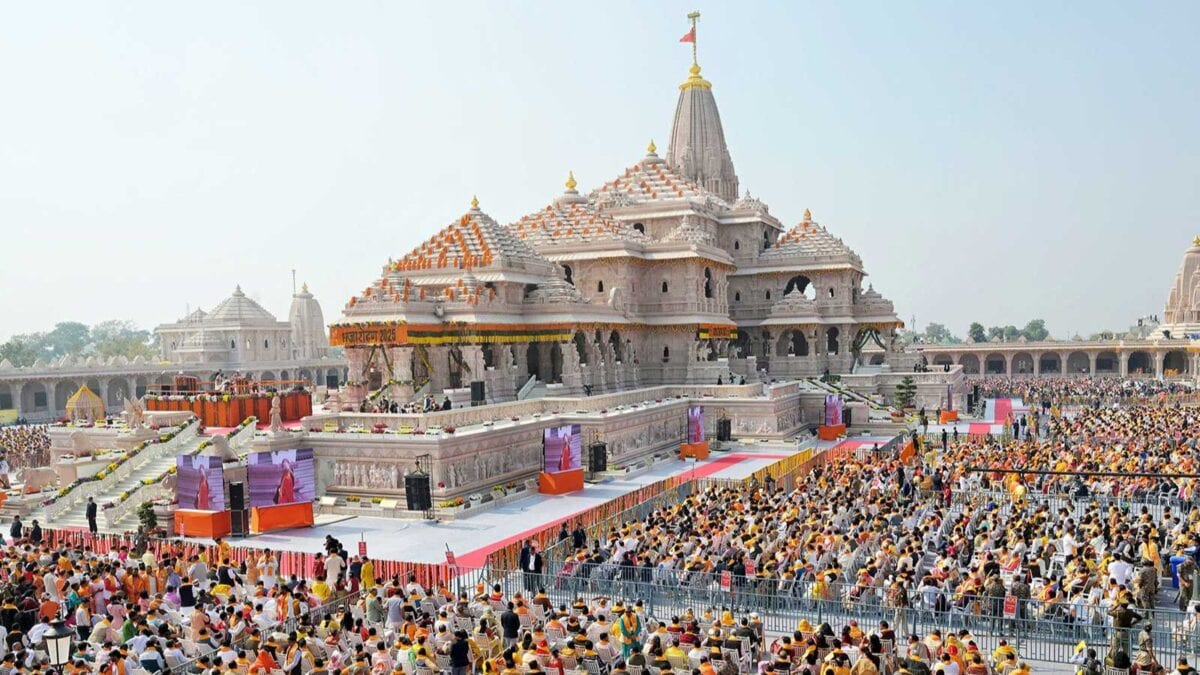
The amended rules also strengthen donor disclosures, spending conditions and field verification requirements for foreign-funded activities. (AI-Generated Image)
The Union government has notified fresh amendments to the Foreign Contribution (Regulation) Rules, tightening disclosure requirements for NGOs receiving foreign funds while explicitly keeping religious conversion activities outside the ambit of permissible foreign-funded religious work.
The amendments, notified on Monday by the Ministry of Home Affairs (MHA), require NGOs seeking FCRA registration or prior permission to provide detailed information about their area of operations, objectives, operating states, foreign donors, social media accounts, utilisation of foreign contributions and the specific purpose for which foreign funding is being sought.
The amended rules also strengthen donor disclosures, spending conditions and field verification requirements for foreign-funded activities.
Foreign Nationals Barred From Key NGO Posts
Under the new rules, foreign nationals—except those of Indian origin—will ordinarily not be eligible to hold key positions in NGOs seeking registration or prior permission under the Foreign Contribution (Regulation) Act.
“After sub-rule (5), the following Explanations shall be inserted, namely:— ‘Explanation 1.— It is hereby clarified that an association having foreign nationals, other than those of Indian origin, as its key functionaries shall ordinarily not be considered eligible for grant of registration or prior permission under the Act’," the notification states.
However, the rules provide an exception. The Centre may, on a case-by-case basis, permit foreign nationals to serve as key functionaries in an association.
“Central Government may, by order, specify such cases or circumstances in which foreign nationals may be permitted to be key functionaries of an association for the purposes of consideration of registration or prior permission, and the conditions to be fulfilled for such consideration," the notification states.
NGOs Must Declare Their Objectives
The amendments make it mandatory for NGOs to clearly state their objectives and utilise foreign contributions only for those purposes.
Explanation 2 under sub-rule (5) of the Foreign Contribution (Regulation) Rules states: “It is hereby clarified that the foreign contribution so received shall be utilised only for activities carried out in India in accordance with the association’s stated objectives and for the purposes for which such contribution has been received."
Stricter Conditions For Utilisation Of Funds
The amended rules require NGOs to utilise at least 75 per cent of a foreign contribution instalment before seeking release of a second or subsequent instalment.
Under the new proviso to Rule 9A: “Provided that an association seeking release of the second or any subsequent instalment shall make an application in Form FC-3BB and the second or any subsequent instalment shall be released only after utilisation of seventy-five per cent. of the foreign contribution received in the previous instalment and after field inquiry of such utilisation."
The rules also introduce a minimum activity threshold for organisations seeking renewal of registration.
A new Rule 14A states: “For the purposes of cancellation under section 14 and renewal under section 16, an association shall be deemed to have undertaken reasonable activity in its chosen field for the benefit of society if it has utilised foreign contribution of not less than ten lakh rupees in the last two financial years for such purpose."
In effect, NGOs will now be required to demonstrate utilisation of at least Rs 10 lakh in foreign contributions over the previous two financial years to be considered as having undertaken reasonable activity.
Prior Approval For Change In Operations
The amendments also introduce stricter norms for NGOs seeking to expand or alter their operational scope.
Under newly inserted Rule 17B, an association wishing to add or remove any purpose, state or Union Territory from its registration certificate must seek prior approval from the Centre through Form FC-6F.
The application must be accompanied by a governing body resolution and the prescribed fee. “The Central Government may, after such inquiry as it deems fit, approve or reject the application under sub-rule (1)," the notification states.
Religious Activities Allowed, Proselytisation Excluded
The amended rules codify the activities that qualify as religious work under the FCRA framework.
Permissible activities include construction, renovation and maintenance of places of worship; preservation, printing, translation and digitisation of sacred scriptures; preservation of institutions engaged in religious studies; pilgrim amenities; dharamshalas, langars and community kitchens; religious education and spiritual discourses; devotional music and liturgical arts; preservation of indigenous and tribal faith traditions; protection of religious heritage sites; inter-faith dialogue programmes; faith-based publications; religious libraries and museums; counselling and de-addiction centres run by religious organisations; training in traditional sacred crafts; and development and maintenance of burial and cremation grounds.
However, the rules specifically exclude proselytisation from permissible foreign-funded religious activities.
For instance, activities such as religious education, satsangs, discourses and meditation retreats are permitted only when they do not involve proselytisation. Similarly, efforts to document or revive indigenous and tribal faith practices are allowed, provided they do not involve religious conversion.
Codified Categories For Other NGOs
The amendments also define permissible activities for cultural organisations, including archaeological exploration, establishment and maintenance of museums, promotion of folk culture, support for classical art forms and preservation of non-religious manuscripts.
The government has similarly codified categories for organisations working in education, social welfare, economic development, youth affairs and sports development.
As a result, NGOs seeking FCRA registration or prior permission will now be required to select their area of work from a pre-specified list of approved activities.
Handpicked stories, in your inbox
A newsletter with the best of our journalism
About the Author
Arunima is Editor (Home Affairs) and covers strategic, security and political affairs. From the Ukraine-Russia War to the India-China stand-off in Ladakh to India-Pak clashes, she has reported from gr...Read More
News india Centre Tightens FCRA Rules, Excludes Religious Conversion From Foreign-Funded Activities
Disclaimer: Comments reflect users’ views, not News18’s. Please keep discussions respectful and constructive. Abusive, defamatory, or illegal comments will be removed. News18 may disable any comment at its discretion. By posting, you agree to our Terms of Use and Privacy Policy.
Read More






 English (US) ·