

 1 week ago
13
1 week ago
13
ARTICLE AD BOX
When boys of his age were immersed in Enid Blyton labels, Liam Rosenior, Chelsea’s latest manager, was gobbling football management tomes. He was only nine years old when he picked up FA Coaching Book of Soccer Tactics and Skills, by Charles Hughes, from his father’s book shelf. It’s a detailed book of football tactics with diagrams and definitions. At 11, he was the player-manager of his team, telling his wanton teammates into playing in a particular way; by 15, he had read books on his father’s idols Johan Cruyff and had a dossier of newspaper cuttings on football strategies. “I played football so that I could one day manage a football team,” he wrote in Players’ Tribune.
Even when playing football in school, he would ask himself: “Why are we doing it this way?” “So I always had a mind to coach.” His father, Leroy, a striker for Fulham and Queens Park Rangers, perhaps sensed his son’s inclinations that he drew a picture of him, all grown-up, managing England in a World Cup when he had barely stepped into teenage. The father’s premonition remains unfulfilled, but his son has landed a job tougher than managing the national team, that of managing Chelsea, its management cut-throat in slapping the pink slip on managers. He is the London club’s sixth full-time manager in five seasons. But Liam and Leroy know the bigger significance of Liam’s recognition by an elite club. That he is the most high-profile of only the 10th full-time black manager an EPL club had even appointed.
ALSO READ | Who is Chelsea’s new head coach, Liam Rosenior?
It is a paradox, because 40 percent of footballers in the EPL have black heritage, yet only 4.4 per cent have ever coached a club. Only three have managed clubs in Europe’s top-five in the last three years, the most prominent being Bayern Munich’s Vincent Kompany. There had been others that had offered promise at the start and then withered, like Arsenal legend Patrick Viera. Leroy himself managed a raft of lower-division clubs—he endured the notoriety of being fired 10 minutes after he was appointed by Torquay United—without winning the trust of bigger clubs, which he felt he should have. “Black players are now playing right through the leagues, which is great, but they are not managing,” he once told The Independent. “Football management reflects attitudes in businesses generally. Racism is not just calling people ‘black this’ or ‘black that’, it is an attitude,” he added.
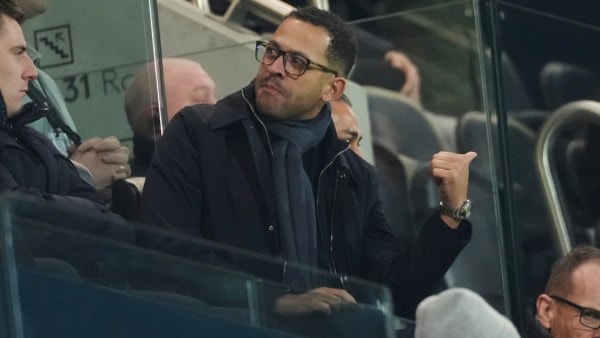 Chelsea’s manager Liam Rosenior gestures on stands during the Premier League match against Fulham. (PHOTO: AP)
The reason there are fewer black managers could be that the board-room of most big clubs is white-dominant. In 2020, the Football Association in England launched a leadership diversity code, setting hiring targets to address inequality. Its survey found that only nine per cent of senior leaders, 11 per cent of team operations, 16 per cent of coaches, and 9 per cent of senior coaches in all four divisions were Black, Asian or of mixed heritage. “If you have a boardroom that’s diverse, you can’t brush things under the carpet,” Kompany would say.
Father’s hardships
Leroy’s ideals were shaped by his father’s hardships in England after fleeing Sierra Leone. Liam’s world-view was moulded by what his father had experienced. “When I started at the Premier League, the only other black people in the building were the cleaners,” Leroy wrote in his autobiography, It is Only Banter. He used to tell his son about his idol Justin Fashanu, a forward of Nigerian descent who endured discrimination because he was not only black but also gay.
Liam is a vociferous LGBTQ+ rights activist. In 2017, he wrote a column in the Guardian titled: “We need a culture shift, not just Rainbow Laces, for players to come out.” Three years later, on the same pages, he penned a sarcastic letter to the US president, Donald Trump, in the backdrop of the US president’s attempts to crush protests triggered by the killing of George Floyd. The farewell note stings: “You truly mirror the views and ideology of a group of people we must and will overcome. For that Mr President, I sincerely thank you.”
Story continues below this ad
The 41-year-old is sensitive to the larger world around him, raised in Wandsworth Town in South London. His coaching fundamentals are founded on empathy and tolerance. “Coaching is more than just ‘knowing football’ – it is about having empathy and engagement with players while being able to relate them to them on a football, social and psychological level,” he once said. The players and management at the three clubs he had managed—Derby County, Hull City and Strasbourg in the French league— swear on his human touch and his ability to win the players’ trust.
The most profound influence on his career is Pep Guardiola, as it is with most managers and coaches of this generation. His teams look to dominate the ball, play out from the back, use the two central defenders and the traditional number six to come and take the ball off the goalkeeper, and play through the press. Some of the traits were evident in Chelsea’s clinical win over Brentford. At Strasbourg, who were fighting relegation when he took over, he showed his tactical flexibility by fielding a back-three at times. He designed a dynamic young team at the French club. At his disposal is a far more gifted squad, which he is buoyant of moulding into a powerhouse again. He knows the larger consequences of his success and power to change the league’s stubborn and subconscious perception on race too. He says he was born to manage football clubs; perhaps he was born to break glass ceilings in English football too.






 English (US) ·