

 4 hours ago
5
4 hours ago
5
ARTICLE AD BOX
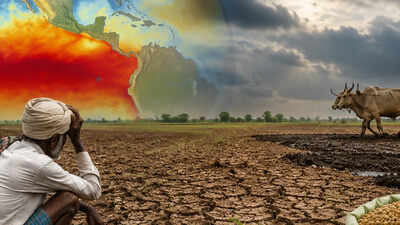
As the kharif season unfolds, Chhattisgarh is confronted with severe challenges due to the late monsoon and the risk of an upcoming El Niño (AI generated)
RAIPUR: The monsoon may have finally advanced across much of Chhattisgarh, bringing thunderstorms and showers of rain to several districts, but the state is entering the kharif season under the shadow of a potentially weak monsoon.With El Niño conditions expected to strengthen in the coming months and rainfall remaining below normal across large parts of the state, the govt has begun drawing up contingency plans to shield farmers from a possible rain deficit.The delayed arrival of the monsoon has already begun affecting farm operations. Against a kharif sowing target of 48.69 lakh hectares, only about 2% of the area has been covered so far as farmers continue to wait for widespread rainfall before beginning large-scale sowing and transplantation, said a govt statement.The concern is not unique to Chhattisgarh. The Centre on Tuesday reviewed preparedness measures with states amid forecasts of a below-normal monsoon season and emerging El Niño conditions in the Pacific.Agriculture-dependent states have been advised to prepare for rainfall variability, promote less water-intensive crops and strengthen drought-management strategies.At a review meeting chaired by Union Agriculture Minister Shivraj Singh Chouhan, Chhattisgarh agriculture minister Ramvichar Netam said the state was focusing on drought-resilient agriculture, including short-duration crop varieties, pulses and oilseeds, while ensuring adequate seed availability and crop insurance coverage.
State officials informed the Centre that rainfall received till June 22 remained substantially below the long-term average.Agriculture production commissioner Siddharth Komal Singh Pardeshi said the govt has initiated to preserve quality seeds of maize, kodo, kutki, ragi, pulses and oilseeds and encourage farmers, particularly in upland areas, to diversify away from water-intensive crops where necessary.To prepare for a possible dry spell, the state seed corporation has planned distribution of 4.95 lakh quintals of certified seeds. More than 1.22 lakh quintals of seeds have been earmarked for vulnerable districts, while fertiliser stocks are also being monitored.The preparations come as weather forecasters warn that El Niño conditions could weaken monsoon performance across parts of the country.Historically, El Niño years have often been associated with below-normal rainfall and agricultural stress in several regions.Weather conditions in Chhattisgarh, however, have improved over the past week. After entering through Dantewada nearly a week later than usual, the southwest monsoon has now advanced across more than half the state and reached Raipur but the humidity and heat continues.Central Chhattisgarh remains a concern, with many districts yet to receive sufficient rainfall for widespread agricultural activity.Weather officials say the coming 10 days will be crucial for the kharif season.
For now, the rains have arrived. Whether they stay long enough to rescue the season remains the bigger question.It's not the lack of rain, it's the chaos in rainfall that worries us'Raipur based environmentalist Nitin Singhvi says the biggest threat from a strong El Niño is not necessarily drought, but increasing weather unpredictability."People often assume El Niño means less rainfall everywhere. That's not how it works," Singhvi said."The bigger concern is weather disorder. Some places may receive very little rain, while others could witness extremely heavy downpours within a short period.""Farmers used to plan cultivation based on a fairly predictable monsoon cycle. Now rainfall is becoming concentrated into fewer but more intense events. A district may receive its seasonal quota of rain, yet still face agricultural stress because the rain did not arrive when crops needed it."Singhvi also warned that warmer cities are amplifying heat stress. Raipur and other urban areas are experiencing the 'urban heat island' effect, where concrete structures and asphalt roads absorb heat during the day and release it at night, keeping temperatures elevated."Even if rainfall improves, rising humidity combined with high temperatures can create dangerous conditions for labourers, farmers and vulnerable populations," he said."The challenge is no longer a simple question of whether it will rain. The challenge is managing increasingly erratic weather," Singhvi said.







 English (US) ·