

 1 hour ago
6
1 hour ago
6
ARTICLE AD BOX
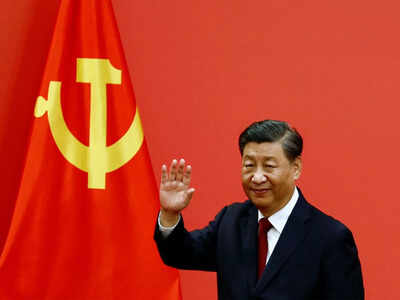
Despite Iran's critical economic reliance on China, Beijing's response to strikes on its leader was limited to verbal condemnation and calls for de-escalation. China prioritizes its broader economic interests and balanced regional ties over defending Tehran militarily, demonstrating a strategic calculus that favors diplomacy and deniability over direct intervention or security guarantees.
When American and Israeli strikes killed Iran’s supreme leader Ayatollah Ali Khamenei, Beijing responded with ritual condemnation. Chinese officials denounced violations of sovereignty.
State media warned against escalation. The foreign ministry urged restraint and called for stability in the Strait of Hormuz.But what China did not do was more telling. It did not mobilize. It did not airlift weapons. It did not pledge security guarantees. It did not threaten retaliation.Driving the newsChina is Iran’s single most important economic backer - yet Beijing is showing few signs it will materially defend Tehran after US and Israeli strikes escalated into a wider regional war.
Beijing has condemned the attacks and called for de-escalation. But it has largely stayed inside a familiar lane: Statements, diplomatic calls, and warnings about spillover risks like the Strait of Hormuz.That restraint is striking because China is widely seen as Iran’s great-power hedge against US pressure - a perception reinforced by years of discounted oil sales, sanctions workarounds and frequent talk of “strategic partnership.”
Some of President Donald Trump’s boosters in America have depicted Khamenei’s death as a devastating blow not just for the Islamic Republic but for China itself. These hot takes assume that China has been humbled.
An article in the Economist
Why it mattersThe gap between how important Iran is to China and how important China is to Iran has never been clearer - and it explains why Beijing’s support is likely to remain more rhetorical than real.Iran needs China: China is Tehran’s economic lifeline under sanctions, buying the overwhelming bulk of Iran’s oil exports and helping keep cash flowing. That trade is the core of the relationship.China can live without Iran: As per a Bloomberg report, Iran is meaningful to China’s energy mix but not indispensable.
Iranian crude makes up about 13% of China’s seaborne oil intake - significant, but not irreplaceable in a global market where Beijing can shift purchases among multiple suppliers.The relationship is asymmetric in trade, investment, and risk toleranceAccording to the Center for Strategic and International Studies, Iran represents less than 1% of commerce for the world’s second-largest economy. That imbalance shapes Beijing’s instincts: it can condemn strikes, keep buying some oil, and still avoid betting its broader economic interests on Tehran’s survival.This is the strategic heart of it: Iran is a lever for China, not a pillar - and Beijing doesn’t typically go to war for levers.Ice-cold calculus: The Economist has described China’s approach as “ice-cold calculus.” Beijing is less alarmed by an airstrike that kills a leader than by mass protests that threaten regime collapse. Internal upheaval carries contagion risk. External strikes can be condemned at low cost.The big pictureAccording to Evan A Feigenbaum, Western commentary often describes China-Iran ties in alliance-like language. But Beijing’s Middle East strategy is built on balance, not bloc politics.China has pursued what analysts call a dual-track approach: Keeping channels open to Iran while simultaneously deepening ties with Iran’s regional rivals and economic heavyweights, including Saudi Arabia and the UAE.That posture helps Beijing do three things at once:1. Present itself as a Global South champion challenging US dominance;2. Protect its business footprint across the Gulf; and3. Avoid entanglement in conflicts that don’t touch its first-order security priorities.This is why China leaned into the 2023 Iran-Saudi detente: It gained diplomatic prestige without inheriting a defense obligation. It also allowed Beijing to signal that it can broker deals where Washington struggles - a branding win, not a binding commitment.She Gangzheng, a professor at Tsinghua University, summed up the logic bluntly: Military support for Iran is “not the way that China does things in the region.”Zoom in: Money talks - but it doesn’t saluteEven China’s economic relationship with Iran is less robust than the rhetoric suggests.Start with the headline promise: in 2021, Chinese foreign minister Wang Yi signed a 25-year cooperation agreement in Tehran that reportedly envisioned up to $400 billion in Chinese investment.Now compare the follow-through: Bloomberg cites estimates that only $2 billion to $3 billion has been confirmed since then - a rounding error versus what China has committed to the UAE or Saudi Arabia. China’s official data show its foreign direct investment stock in Iran totaled $4.5 billion by end-2024, compared with $9.5 billion in the UAE. The American Enterprise Institute’s China Global Investment Tracker places cumulative Chinese investment in Iran at $4.7 billion since 2005, concentrated mainly in energy and metals - versus $15.7 billion in Saudi Arabia across energy, tech, metals and entertainment.The implication is uncomfortable for Tehran: Even when the geopolitics are hot, the capital flows are lukewarm.Iranian officials have voiced that frustration. In 2023, then-president Ebrahim Raisi said there had been a “serious regression” in the relationship and that economic ties had been unsatisfactory. Another Iranian trade official said Russia had overtaken China as Iran’s biggest foreign investor.Beijing’s restraint also shows up in corporate behavior. Esfandyar Batmanghelidj, chief executive of the Bourse & Bazaar Foundation, said: “Chinese companies have a very limited footprint in Iran relative to other countries in the region.”
He added: “Major Chinese firms have steered clear of Iran due to secondary sanctions risks.”So even where China is economically present, it is present in ways that limit exposure: Oil buying and selective trade are easier to sustain under risk than a deep, visible investment surge that would make major Chinese firms hostage to sanctions and war.This is the pattern: China will take discounted barrels, but it won’t take on Iran’s battlefield liabilities.Between the linesChina is unlikely to “rally” behind Iran in the way many observers imagine.1) Beijing avoids binding security obligations by designEvan A Feigenbaum argues that describing China’s policy as alliance-based “misses the point.” China may imitate some tools of US power - sanctions, security cooperation, training - but it has not copied the US model of defense commitments for partners.Feigenbaum’s key warning is conceptual: Western analysts “expect China to behave like the United States-and then when China does not behave like the United States, they conclude that it is a strategic failure rather than a deliberate choice.”That misread turns into surprise every time a partner expects a rescue that never comes.Nicholas Burns put the critique sharply: “China,” he concludes, “is proving to be a feckless friend for its authoritarian allies.” Feigenbaum’s reply is essentially: Beijing never promised to be Washington.2) China’s Middle East posture depends on keeping ties with Iran’s rivalsBloomberg analysts stress that Beijing’s broader strategy depends on balancing Iran against relationships with Sunni Gulf states and - historically - Israel.Yang Zi, research fellow at the S Rajaratnam School of International Studies, captures the constraint: “It’s hard to say China is a major arms supplier to Iran, but it does supply dual-use tech.” And: “China is limited by sanctions as well as considerations over its ties with Sunni Gulf states and Israel.”Overtly arming Iran would be the opposite of balancing: it would force Gulf capitals to treat China as a partisan actor, threatening the very market access Beijing has spent years buying with trade, infrastructure and technology.3) Beijing’s prefers “help” comes with deniability - not flagsIf China does anything beyond diplomacy, it is more likely to be in the dual-use gray zone.Beijing officially stopped selling weapons to Iran in 2005. There have been reports of air-defense systems or missile propellant ingredients reaching Iran, but neither side has publicly confirmed them. After President Donald Trump’s strike, China’s foreign ministry rejected an account that it was poised to arm Iran with supersonic anti-ship missiles as “not true.”What’s nextBeijing’s most likely course is a continuation of current policy: Emphasis on trade and diplomacy, not security guarantees.Expect China to:* Keep buying Iranian oil if flows continue (especially via discounted, hard-to-trace channels);* Intensify calls for restraint and protection of shipping lanes;* Position itself as a “voice of stability” while privately hedging for multiple outcomes in Tehran;* Avoid visible arms transfers that could rupture Gulf ties or blow up the Trump-Xi agenda;* Engage pragmatically with whoever holds power in Iran next.The bottom lineBeijing is not abandoning Tehran. It is simply refusing to fight for it.China will likely keep doing what it does best in crises: condemn, call for restraint, protect its economic interests, and stay flexible.(With inputs from agencies)








 English (US) ·