

 1 day ago
7
1 day ago
7
ARTICLE AD BOX
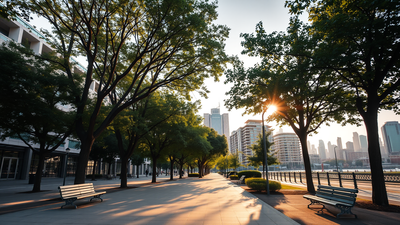
Mature trees cast dappled shade on a pedestrian walkway, offering a serene urban escape bathed in warm, late afternoon light. Image Credit: TIL Creatives
As cities warm due to climate change and urbanisation, planting trees is often seen as a key solution. However, according to a recent scientific review, just increasing the number of trees may not help as much as expected.
It is essential to consider both the location of the tree arrangement and the design itself.A review titled A Systematic Analysis of Tree Spatial Arrangements and Their Impact on Urban Thermal Environments, published in Scientific Culture, examined 49 peer-reviewed papers published between 2015 and 2025. The scientists found that different tree arrangements affect temperature differently, with clustered plantings producing the strongest cooling effects.
In some cases, such arrangements were able to cool down air temperature by up to 5°C.The paper also reports that clustered and row-based arrangements were the most consistently effective, while scattered plantings tended to deliver weaker or more variable cooling. It notes that the largest benefits usually came when trees were placed to maximise shade and airflow in streets, courtyards and other heat-prone urban spaces.
Such results come at a time when heat waves are increasingly common in Europe, including the UK.The arrangement of trees mattersThe systematic review carried out by scientists Mohd. Firoz Anwar and Mazharul Haque were conducted in accordance with the internationally accepted PRISMA protocol for systematic reviews. From an initial pool of 279 studies, they selected 49 peer-reviewed papers that met the review's inclusion criteria for detailed analysis.The review found that tree arrangement strongly affects local temperature through three cooling processes: shade, evapotranspiration, and wind movement in streets and open spaces. Grouped tree plantings, including parks and other dense planting areas, showed the highest cooling performance. According to the review, canopy overlap and a high rate of evapotranspiration contributed to cooling of up to 5°C in ambient air temperature.Trees arranged in lines along streets and paths were also effective. This arrangement reduced the temperature of adjacent surfaces by 2°C to 4°C. Single trees had a more localised impact. Trees planted 5 to 10 metres from buildings reduced indoor cooling needs by 10 percent to 15 percent.
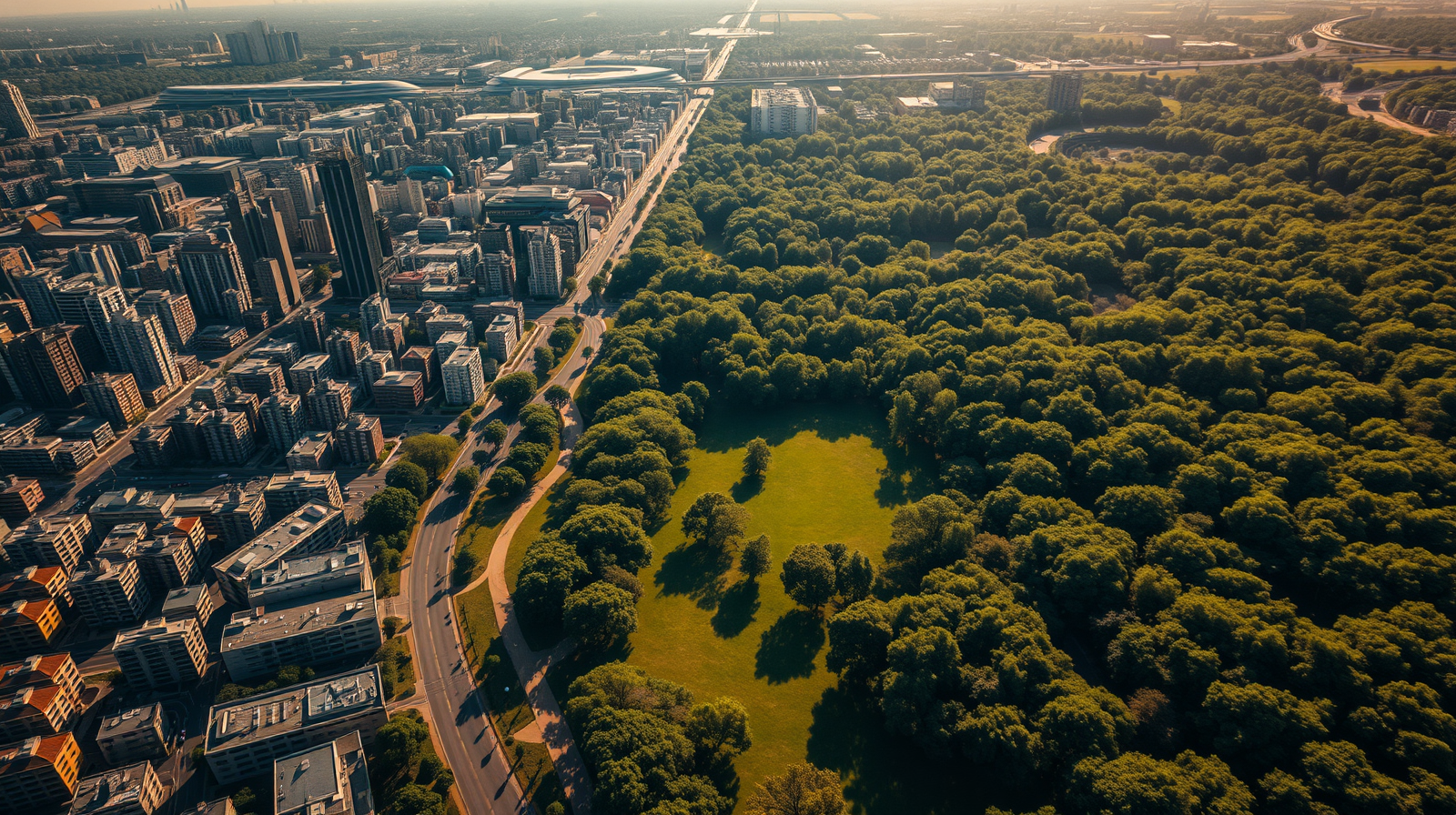
Aerial view reveals stark contrast: harsh, sun-baked city against a lush, shaded park. Image Credit: TIL Creatives
The science backs up observations made over many yearsThese findings are consistent with earlier research on urban forests.The United States Environmental Protection Agency (EPA) says trees and plants provide shade, reduce the amount of heat absorbed by buildings and roads, and create an evaporative cooling effect as moisture evaporates from leaves.
The EPA says these cooling processes help mitigate urban heat island effects, where urban areas are hotter than nearby rural areas.In addition, the Food and Agriculture Organization of the United Nations (FAO) says urban forests increase thermal comfort, save energy for cooling, and help cities adapt to climate change.Another European Environment Agency (EEA) report says urban trees are among the most effective nature-based solutions for reducing heat stress in European cities while also improving air quality and human health.The EEA briefing is based on a review of 97 nature-based solutions cases across cities, mountains, coasts and agricultural landscapes. It argues that scaling them requires standardised monitoring, clearer cost-benefit evidence and stronger governance. The list needs clearer punctuation and the sentence is missing a final period.However, most evidence is obtained from East AsiaEven though the review included studies carried out in several climatic zones, there was one significant geographical limitation observed by the researchers.
About 38 percent of the evidence came from East Asia, including China, Japan, and South Korea, where urban greening has been widely studied. At the same time, relatively little evidence was provided by South Asia and Africa, even though both regions face serious problems of the urban heat island effect.According to the authors, cities with different climates, rainfall patterns, and tree species should generate local evidence rather than rely entirely on studies from elsewhere.
At the same time, there is a need for more longitudinal studies investigating the performance of different species of trees and the integration of green infrastructure into future urban planning.Importance for expanding urban centersAs cities expand, greenery and natural cover are replaced by roads, buildings, and concrete that absorb heat during the day and release it at night, making urban areas hotter than rural ones.A report by the Intergovernmental Panel on Climate Change says climate change is leading to more frequent and intense heat waves in many regions. It also worsens urban heat islands, poses health risks to residents, increases energy consumption, and strains infrastructure. The study suggests urban planners need to look beyond planting more trees and focus on strategic placement. Grouped trees may work best in large public spaces, while rows of trees can cool traffic lanes and sidewalks, and individual trees can help lower temperatures around homes and businesses.








 English (US) ·