

 1 hour ago
4
1 hour ago
4
ARTICLE AD BOX

For many people, high blood pressure feels like something that happens to “others”, those who don’t eat well or skip exercise. So when someone who’s careful about their diet, shows up for workouts, and tries to do most things right is told their BP is high, it can feel confusing, even a little unfair.
And that’s a story doctors in India say they’re hearing more often now.Data backs this up. According to the National Family Health Survey (NFHS-5), nearly one in four adults in India has elevated blood pressure, and a significant number of them don’t fit the typical image of being “unhealthy.” What’s more concerning is that many are unaware of it until it shows up during a routine check-up. And by then, it’s often been quietly building for years.But here’s where it gets complicated. Blood pressure isn’t controlled by just food and exercise. Those matter, of course, but they’re only part of the picture. So the idea that a healthy lifestyle automatically protects you from high BP doesn’t always hold up. It helps, no doubt. But it doesn’t make you immune. And that’s exactly why understanding the less obvious triggers has become just as important as counting steps or calories.
Understanding the less obvious triggers of high BP
"Hypertension is a condition that may develop as a result of not practicing healthy lifestyle choices. It’s important to note that individuals who develop hypertension may have a healthy lifestyle. The primary cause of hypertension is natural, as people age. As you get older, your arteries begin to lose their elasticity and become stiffer due to the gradual accumulation of fat in the walls of your blood vessels, which is medically referred to as essential hypertension.
You can’t completely stop essential hypertension from developing regardless of the health of your lifestyle. However, you can slow its progress," Dr. Suman Mitra, Internal Medicine- CK Birla Hospitals, CMRI told TOI Health.Genetics and family history also play a significant role in the development of hypertension, says the doctor. "Hypertension tends to run in families, therefore, if you have a strong family history of hypertension, there is a greater likelihood of developing hypertension, even if you have a good diet and exercise regularly."
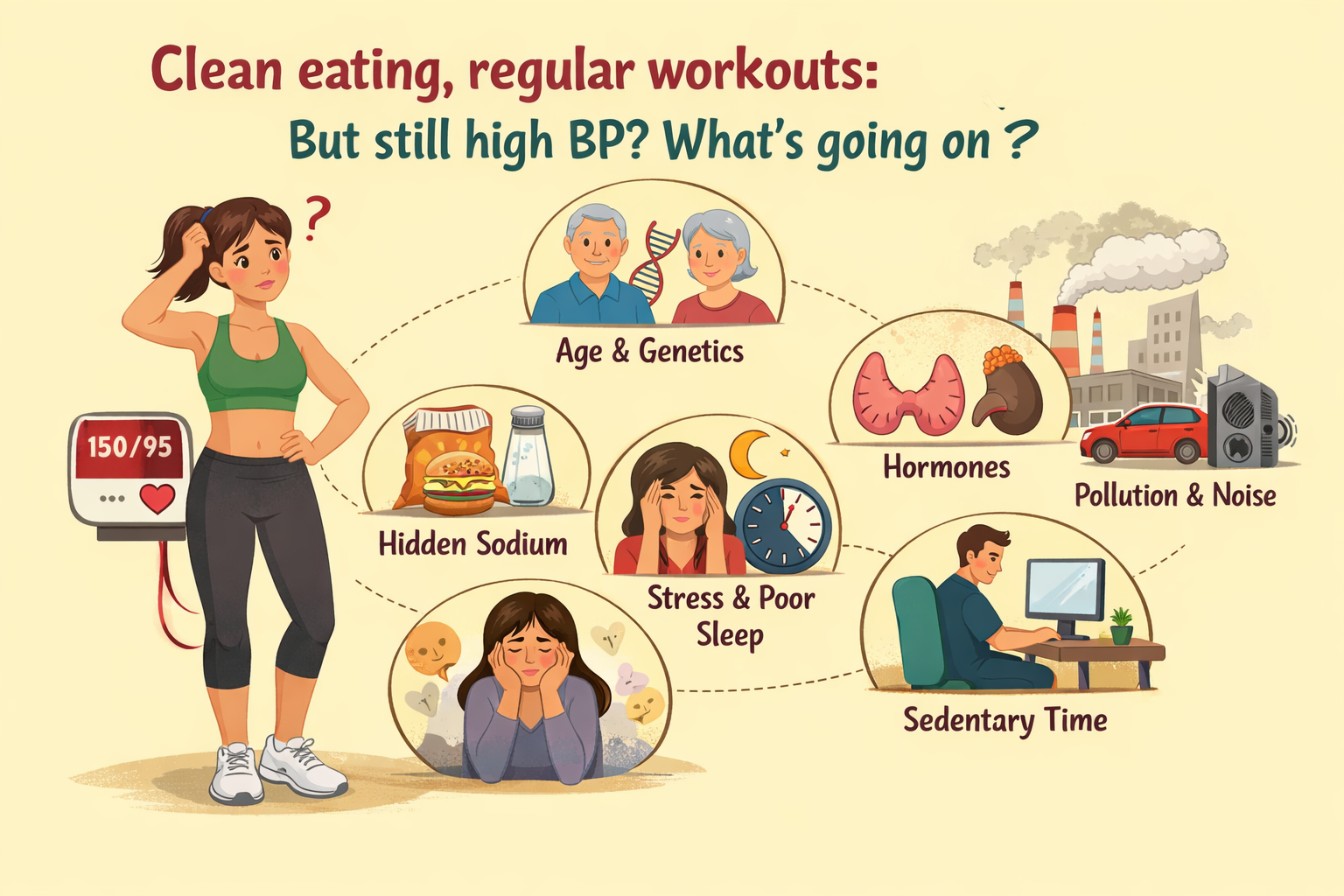
Image: AI
For younger people, most of the causes of hypertension are related to some form of medical problem. The types of medical problems due to hypertension could be related to the kidneys such as renal artery stenosis (narrowing of the arteries leading to the kidneys) or polycystic kidney disease. Both of these conditions can increase blood pressure in an individual. Another type of medical problem that can lead to hypertension includes a hormonal imbalance from the endocrine system such as a malfunctioning thyroid, primary hyperaldosteronism (hyperactivity of a hormone), and other types of problems affecting hormone regulation.
“Another increasingly significant cause of difficulty in controlling hypertension is obstructive sleep apnea, often seen in individuals who may appear healthy on the outside but have sleep disturbances.”Adding to this, Dr. Niranjan Singh, Senior Consultant, Department, Internal Medicine, CK Birla Hospitals Jaipur says, poor sleep quality, prolonged stress and irregular daily habits can highly affect blood pressure by keeping the body in a persistent state of alertness.
He adds, "the habit of consuming packaged foods or in restaurants, which are high in sodium, are the main reason for the same. Sedentary lifestyle, even in those who exercise for a short time but tend to sit for long hours, can also be one of the factors.
" Dr. Niranjan Singh sheds light on clinical conditions such as early metabolic syndrome, insulin resistance, or undiagnosed thyroid issues and their silent impact on the blood pressure.
Caffeine sensitivity and prolonged screen time further enhance the risk, he says. Hormonal fluctuations, particularly in women, and age-related vascular changes are also contributing to the issue. Environmental influences such as air pollution and noise exposure may also play a subtle yet important role.
"Therefore, it is important to manage blood pressure. One needs to have a holistic approach—targeting not just on diet and exercise, but also on sleep hygiene, stress management, regular monitoring, and health screenings," he recommends.









 English (US) ·