

 1 hour ago
6
1 hour ago
6
ARTICLE AD BOX
A cloudburst triggered flash floods in Doda's Bhalesa area, washing mud and debris onto roads and cutting off several interior villages. Authorities launched clearance operations and urged people to avoid travel as concerns over recurring mountain cloudbursts resurfaced.
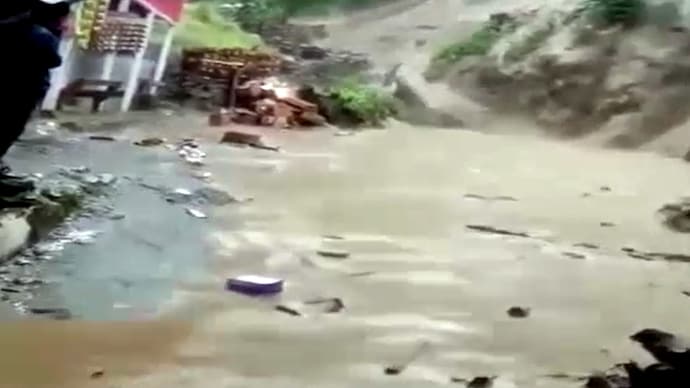
Flash floods in Doda district sweep away several houses and shops.

Srinagar,UPDATED: Jul 1, 2026 12:52 IST
A cloudburst triggered flash floods in parts of Jammu and Kashmir's Doda district on Tuesday, with the Bhalesa area among the worst affected. Torrential floodwaters carrying mud and debris washed over roads, severing connectivity to several interior villages and prompting authorities to launch clearance operations, assess the damage and advise people to avoid travel until the situation is brought under control.
Last year, at least 45 people, including two Central Industrial Security Force (CISF) personnel, were killed, and 167 others injured after a major cloudburst struck Chositi village in the adjoining Kishtwar district, triggering flash floods and causing widespread destruction.
More than 220 people were reported missing as rescue teams continued efforts to trace survivors.
The incident took place along the route of the Machail Mata Yatra to the Himalayan shrine of Mata Chandi, throwing the pilgrimage route into disarray.
The flooding affected pilgrims who had travelled nearly 17 km of the yatra, which begins at Gulabgarh town and started on July 25 this year.
Mud-filled floodwaters swept through homes and temporary camps used by pilgrims at Chashoti village, which is around 8 km from the shrine. The scale of the destruction was severe, with large areas hit by the sudden flow of water and debris.
Among those killed were two jawans of the CISF. Officials said more than 220 people were still missing after the cloudburst, even as rescue teams raced to find those trapped or swept away in the flooding.
Cloudbursts have become increasingly common in the country’s mountain regions. They occur when moisture-laden air rises and is forced further upward by mountain peaks until a sudden drop in temperature causes condensation.
Warm and moisture-heavy air from below then meets cooler air above, creating strong upward currents. This can quickly build dense clouds that release intense and highly localised rainfall within minutes. The mixing of warm and cold air, strong convection and high moisture levels at high altitudes can also lead to such events.
- Ends
Published By:
Sayan Ganguly
Published On:
Jul 1, 2026 12:52 IST









 English (US) ·