

 1 hour ago
4
1 hour ago
4
ARTICLE AD BOX
The operation targeted an illicit network involved in the mid-sea transfer of oil cargo sourced from conflict-affected regions, aimed at evading customs duties and maritime regulations.
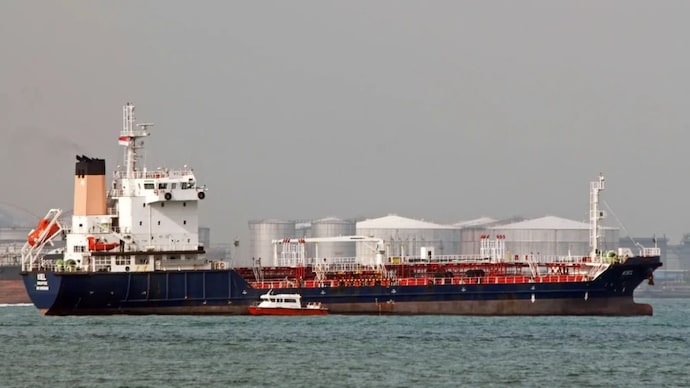
Indian Coast Guard intercepted three suspect vessels approximately 100 nautical miles west of Mumbai. (Photo: X/IndianCoastGuard)

New Delhi,UPDATED: Feb 8, 2026 19:30 IST
The Indian Coast Guard (ICG) has busted a major international oil-smuggling syndicate following a meticulously coordinated sea–air operation conducted on 5–6 February 2026, officials said on Thursday.
The operation targeted an illicit network involved in the mid-sea transfer of oil cargo sourced from conflict-affected regions, aimed at evading customs duties and maritime regulations.
According to the ICG, three suspect vessels were intercepted approximately 100 nautical miles west of Mumbai after technology-enabled surveillance systems flagged suspicious activity within India’s Exclusive Economic Zone (EEZ).
On 06 Feb 26, @IndiaCoastGuard busted an International oil-smuggling racket in a meticulously coordinated sea–air operation. The syndicate exploited mid-sea transfers in international waters to move cheap oil from conflict ridden regions to motor tankers, evading duties owed to pic.twitter.com/erJ31U4xyH
— Indian Coast Guard (@IndiaCoastGuard) February 7, 2026The vessels were believed to be engaged in illegal ship-to-ship transfers of oil-based cargo in international waters.
“Advanced digital surveillance and data-pattern analysis indicated abnormal vessel behaviour and convergence at sea,” an ICG official said, adding that the inputs prompted immediate deployment of Coast Guard ships and aircraft to the area.
Specialist boarding teams carried out sustained rummaging of the vessels on February 5.
Electronic data recovered onboard, along with verification of ship documents and detailed interrogation of crew members, enabled investigators to reconstruct the entire chain of events.
Officials confirmed that the vessels were part of a coordinated smuggling operation involving handlers operating across multiple countries.
Initial investigations revealed that the syndicate transported cheap oil by seagoing vessels and conducted mid-sea transfers to motor tankers in international waters, a tactic commonly used to mask the origin of cargo and evade duties owed to coastal states, including India.
“The operation exposed a sophisticated modus operandi supported by a global handler network,” the official said.
Further findings suggest that the intercepted vessels frequently changed their names, flags, and digital identities to avoid detection by maritime law enforcement agencies.
The ownership of the vessels is also suspected to be linked to foreign entities, adding an international dimension to the case.
Following confirmation of digital and physical evidence, all three vessels were apprehended.
The Coast Guard has begun escorting them to Mumbai, where they are expected to be handed over to Indian Customs and other law enforcement agencies for further investigation and legal proceedings.
Officials described the operation as a significant success in combating transnational maritime crime.
“This action demonstrates the Indian Coast Guard’s growing capability in leveraging technology, intelligence, and sustained maritime presence to counter complex threats at sea,” an ICG spokesperson said.
The bust, officials noted, reinforces India’s role as a net security provider in the Indian Ocean Region and highlights its commitment to upholding a rules-based international order in the maritime domain.
- Ends
Published On:
Feb 8, 2026









 English (US) ·