

 1 hour ago
6
1 hour ago
6
ARTICLE AD BOX

Cardiologists emphasize the importance of nurturing social ties for a healthy heart. When people experience loneliness, it can lead to higher stress hormones, increased blood pressure, and chronic inflammation, all of which elevate the risk of heart disease. On the flip side, engaging with friends and community activates the release of oxytocin, which alleviates stress and bolsters immune health.
In the fast-paced world, where every moment feels like a race, maintaining an active social life comes with multiple challenges. Having said that, one can't deny that its benefits extend far beyond mere emotional fulfillment.
Some might even say that a thoughtfully curated social network can serve as a protective shield against heart disease. As we delved deep into the subject, we reached out to cardiologists for expert opinion. As the medical professionals weighed in, they highlighted how social engagement plays a role in enhancing cardiovascular health.Below are the excerpts from our conversationDr Haresh Mehta, Director- Interventional & Structural Cardiology, S.L. Raheja Hospital, Mahim, said, "An engaged lifestyle will lower your chances of heart disease.
In my field as an interventional cardiologist, I frequently witness how loneliness can lead to heart disease; community support through friendships and family provides some level of protection from heart disease."He further breaks it down for us:
The importance of social networks
Chronic loneliness can produce chronic stress, causing an increase in your blood pressure, inflammation, and cortisol levels- large contributors to developing heart disease.
Studies link social isolation to a 29-30% higher risk of cardiovascular events, similar to smoking or obesity. Having friends and family gives you a stable mood and promotes sleep, exercise, and good lifestyle practices, all of which can help you maintain good heart health.
The science behind it
Social bonds release oxytocin, which relaxes blood vessels and curbs stress hormones. The results show that they increase immune system activity while decreasing arterial plaque accumulation.
Another study demonstrates that patients who have strong social ties achieve faster angioplasty and TAVI recovery results with reduced medical complications.
Practical ways to build connections
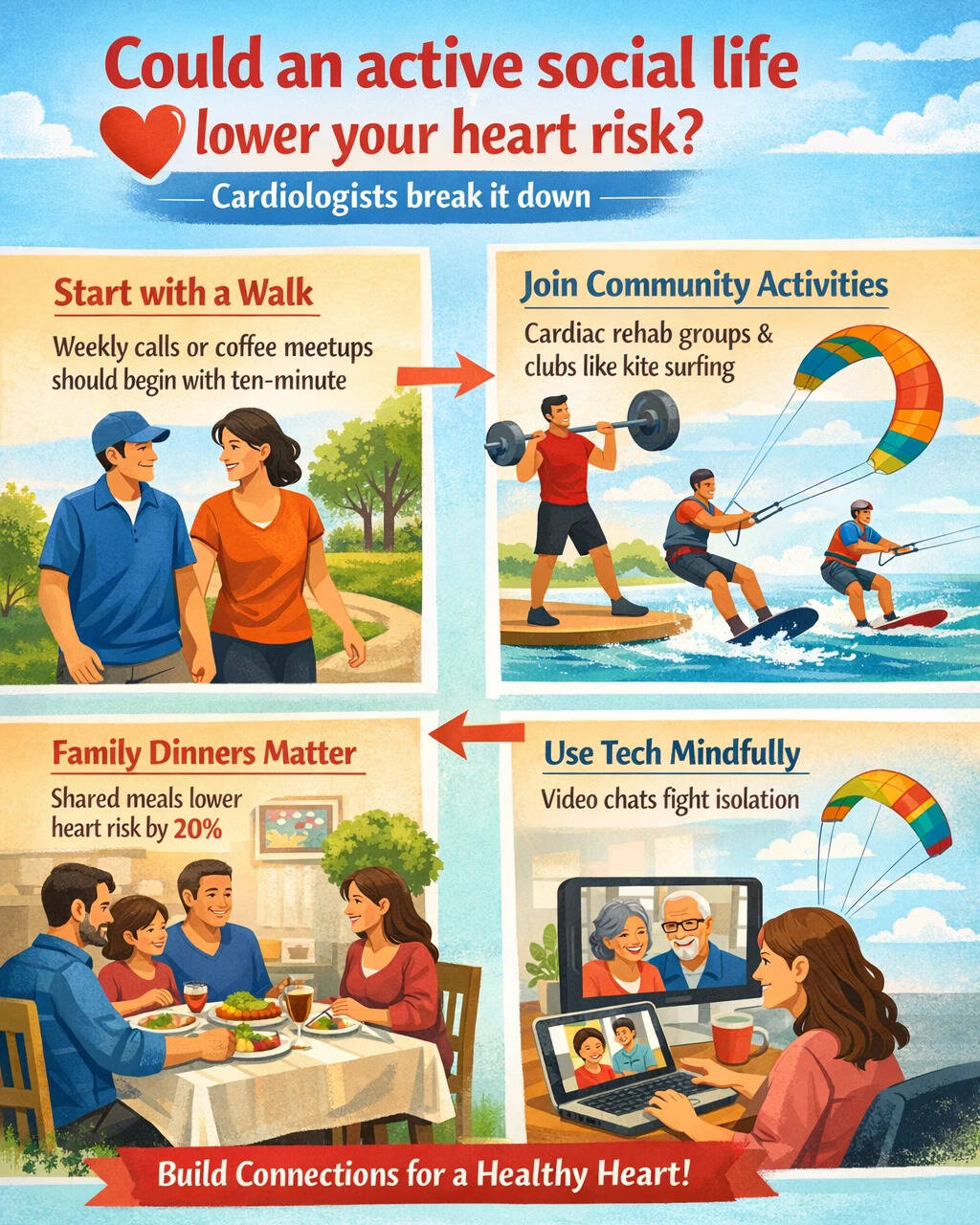
Weekly calls or coffee meetups should begin with ten-minute walks because they need to start with small activities.People should participate in community organizations that include cardiac rehabilitation programs and recreational clubs that offer activities like kite surfing for adventure seekers.Prioritise family dinners; shared meals lower heart risk by 20% through better eating and bonding.Use tech mindfully- video chats combat isolation without screen overload.
Real-world impact
In urban India, where long work hours breed solitude, I have advised patients to reconnect: one reversed pre-diabetes through weekly group swims. Combine this with 150 minutes of weekly activity, a balanced diet, and 7-8 hours of sleep for optimal results.
Social vitality isn’t a luxury, it’s heart medicine. Small efforts yield big protection, adding healthy years.Dr. Abhijeet Palshikar, Director-Cardiology, Sahyadri Super Specialty Hospital, Deccan Gymkhana said, "We have seen from studies within the medical community, being socially isolated or feeling alone can be risk factors for developing heart disease by negatively impacting the cardiovascular system (the heart and blood vessels) through increased levels of cortisol and adrenaline (two stress hormones), which over time lead to hypertension (high blood pressure), inflammation, insulin-resistance, and atherosclerosis (plaque build-up inside arteries).
""We realize that by participating in social interactions with friends and family members, there are numerous positive things that happen in your body, including a reduction of stress, increased variability of heart rates (heart rate variability), and improved control of your blood pressure. In addition to these physical changes in your body, social connections with others will encourage you to engage in healthy behaviour patterns; for instance, when individuals feel supported, they are more likely to participate in regular exercise, eat balanced meals, take their prescribed medications, and seek out timely medical care," he added.While talking about what an active social life should actually look like, Dr. Abhijeet added, "There's a common misconception that having an 'active' social life means constantly going to parties and being around lots of people. It’s the quality of one’s friendships that is significantly more important than the number of friends one has. Having just a few friends can provide much greater protection from stress than having multiple acquaintances.
""Additionally, providing individuals with a sense of belonging in the community, be it through activities like group walking, participating in community service, or volunteering, can provide them with protective benefits to their hearts.Nevertheless, a socially active lifestyle should not replace managing one's traditional heart disease risk factors (i.e., controlling diabetes, cholesterol, smoking, and physical inactivity), but should simply add a layer of protection.
Today in preventive cardiology, we evaluate more than just laboratory values on blood tests and what the blood pressure number is; increasing amounts of research are recognizing that an individual’s overall emotional and social well-being is an important part of total heart care," Dr.
Abhijeet concluded.Medical experts consulted This article includes expert inputs shared with TOI Health by: Dr Haresh Mehta, Director- Interventional & Structural Cardiology, S.L.
Raheja Hospital, Mahim.Dr Abhijeet Palshikar, Director-Cardiology, Sahyadri Super Specialty Hospital, Deccan Gymkhana.Inputs were used to explain how maintaining an active social life may support heart health, with cardiologists highlighting the potential benefits of social connections in lowering stress, improving lifestyle habits, and possibly reducing cardiovascular risk.







 English (US) ·