

 1 hour ago
5
1 hour ago
5
ARTICLE AD BOX

Cybercriminals are increasingly targeting vulnerable groups, weaponizing age and innocence (Representative image enhanced with AI)
NEW DELHI: Behind the glowing screens of everyday devices lies a rapidly evolving digital battlefield, where age, gender and innocence are increasingly being weaponised by cybercriminals.
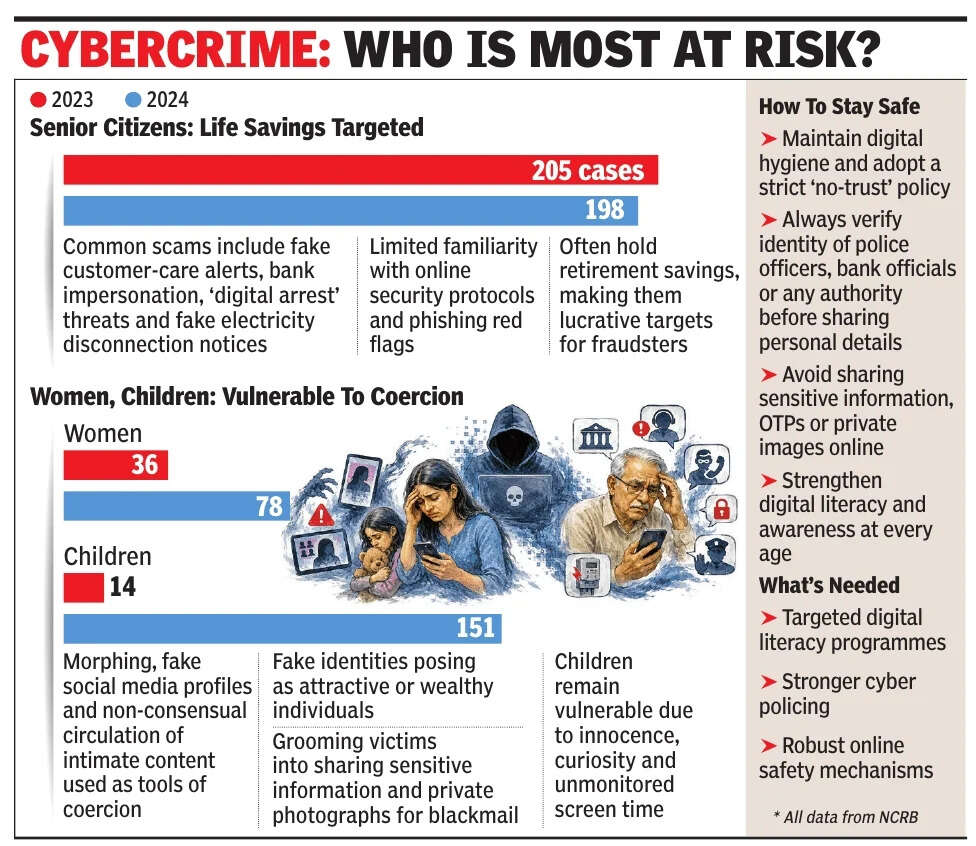
From financially draining senior citizens to exploiting women through intimate data and targeting children online, different demographic groups are facing uniquely tailored cyber threats. According to National Crime Records Bureau (NCRB) data for 2024, senior citizens remain prime targets for digital financial fraud and manipulation.In Delhi alone, 198 senior citizens aged 60 and above fell victim to cheating and fraudulent schemes under various legal provisions.
In 2023, as many as 205 such cases were registered.
Alarming surge in cyber threats targeting kids
Cyber experts say elderly individuals are disproportionately vulnerable to online scams due to a combination of psychological and behavioural factors.“Many senior citizens did not grow up with digital technology, leaving them less familiar with online security protocols, phishing red flags and multi-factor authentication. This relative lack of digital literacy, coupled with the fact that they often possess substantial retirement savings, makes them lucrative targets for scammers using sophisticated social engineering, fake customercare alerts and bank impersonation tactics to drain their life savings,” said a police officer.
Vinit Kumar, DCP (IFSO), said senior citizens often lack digital hygiene and tend to trust unknown callers, making them vulnerable to “digital arrest” scams.He added that in another common modus operandi, scammers pose as officials from the electricity department and warn victimsthat their power supply will be disconnected. They then send an APK file and ask victims to fill in their bank details, leading to financial fraud.Women, meanwhile, continue to face a hostile digital environment marked by targeted harassment and cyber exploitation. NCRB data shows that 78 cybercrime and Information Technology Act cases were registered in Delhi in 2024 where women aged 18 and above were the primary victims.Of these, 75 cases involved the unauthorised publishing or transmission of sexually explicit content online.In 2023, 36 such cases were registered, including 28 related to sexually explicit material.
Experts say women remain particularly vulnerable as cybercriminals increasingly weaponise digital tools to inflict reputational, social and psychological harm. Morphing, fake social media profiles and the non-consensual circulation of intimate content have emerged as potent tools of coercion, exploiting deeprooted societal stigmas.Most alarming is the sharp surge in cyber threats targeting children.
NCRB data shows that children were victims in 151 cybercrime cases in Delhi in 2024. Of these, 149 cases involved online publication or transmission of material depicting children in sexually explicit acts. In 2023, only 14 such cases were registered, nine of them linked to similar offences.In cases involving women and children, perpetrators often create fake online identities, posing as attractive and wealthy individuals. "They groom victims into sharing sensitive information and, in many cases, private photographs, which are used for blackmail. “Women should verify who they are interacting with online and avoid sharing personal information on the internet," Kumar said.“Children are especially vulnerable in cyberspace due to their innocence, curiosity and increasing unmonitored screen time,” said a senior cyber cell officer.









 English (US) ·