

 49 minutes ago
4
49 minutes ago
4
ARTICLE AD BOX
A Delhi court upheld the refusal to stop reuse of a grave at Shaheen Bagh graveyard. The ruling said scarce burial land cannot create a private right, though the family may still lead evidence.
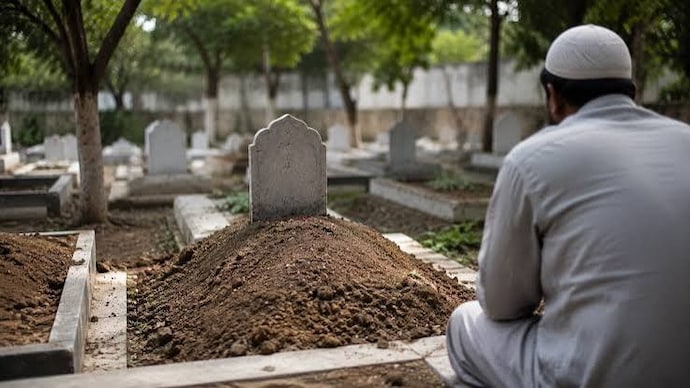
Hussain had sought protection of his wife's grave, arguing that under Muslim personal law, a grave could not be reopened or reused until the body had completely decomposed.

Newdelhi,UPDATED: Jul 12, 2026 18:44 IST
A Delhi court has upheld a trial court order refusing to stop the reuse of a grave at the Shaheen Bagh graveyard, where a woman was buried in April 2021. The court said granting such temporary protection would create a private right over scarce public land meant to serve the wider community.
District Judge Atul Ahlawat dismissed the appeal filed by M Basharat Hussain against the October 8, 2025 order of the trial court. The judge, however, said the observations were limited to the question of interim relief and would not affect the appellant's right to lead evidence before the trial court while the suit remains pending.
Hussain had sought protection of his wife's grave, arguing that under Muslim personal law, a grave could not be reopened or reused until the body had completely decomposed. He also argued that disturbing the grave before seven years would violate the dignity of the deceased and fundamental rights guaranteed under the Constitution.
The Management Committee of Jamiat Ulema-i-Hind and graveyard caretaker Mufti Abdul Raziq opposed the plea. They said the appellant had no legal, statutory, contractual or religiously enforceable right to reserve a specific grave in a public cemetery. They also told the court that the graveyard was facing an acute shortage of burial space and that reuse of graves, carried out with dignity and in line with accepted religious practice, was permissible in cases of necessity.
In its July 10 order, the court said, "The trial court had correctly appreciated the facts in the background of the applicable laws and this court does not find any perversity or arbitrariness in the impugned order. Therefore, there is no merit in the present appeal and the same is hereby dismissed. The impugned order is accordingly upheld".
Dismissing the appeal, the court said that while Islamic law generally prohibits disturbing graves, authoritative religious texts recognise an exception when burial space is scarce. It noted that both sides had accepted that the Holy Quran is silent on the issue of reuse of burial space and had relied instead on Hadith. Referring to Islamic jurisprudence, the court said religious texts permit reuse of burial space in cases of necessity, although removal of the bones of the first deceased remains prohibited.
The judge said, "The temporary injunction as sought by the appellant to preserve the dignity of the body of his deceased wife could not be granted for any particular period of time, since it would have amounted to creating a private right on the scarce public land, which is utilised for the needs of the society as a whole and the Muslim populace in particular." The court also said the appellant had failed to produce any scientific or cogent evidence to show that his wife's body had not fully decomposed or that seven years was the minimum mandatory period before the grave could be reused. It said merely asserting that the body would need at least seven years to decompose, without supporting evidence, was not enough to make out a prima facie case for temporary injunction.
The court also reiterated that the scope of interference in an appeal against an interim injunction order is limited, and an appellate court cannot replace a trial court's discretion unless the decision is arbitrary, perverse or contrary to settled legal principles. Finding no such flaw in the trial court's order, the district judge upheld the dismissal of the injunction plea and dismissed the appeal.
- Ends
Published By:
India Today Web Desk
Published On:
Jul 12, 2026 18:44 IST








 English (US) ·