

 1 hour ago
6
1 hour ago
6
ARTICLE AD BOX
The Karkardooma Court has convicted former MCD councillor Tahir Hussain in the murder case of IB officer Ankit Sharma. The verdict marks a major outcome in a high-profile Delhi riots prosecution, with sentencing still pending.
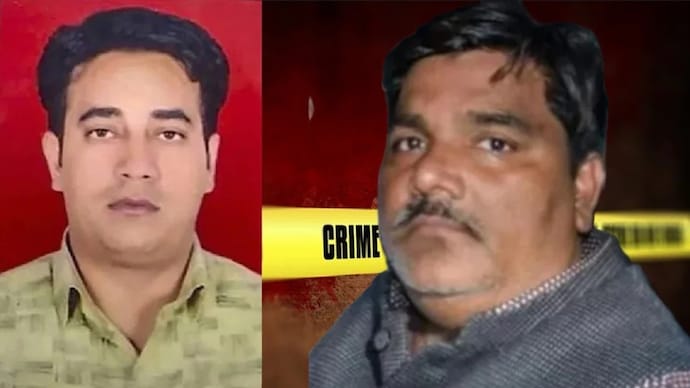
Former MCD councillor Tahir Hussain has been convicted in the murder case of Intelligence Bureau (IB) officer Ankit Sharma in Delhi riots.

New Delhi,UPDATED: Jul 14, 2026 09:46 IST
Nearly six years after the 2020 Delhi riots, the Karkardooma Court has convicted former MCD councillor Tahir Hussain in the murder case of Intelligence Bureau (IB) officer Ankit Sharma. The verdict follows years of investigation, forensic examination, witness testimonies and trial proceedings. The case became one of the most high-profile prosecutions arising out of the northeast Delhi riots, with investigators alleging that Sharma was killed by a violent mob before his body was dumped in a drain.
Here's a detailed timeline of how the case unfolded, from the outbreak of communal violence in 2020 to the court's conviction in 2026.
17-23 FEBRUARY 2020
Tension began escalating across several parts of northeast Delhi over protests for and against the Citizenship Amendment Act (CAA). Localities including Jaffrabad, Maujpur, Chand Bagh, Karawal Nagar and Khajuri Khas emerged as some of the most sensitive areas as the atmosphere became increasingly volatile.
24 FEBRUARY 2020
Large-scale communal violence broke out in northeast Delhi. Stone-pelting, arson and firing were reported from several neighbourhoods. Delhi Police deployed additional forces, but the violence continued to spread across multiple areas.
25 FEBRUARY 2020
This was the day 26-year-old Intelligence Bureau officer Ankit Sharma stepped out of his home to buy household essentials. He never returned.
His family searched for him throughout the day but could not trace him.
On the same day, allegations surfaced that stones and petrol bombs were being hurled from the rooftop of Tahir Hussain's house in Chand Bagh during the violence.
26 FEBRUARY 2020
Shock spread after Ankit Sharma's body was recovered from a drain in Khajuri Khas.
The post-mortem examination revealed that he had suffered dozens of injuries caused by sharp-edged weapons.
His father, Ravinder Kumar, lodged a complaint accusing Tahir Hussain and others of murdering his son.
27 FEBRUARY 2020
Delhi Police constituted a Special Investigation Team (SIT) to probe the murder.
Forensic experts examined the crime scene and began collecting evidence linked to the case.
MARCH 2020
Delhi Police arrested Tahir Hussain.
Investigators claimed that searches at his residence led to the recovery of large quantities of stones, material used to make petrol bombs, acid packets, slingshots and other items from the rooftop.
Police alleged that Hussain's house had functioned as an operational base for rioters during the violence.
JUNE 2020
Delhi Police filed its chargesheet in the case.
According to the prosecution, Ankit Sharma was caught by a mob, brutally assaulted to death and his body was later thrown into the drain.
2021-2022
During these two years, several eyewitnesses recorded their statements.
Forensic reports and electronic evidence were also submitted before the court as part of the prosecution's case.
23 MARCH 2023
The Karkardooma Court framed charges against Tahir Hussain and 11 other accused under provisions related to murder, rioting, criminal conspiracy and other offences.
The court observed that sufficient material existed on record to proceed with the trial.
2023-2025
The prosecution examined police officers, forensic experts, eyewitnesses and other witnesses before the trial court.
The defence denied all allegations and maintained that the accused were innocent.
13 JULY 2026
The Karkardooma Court convicted Tahir Hussain and the other accused.
The court held that the prosecution had successfully established the charges during the trial.
ANKIT SHARMA MURDER CASE
Ankit Sharma was working as a Security Assistant with the Intelligence Bureau (IB) and lived with his family in Delhi's Khajuri Khas area.
As communal violence intensified across Chand Bagh and neighbouring localities on February 24 and 25, 2020, incidents of stone-pelting, arson and firing were reported from multiple locations.
On February 25, Sharma left home to purchase household items but never returned. The following day, his body was recovered from the Khajuri Khas drain.
According to the post-mortem report, his body bore a large number of injuries, including wounds inflicted by sharp-edged weapons.
Police alleged that he was surrounded by a mob, brutally attacked and murdered before his body was dumped into the drain.
The murder became one of the most widely discussed cases arising from the Delhi riots because the victim was an officer of India's central intelligence agency.
HOW TAHIR HUSSAIN BECAME THE MAIN ACCUSED
According to the Delhi Police investigation, Tahir Hussain's house allegedly served as the main operational base for rioters during the violence. Investigators relied on multiple pieces of evidence while building their case.
FATHER'S COMPLAINT
Ankit Sharma's father, Ravinder Kumar, alleged in the FIR that continuous stone-pelting, petrol bomb attacks and firing were taking place from Tahir Hussain's house and that his son was killed during the same violence.
EYEWITNESS TESTIMONIES
Police recorded statements from several eyewitnesses who claimed that Tahir Hussain was present at the spot and was either leading or instigating the mob.
These testimonies were presented by the prosecution during the trial.
FORENSIC EVIDENCE AND CRIME SCENE
Police claimed to have recovered a large quantity of stones, petrol bomb-making material, acid packets, slingshots and other objects from the rooftop of Tahir Hussain's building.
The prosecution argued that these recoveries pointed towards prior preparation for the violence.
ELECTRONIC AND CALL RECORDS
Investigating agencies also relied on Call Detail Records (CDRs), mobile location data and other digital evidence.
According to the prosecution, these records supported its allegations regarding the conspiracy and Tahir Hussain's presence at the scene.
CHARGESHEET
Delhi Police alleged in its chargesheet that Ankit Sharma was deliberately targeted, attacked by a mob and killed before his body was dumped into the drain.
The prosecution identified Tahir Hussain as the principal accused in the alleged conspiracy.
WHAT DID THE DEFENCE ARGUE?
Throughout the trial, Tahir Hussain maintained that he was innocent.
He argued that he had been falsely implicated for political reasons and claimed that he had himself sought police assistance during the violence.
The prosecution, however, relied on witness testimonies, forensic material and other evidence placed before the court. The trial court found the evidence sufficient to convict him.
The court will pronounce the quantum of sentence separately after the conviction.
- Ends
Published By:
Zafar Zaidi
Published On:
Jul 14, 2026 09:46 IST









 English (US) ·