

 1 hour ago
4
1 hour ago
4
ARTICLE AD BOX
Last Updated:May 24, 2026, 14:57 IST
Iran will not cede control of Hormuz to the US because doing so would destroy its geopolitical leverage, compromise its security, and violate its constitutional sovereignty


US President Donald Trump and Iran's Supreme Leader Mojtaba Khamenei. File Image
President Donald Trump announced that a peace agreement with Iran has been “largely negotiated" and will include the full reopening of the Strait of Hormuz without tolls.
But the question is will Iran give up Hormuz so easily? News18 explains.
What Trump said
In a post on his Truth Social platform, Trump stated that the framework — structured as a “Memorandum of Understanding pertaining to PEACE" — is subject to finalisation between the US, Iran, and participating regional nations.
This follows an intensive period of reciprocal naval blockades and a severe military conflict that erupted on 28 February 2026.
Trump claimed final aspects of the deal are being actively discussed and details will be announced shortly.
Trump previously issued a “final" ultimatum demanding free traffic of oil and emphasised that reopening the waterway is a non-negotiable term.
Trump confirmed he held productive separate calls regarding the deal with Israeli Prime Minister Benjamin Netanyahu and the leaders of Saudi Arabia, the UAE, Qatar, Pakistan, Turkey, Egypt, Jordan, and Bahrain.
“Final aspects and details of the Deal are currently being discussed, and will be announced shortly," Trump wrote on Truth Social.
U.S. Secretary of State Marco Rubio, on a visit to India, said more news on Iran could come on Sunday and there was a possibility of good news on the strait over the next few hours.
What is actually in the draft deal?
The proposed 14-clause framework, mediated primarily by Pakistan and Qatar, outlines a phased timeline:
- 60-Day Extension: A 60-day temporary ceasefire extension.
- De-mining: Iran would clear its mines from the shipping lanes.
- Uranium Sticking Point: Reports indicate Iran has made a general commitment to hand over its highly enriched uranium stockpile. However, Iran’s Revolutionary Guard (IRGC) quickly dismissed this as “propaganda," insisting that formal nuclear talks are meant to happen separately over a subsequent 60-day period.
What was Iran’s response?
While US Secretary of State Marco Rubio confirmed “some progress made", Iranian State Media and Foreign Ministry spokesperson Esmail Baghaei pushed back slightly.
“The trend this week has been towards a reduction in disputes, but there are still issues that need to be discussed through mediators. We will have to wait and see where the situation ends in the next three or four days," said Iranian Foreign Ministry spokesperson Esmail Baghaei.
Iran described Trump’s characterization as “incomplete and inconsistent with reality," clarifying that while Hormuz is being discussed, any final mechanism must be strictly coordinated between regional bordering nations like Iran and Oman. They expect an additional 30 to 60 days of negotiations to iron out the finer details.
Iran has demanded supervision of the strait, an end to the U.S. blockade on its ports and the lifting of sanctions on Iranian oil sales.
Baghaei said the issue of the U.S. blockade on Iran’s shipping was important, but that its priority was ending the threat of new U.S. attacks and the ongoing conflict in Lebanon, where Iran-allied Hezbollah militants are fighting Israeli troops who have moved into the south.
Iran’s top negotiator Mohammad Baqer Qalibaf said Iran’s armed forces had rebuilt their capabilities during the ceasefire and that, if the U.S. “foolishly restarts the war," the consequences would be “more forceful and bitter" than at the start of the conflict.
Why Iran is ready to negotiate
Iran’s willingness to negotiate is driven by intense economic pressure rather than a capitulation of its sovereignty. The US has enforced a strict naval blockade on Iranian ports since April 13. Iran is using the reopening of the strait to force the US to lift this economic stranglehold.
According to reports from Iran’s semi-official Tasnim News Agency, Tehran has only agreed to let the number of passing commercial ships return to pre-war levels within 30 days. They explicitly stated this “in no way means a return to free passage" as it existed before the war.
Iran has made its cooperation conditional on the unfreezing of its overseas assets and the ability to freely sell its oil.
Why Iran will not cede control of Hormuz to US
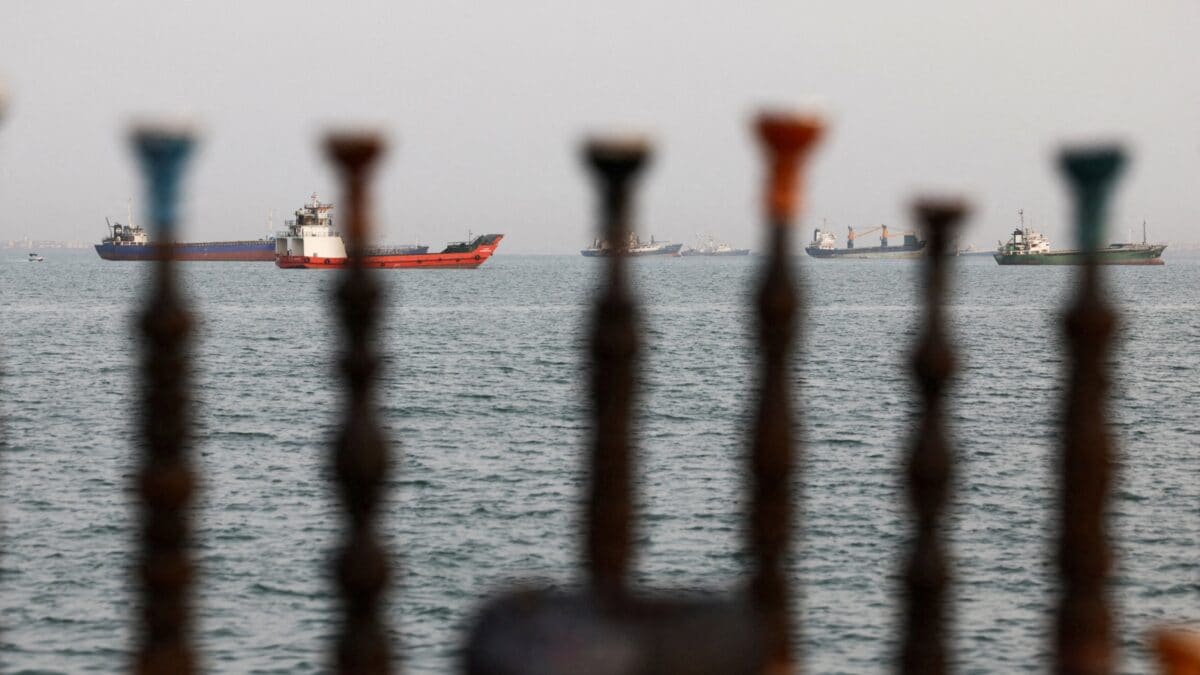
Iran will not cede control of the Strait of Hormuz to the United States because doing so would destroy its primary geopolitical leverage, compromise its national security, and violate its constitutional sovereignty.
Geopolitical Leverage
Chokepoint control: Iran commands a shipping lane where one-fifth of global oil passes.
Deterrence mechanism: Threats to close the strait deter Western military intervention.
Economic weapon: Disrupting traffic allows Iran to instantly spike global energy prices.
National Security
Territorial defense: The strait borders Iran’s southern coast directly.
US encirclement: Iran views US naval presence as an existential military threat.
Asymmetric warfare: Iran’s navy is built specifically for swift, littoral combat in these narrow waters.
Ideological Sovereignty
Anti-imperialist stance: Iran’s regime justifies its rule by resisting Western dominance.
Constitutional mandate: Giving up territory or strategic control violates the Islamic Republic’s founding principles.
With agency inputs
Handpicked stories, in your inbox
A newsletter with the best of our journalism
News explainers Despite Trump’s Claims, Iran May Not Give Up Strait Of Hormuz So Easily: Here’s Why
Disclaimer: Comments reflect users’ views, not News18’s. Please keep discussions respectful and constructive. Abusive, defamatory, or illegal comments will be removed. News18 may disable any comment at its discretion. By posting, you agree to our Terms of Use and Privacy Policy.
Read More






 English (US) ·