

 1 week ago
5
1 week ago
5
ARTICLE AD BOX
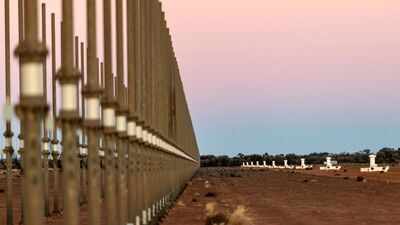
Photo credit: BAE Systems Australia
NEW DELHI: Australia has secured its largest-ever defence export agreement after signing a A$2.5 billion (US$1.75 billion) deal with Canada to supply advanced Over-the-Horizon Radar (OTHR) technology capable of detecting aircraft, ships and missile threats thousands of kilometres away.The landmark agreement will see Canada acquire Australian-developed radar technology to strengthen surveillance across its vast Arctic territory, a region that is becoming increasingly important amid rising geopolitical competition, expanding shipping activity and growing military presence.The project will provide Canada with a long-range early warning capability while reinforcing the North American Aerospace Defence Command (NORAD) network.
For Australia, the deal marks the first international export of its Over-the-Horizon Radar technology and a major breakthrough for its defence industry."Today's agreement marks a significant milestone in Australian defence trade and lays the foundation for deeper and mutually beneficial defence industry collaboration with Canada," Australian Prime Minister Anthony Albanese said.The radar system is based on Australia's Jindalee Operational Radar Network (JORN), developed by BAE Systems Australia, which can detect and track targets at ranges of up to 3,000 kilometres.
The agreement is expected to create around 300 jobs in Australia and represents the first phase of broader cooperation between Canberra and Ottawa on long-range surveillance technologies.Canada's Secretary of State for Defence Procurement Stephen Fuhr said the capability would significantly enhance Arctic monitoring."This project is part of a broader effort to build an integrated Arctic surveillance and communications network that will strengthen Canada's ability to monitor, understand and respond to activity in the Arctic," he said.Why the Australia-Canada radar deal mattersThe agreement comes as the Arctic rapidly emerges as one of the world's most strategically contested regions.Melting sea ice is opening new maritime routes that were previously inaccessible for much of the year, creating opportunities for commercial shipping, resource exploration and military operations. As activity increases, governments are investing heavily in surveillance systems capable of monitoring vast and remote areas.For Canada, the Arctic represents a critical national security frontier. Large stretches of Canada's northern territory face the Arctic Ocean, where Russian military infrastructure and strategic assets remain active. The region has also become increasingly important for North American missile warning and aerospace defence planning.By acquiring Australia's OTHR technology, Canada aims to improve its ability to detect aircraft, ships and missile launches far beyond its northern coastline, providing valuable early warning time and improving situational awareness across the Arctic and North Atlantic approaches.The acquisition also strengthens NORAD's surveillance architecture at a time when both Canada and the United States are modernising continental defence systems to address evolving threats, including long-range cruise missiles and hypersonic weapons.According to BAE Systems Australia, the company is prepared to support the rapid delivery, installation and sustainment of the system through its experienced workforce."Canada's acquisition of a cutting-edge Australian OTHR system supports the strategic interests of both nations through enhanced detection and tracking of threats to North America, strengthening Five-Eyes situational awareness," BAE Systems Australia chief executive Craig Lockhart said.What is Over-the-Horizon Radar and how does it work?Traditional radar systems are limited by the curvature of the Earth.
Even powerful radars can typically only detect targets that remain within their direct line of sight, making it difficult to monitor threats approaching from thousands of kilometres away.Over-the-Horizon Radar overcomes this limitation by using high-frequency radio waves that interact with the ionosphere, a charged layer of the Earth's upper atmosphere located roughly 60 km to 1,000 km above the planet's surface.Instead of travelling in a straight line, the radar signal is transmitted upward toward the ionosphere. The ionosphere bends, or refracts, the radio waves back toward Earth, allowing them to travel well beyond the horizon and cover distances of several thousand kilometres.When the signal encounters an aircraft, missile or ship, part of the radio energy is reflected back along the same path. Sophisticated receivers analyse the returning signal and calculate the target's location, speed and direction.This enables operators to detect and track objects far beyond the range of conventional radar systems. The technology is particularly valuable for monitoring remote maritime regions, detecting long-range missile launches and providing strategic early warning against potential threats.Unlike satellite-based surveillance, OTHR systems can provide persistent, wide-area monitoring over enormous distances and operate continuously regardless of weather conditions.As concerns grow over missile proliferation, Arctic competition and long-range strike capabilities, Over-the-Horizon Radar is increasingly being viewed as a critical component of modern air and maritime defence networks.The Australia-Canada agreement underscores the growing demand for such technologies and highlights the role of long-range surveillance systems in shaping future military strategy.









 English (US) ·