

 1 week ago
27
1 week ago
27
ARTICLE AD BOX
Last Updated:June 18, 2026, 13:45 IST
Ram Mandir is a global symbol of Sanatan Dharma and deserves world-class management, Nripendra Misra, chairman of the temple construction committee, said.


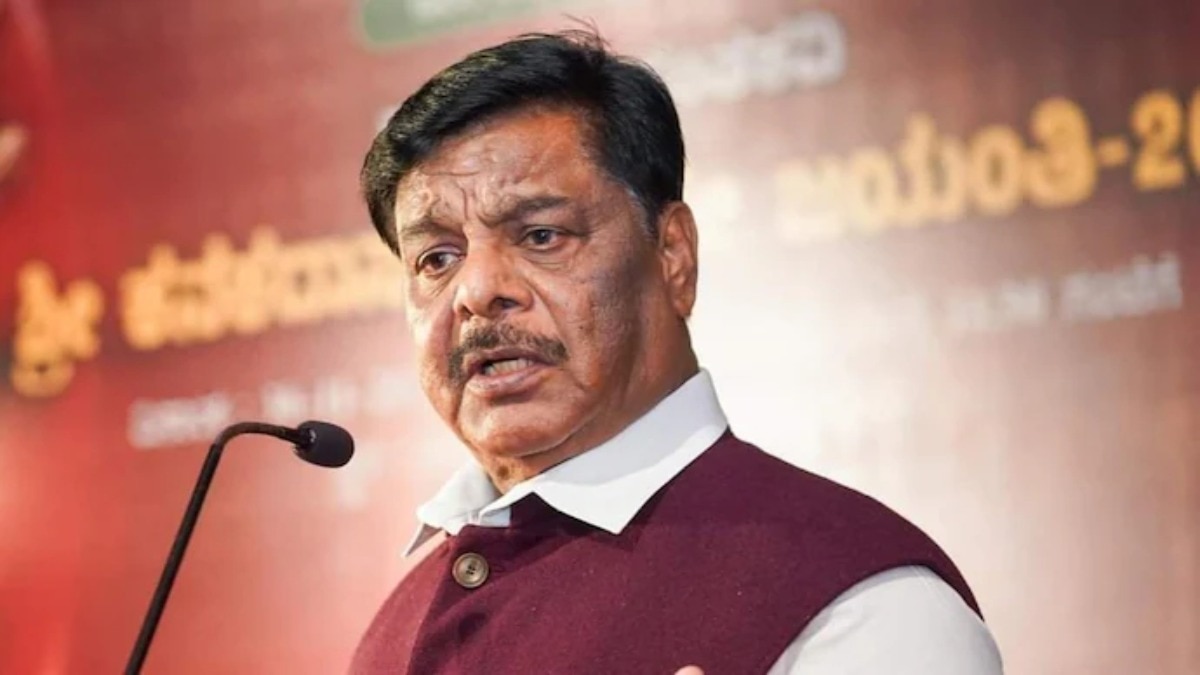
Nripendra Misra, Chairman of the Ram Mandir construction committee. (ANI)
Pained by alleged irregularities related to offerings and donations at the Ram Temple in Ayodhya, Nripendra Misra, Chairman of Ram Mandir construction committee and former principal secretary to Prime Minister Narendra Modi, on Wednesday, mooted the appointment of an independent CEO to manage its affairs and said a former IAS officer could be considered for the role to ensure professional and transparent management.
In conversation with Lakshman Roy, Deputy Executive Editor, CNBC AWAAZ, Misra said that the Ram Mandir is an international symbol of Sanatan Dharma and that its management, therefore, should be superior to that of all other temples.
Edited excerpts from the exclusive interview:
Q: You played a very important role in the construction of the Ram Temple in Ayodhya. Now, a controversy has arisen regarding the offerings and donations. Did this hurt you?
Nripendra Misra: Naturally, if any kind of controversy becomes associated with the management of the temple, everyone who is connected with the temple for work and service will feel saddened. Although under the arrangement made by the Supreme Court, the responsibility of the Chairman of the Construction Committee is limited to construction, I was also made an ex-officio member of the Trust. The intention must have been that the Chairman should have access to the support and guidance of the Trustees regarding how construction is carried out and how the Trust’s work remains connected to it. Fortunately, for the last five years there has been a very clear line of separation. During this period, I focused entirely on construction. I have made more than 150 visits to Ayodhya.
My goal was always to observe the construction very closely. During construction reviews and various decisions, we would also invite available Trust members so they could attend if convenient. The communication would state that Trustees could participate according to their convenience. That is one aspect. Management is another aspect. In reality, management has only been functioning for four years. Four years is not a very long period in the life of such an institution. It is still only the beginning. Naturally, there are many challenges. The biggest challenge is ensuring convenience for devotees and maintaining their confidence that the temple is being managed according to healthy traditions.
One issue first arose around two years ago regarding land purchases. This was discussed in Trust meetings at the time. The Trust formed a three-member committee consisting of regular Trust members to advise on transparent land purchases in the future, after which Mr. Champat Rai would carry out the purchase. In a way, I would call it a warning—that if we are not transparent, and if we are unable to immediately explain our responsibilities to devotees, difficulties will arise sooner or later.
Within just two years, another issue has come up, and it is more serious than the previous one. An SIT is already investigating and will submit its report within 15 days. Given my years of experience, my role as an ex officio Trust member, and my association with the Construction Committee, I would not like to offer any suggestions right now regarding matters being examined by the SIT. In particular, there is one question circulating widely on social media: why has an FIR not been registered? Since the SIT is examining the matter, it has full authority to convert its preliminary inquiry into an FIR if it chooses to do so. Therefore, I do not wish to offer any suggestions at this stage. I do not want to influence the process.
I do have some other suggestions in mind. I believe this temple is an international-level temple of Sanatan Dharma. We should no longer view it only through the lens of Ayodhya, Eastern Uttar Pradesh, or the Bihar belt. At one time, that may have been its primary sphere of influence, much like Vaishno Devi for Northern India. But that is no longer the case. Today, the Ram Mandir is an international symbol of Sanatan Dharma. Therefore, its management should be superior to that of all other temples.
Q: In your opinion, what kind of changes can be made in the current management system?
Nripendra Misra: First and foremost, there is a need for an experienced officer to serve as the chief executive officer (CEO), overseeing the Trust’s overall functioning while also having independence in management. This arrangement should be made immediately without wasting time. Believe me, today the activities within these 71 acres are comparable to those of a small district. One lakh people visit every day. They have various needs. Managing all of this is not a simple task. The challenge is very large, and both the state government and the central government should certainly take a decision on this matter.
Watch The Full Nripendra Misra Interview Here:
Q: Is this suggestion your personal recommendation or have you formally conveyed it to the governments and relevant authorities?
Nripendra Misra: I have not formally submitted this suggestion anywhere yet. However, during discussions at various levels, I have certainly raised this point. The bylaws already provide for a Management Committee, whose Chairman is the General Secretary, Mr. Champat Rai. A Chief Executive Officer can be invited into that Management Committee. Therefore, there is no mismatch between the articles and the arrangement—or, let us say, the posting of such a person.
Q: We understand that your Construction Committee is limited to the Ram Mandir itself, but is there any plan in the future to redevelop some of these surrounding sites of religious importance as well?
Nripendra Misra: There are two aspects to that. First, it is a somewhat sensitive matter. All of these temples are managed by different mahants and religious heads, each with their own traditions and followers. In many cases, hundreds of thousands of disciples are associated with them. Therefore, if the state government or the central government wishes to undertake any management, reconstruction, or redevelopment work, it would require their cooperation. The Construction Committee, which is limited to the Ram Mandir and was constituted under the Supreme Court’s judgment, is restricted to the 71-acre temple complex alone.
Q: Prime Minister Narendra Modi recently completed the record of being India’s longest-serving elected PM. In your view, what qualities of governance does he possess that made this possible?
Nripendra Misra: There are certainly many qualities, but three set him apart from other leaders of a similar stature. The first is his ability as a communicator. There are many excellent communicators in the country, but his style of communication is unique, especially when he connects directly with the people. It is not only about the words he uses; it is also about his conduct and mannerisms. That is a very important quality.
The second is his passion for the country. He thinks of almost nothing except development. Believe me, I worked with him for nearly six years. If I look at it on a day-to-day basis, I cannot recall a single occasion when he discussed anything other than development. It was always about development, always about the next agenda. And because he is popular among the people, he communicated that same message to the public as well.
The third point — and perhaps I am being a little bold in saying this, but enough years have passed since I left that role — is that he is not predictable. You can never predetermine what his position on a particular proposal will be. You can be certain that he will listen to every side, both for and against, but where he will ultimately stand is never predictable. This is especially true when it comes to selecting development programmes. Sometimes politics requires certain decisions. Although he generally does not want to run a heavily subsidy-driven government, if there is a public welfare scheme that he believes should be implemented, even a highly popular one, he announces it in his own way.
Q: You were with PM Modi during one term, and now his third term has begun. What differences do you see?
Nripendra Misra: There is always continuity in administration, especially when the leadership remains the same and the ruling party remains the same. So naturally there will be some continuity. The challenge with continuity is that if there is no newness, a fatigue factor eventually develops. What I observe now, from reading newspapers and following developments, is that PM Modi constantly tries to bring something new into governance. Since I have had the experience of working with him, I can better understand how he is attempting to introduce fresh ideas and prevent stagnation.
Q: The recent conflict involving Iran shook the global economy. India was among the economies most vulnerable to its impact. What lessons should we learn from it?
Nripendra Misra: The possibility that one, two, or three countries could disrupt global affairs and economic stability on such a scale was perhaps not fully anticipated even by India. India had not fully estimated the kind of difficulties that could arise because of the Strait of Hormuz, for example. The first lesson is that we must strengthen the resilience of our economy against global challenges. We need to identify specific measures and make them part of our management strategy.
I have great appreciation for the central government in this regard. There were numerous international disputes and competing interests involved. India maintains good relations with most countries, but if you move too far in one direction, your relationship with another country may be affected. This constantly tests our sovereignty and strategic independence.
Yet, the government managed to maintain a delicate balance in both economic and political relationships, including trade negotiations. I must compliment the government for that.
Handpicked stories, in your inbox
A newsletter with the best of our journalism
News india ‘Devotees’ Trust Paramount’: Nripendra Misra Moots Independent CEO For Ram Temple Trust | EXCLUSIVE
Disclaimer: Comments reflect users’ views, not News18’s. Please keep discussions respectful and constructive. Abusive, defamatory, or illegal comments will be removed. News18 may disable any comment at its discretion. By posting, you agree to our Terms of Use and Privacy Policy.
Read More



 English (US) ·