

 1 hour ago
7
1 hour ago
7
ARTICLE AD BOX
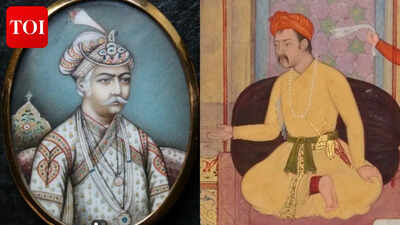
Abu'l-Fath Jalal-ud-din Muhammad Akbar, arguably India's most famous Mughal emperor, has made an indelible mark on the country's history. His expansion of territories, promotion of religious pluralism, and administrative policies made him one of the most exemplary rulers to have helmed the subcontinent.While "Akbar the Great" has been embedded for eternity in history books, he frequently "leaps to life" when modern audiences debate his legacy. Recently, X (formerly Twitter) became the battlefield for a fiery controversy regarding whether the Mughal king possessed Central Asian or Mongolian features.The debate began when a user shared a portrait of Akbar to challenge claims made by Indian author Amish Tripathi.
Tripathi had reportedly noted that it was "absurd" for modern Indians to think Akbar looked like actor Prithviraj Kapoor (who famously played him in Mughal-e-Azam)."As per him, to our eyes, he would've appeared Mongolian or Chinese. Also that his language wasn't Urdu but Turkish/Persian," she wrote. The user questioned if the man in her referenced painting "looked Chinese" to viewers, arguing that history is often portrayed incorrectly by "so-called history narrators."
"If Mr Tripathi had done even a bit of research on either history or geography he would have come to know that while Akbar's court language was Persian, by his generation, the spoken language in the royal household was close to what is now Brij Bhasha & Haryanvi" she wrote. Moreover, she claimed that Babur, Akbar's grandfather was born only 700km from Peshawar, "about 30% less than the distance between Delhi and Patna."
"The burden of Mr Tripathi's song was that all history is biased with an unstated corollary that therefore any made-up version of history is as good or valid as an academic's. This is a dangerous slope in any field" she wrote.
Turco-Mongol evidence
However, the original post was quickly corrected by another user who pointed out a major flaw: the "authentic contemporary portrait" being used as evidence was actually painted in 1850—250 years after Akbar’s death.She shared numerous other portraits of the emperor where his "central Asian features are self-evident." "They clearly depict him with features that suggest Central Asian/Turko-Mongol ancestry: high cheekbones, almond-shaped eyes, a broad forehead, and a relatively flat face compared to typical South Asian phenotypes," she wrote. One of the paintings was created by artist Hashim around 1614-1615, showing Emperor Jahangir admiring a miniature portrait of his deceased father, Akbar.
In it, the old emperor is shown with Turko-Mongol features. "Maybe go read a book and learn what real research is next time before arrogantly posturing & making up BS about history first," wrote the author.
Did Akbar have Turco-Mongol features?
Akbar was born in 1542 at the Umerkot Fort in Rajputana, modern-day Sindh, Pakistan, to Emperor Humayun and Hamida Banu Begum. While he spent his life and reign embedded in the South Asian culture, his roots trace back to a Turko-Mongol origin. His grandfather Babur was from the Fergana Valley, located in present-day Uzbekistan. He was a descendant of Timur, a Turco-Mongol conqueror and Genghis Khan, a Mongol conqueror. Thus, Akbar had the origins of a Turco-Mongol appearance. The word 'Mughal' itself has been derived from the word Mongol, thus referring to descent from Genghis Khan. However, by his reign (1556-1605), the dynasty was already becoming a genetic and cultural hybrid.As per modern historians and anthropologists, racial categories are outdated as human variation is continuous and not divided into fixed races. While Akbar may have had Turco-Mongol features, his cultural ties and political policies embedded him in the South Asian context permanently.





 English (US) ·