

 3 days ago
6
3 days ago
6
ARTICLE AD BOX
Cars are becoming sophisticated digital command centers, outfitted with an array of screens that enhance customization and connectivity. While car makers emphasize the perks of fewer buttons and regular software upgrades, issues such as driver distraction and the quality of these interfaces raise eyebrows. The tech-centric appeal resonates strongly with younger consumers, who crave innovative interiors packed with features.
Cars today are evolving into digital ecosystems, with dashboards filled with interconnected displays that promise convenience, customisation and constant connectivity. As screens grow in size and number, the industry is debating how far this trend should go and whether it risks complicating the driving experience.The Rise of Multi-Screen CabinsAutomakers highlight that multiple screens reduce physical buttons and enable software-driven features that can be updated over time. Several new electric SUVs now offer three connected displays across the dashboard, combining an instrument cluster, infotainment system and a dedicated passenger interface. A growing segment of buyers actively seeks larger displays, gravitating toward cabins that look modern, futuristic and feature-rich.
This demand has pushed manufacturers to integrate more screens across segments, sometimes simply to stay competitive.
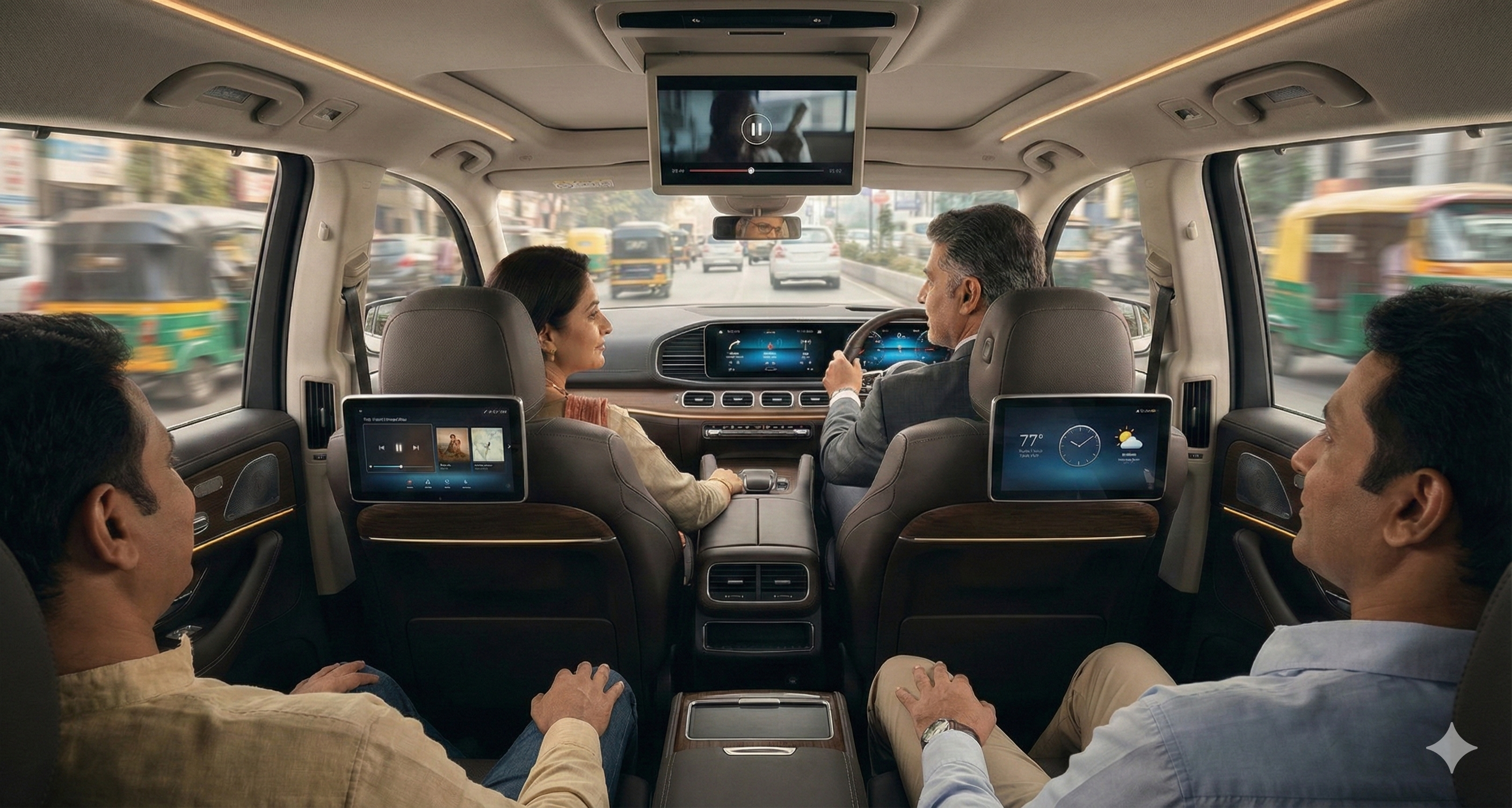
Screen overload in cars (AI generated image meant for representation purposes only)
Screens, once used to differentiate premium variants, have now become widespread. While functional displays such as the instrument cluster and infotainment screen serve clear purposes, the necessity of a dedicated passenger screen in mass-market cars continues to be debated.Safety Debates and Real-World ConcernsThe function of screens varies across price brackets. In high-end cars, front passenger displays are often restricted to safe functions such as driving data or climate controls.
In contrast, some mass-market models allow video playback, which can distract drivers. Screens can also be misused in unsafe ways, including children watching content in the front seat instead of being secured in the rear.Touchscreens support safety when used for reversing cameras or driver assistance, but in many mass-market models, interface quality depends heavily on software updates. Lag and unpredictable responses remain concerns even as reliability steadily improves.Why Buyers Still Want More ScreensMulti-screen cabins continue to grow in popularity among younger buyers. Screens allow designers greater freedom, supporting cleaner layouts and more future-ready interiors. They also pack more features into the cabin without adding clutter, contributing to a minimalistic aesthetic. Consumer expectations for tech-forward cabins are rising, and manufacturers are adapting quickly.How Multi-Screen Cabins Help FamiliesMultiple screens offer practical advantages. Passengers can adjust navigation, climate settings, or entertainment independently, reducing the driver's burden. Rear-seat displays keep children occupied on long journeys, and individual screens let each occupant customise their experience without affecting the others.What the Market IndicatesIn India, multi-screen configurations are becoming common in mid- to premium-segment vehicles, particularly EVs.Manufacturers report higher interest in variants featuring larger or additional displays, driven by younger buyers and urban markets. Although India does not publish separate market-share data for multi-screen vehicles, customer preference consistently leans toward cars with richer digital interfaces.
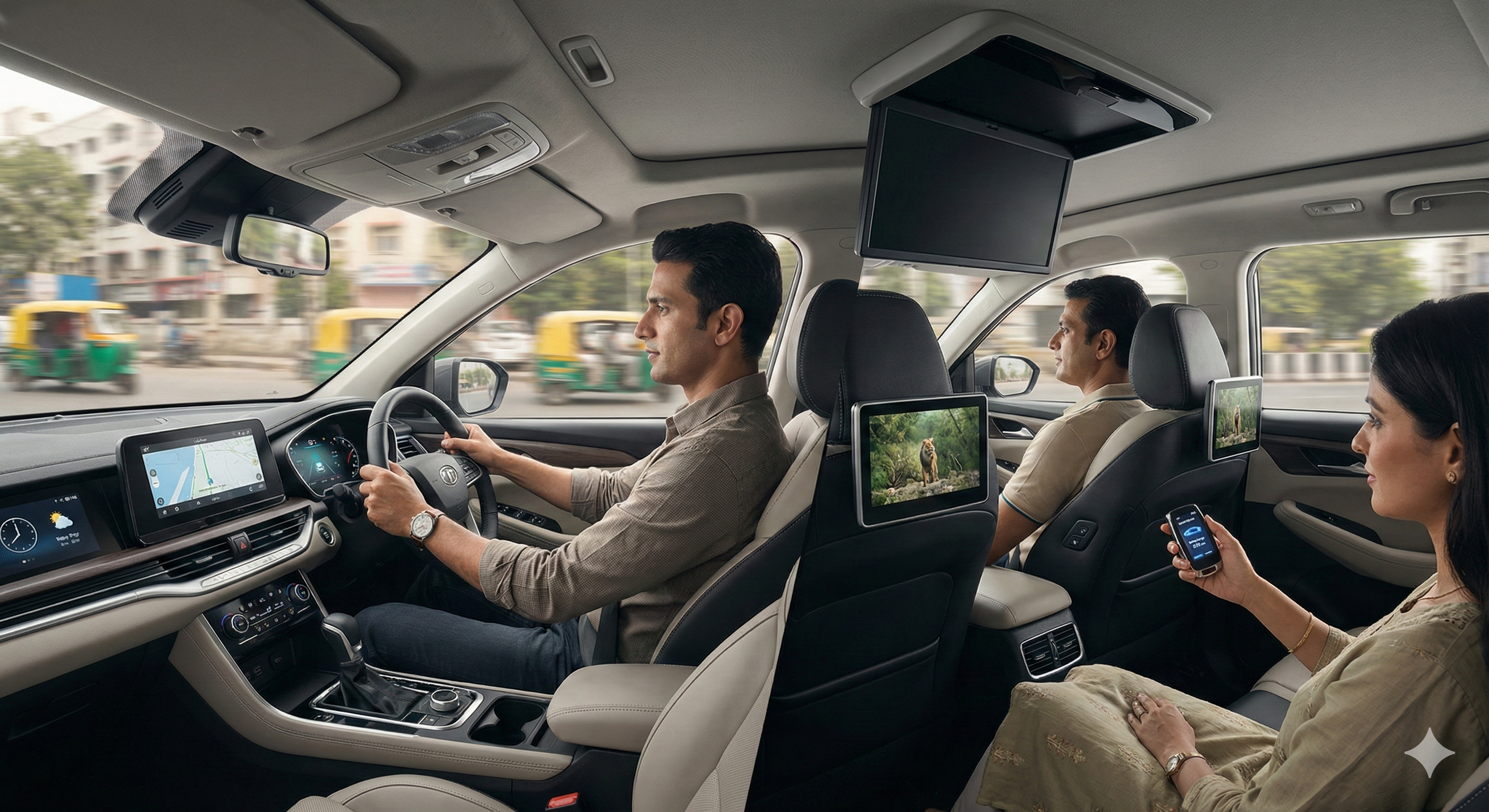
Screens take over the interiors of cars (AI generated image meant for representation purposes only)
Finding Balance in a Tech-Heavy FutureAs digitalisation shapes cabin design, the challenge for automakers is ensuring that innovation enhances usability rather than overwhelming it.
Screens remain useful for navigation, media, and safety functions, but thoughtful placement and responsible feature limitations are increasingly important.The Connected Tail-Lamp DebateConnected tail lamps, the full-width light bars now seen on many new cars and EVs, have become one of the most discussed styling trends in the industry. A top professional with 30 years of automotive experience says these designs “mainly enhance aesthetics and perceived width, and in some cases even improve aerodynamics and visibility.”
He explains that “a continuous light bar creates a single visual graphic, making the car look wider and more premium,” which is why many brands have adopted it as a signature element.
But he also notes that such systems are “definitely costlier to make and repair,” since they rely on more LEDs, fibre-optic guides, and complex housings.The debate, however, is not limited to experts. Discussions among users reveal how split regular drivers are about the trend.
Some users praise the modern look and say light bars offer a softer, more uniform glow that is easier on the eyes at night. Others argue the design has become overused, calling it a repetitive, predictable shortcut for carmakers. A few even feel it leans too heavily into EV-style aesthetics regardless of the segment.As styling evolves, connected tail lamps continue to polarise, balancing modern appeal with questions of cost, identity, and practicality.The Rise of Screen-Based Key FobsScreen-equipped key fobs are becoming the next digital accessory in modern cars. Several luxury brands now offer fobs with small touch displays that show battery or fuel levels, lock status, cabin temperature, and vehicle location, while some EVs even allow remote parking or summon functions through the fob.As the tech evolves, manufacturers expect these mini screens to take on more responsibilities, from acting as full digital keys to displaying service alerts, managing EV charging, enabling parking or toll payments, and even linking with smart-home systems. As cabins add more displays, the humble key fob is quietly turning into a compact control centre.








 English (US) ·