

 1 hour ago
1
1 hour ago
1
ARTICLE AD BOX
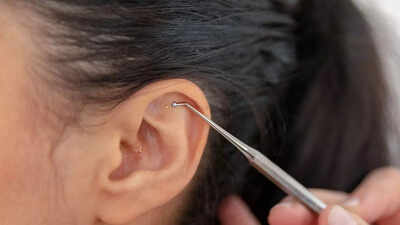
Initially, ear seeding was thought to be more of a minimalist piercing trend than a wellness therapy. With tiny beads, seeds, or shards taped/etched to specific points on the outer ear, the wearer is prompted to gently press/caress them through the day to release a calming response in the body.
“Working in IT, my mind is almost always racing, and most relaxation techniques never really stayed with me. With ear seeding, the tiny beads just sit on my ear while I code or take calls, and pressing them has become a small ritual whenever I feel overwhelmed,” shares Paulami Dey, 30, IT professional from Bangalore.Originally introduced in traditional Chinese acupuncture techniques, it rides on the idea that a being’s ear is the ‘mini-map’ of the body, with points linked to the nervous system, organs and other emotional states.
In India’s metros, this needle-free cousin of acupuncture is quietly finding a base in Indian ENT clinics, Sujok centres, spas and even workplace wellness conversations as urban professionals search for softer ways to soothe frazzled nerves.
Why ear seeding?
Dr Meena Agrawal, Senior Consultant ENT Surgeon, PSRI Hospital, Delhi, points out that India has long used ear stimulation in some form, whether it is piercing or massage, but ear seeding formalises it as a structured therapy.
“Patients with lifestyle-related stress or occasional insomnia do report feeling calmer and sleeping better after a few days of wearing the seeds. However, the scientific evidence for ear seeding is still limited.
They like that it is non-invasive, discreet and can be layered onto existing routines without medication or downtime. Most studies are small, not rigorously controlled and largely rely on subjective feedback, so it cannot be considered a primary medical treatment yet and should be viewed as a supportive therapy rather than a cure.”
She further states that “people with mild stress or sleep issues benefit from ear seeding, those with chronic insomnia, significant anxiety disorders or other serious conditions usually need conventional treatment, with ear seeding used only as a complementary tool.”Pooja Mehta, Certified Sujok Practitioner from International SUJOK Association, describes ear seeding as a “soft version” of acupuncture.
Instead of multiple needles across the body, a therapist chooses a handful of points on the ear linked to issues such as anxiety, insomnia or muscle tension and tapes seeds over them. She says, “For anxiety or insomnia, I often work with points linked to the Brain, Shen Men, Heart and Liver.
These combinations help calm the mind, stabilise emotions and improve sleep quality, and we fine-tune other points based on the individual’s specific symptoms and patterns.
Many urban clients prefer ear seeding because it is non-invasive, discreet and fits easily into a hectic workday. The seeds continue to provide gentle stimulation even after the session, and people can press them whenever they feel tense, which makes the support more continuous than a one-time treatment.”
Risk or reward?
Both experts agree that, when done correctly, ear seeding is generally low-risk. Still, it is not entirely free of downsides.
People with active ear infections, eczema, dermatitis, very sensitive skin or a recent ear surgery are usually advised to skip it. Over-pressing the seeds or leaving them on for too long can cause soreness or minor abrasions, and some may react to the adhesive. The bigger risk, Dr Agrawal warns, is misplaced faith.
She says, “A major misconception is that ear seeding can single-handedly cure insomnia, anxiety or chronic stress.
Correct point selection is essential, and the best results come when it is used thoughtfully, under professional guidance and alongside proper medical evaluation and lifestyle changes.”Despite the caution, curiosity is high, especially among younger, time-poor professionals who want something natural and non-intimidating. For them, ear seeding sits in the same universe as breathwork, aromatherapy and guided meditation. Small, sensory rituals that promise micro-moments of calm without demanding a complete lifestyle overhaul. Practitioners expect to see the technique show up more often in wellness menus at spas, yoga studios and corporate wellness programmes, precisely because it is quick, relatively affordable and compatible with a packed schedule.
As one therapist puts it, the fact that those glittering little studs can live on your ear while you answer emails or sit in traffic is part of the charm.









 English (US) ·