

 56 minutes ago
6
56 minutes ago
6
ARTICLE AD BOX
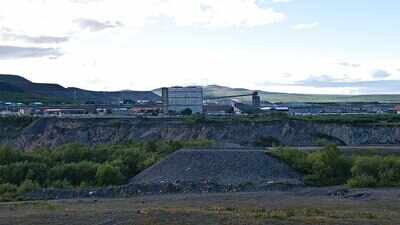
Area of the Kiruna mine seen from the town. Image Credits: Wikimedia Commons
Kiruna is being relocated because the ground beneath it is destabilising, not because of war, floods, or earthquakes. That is the situation in Kiruna, a town about 200 kilometres north of the Arctic Circle.
For over a hundred years now, Kiruna has been relying on one of the biggest underground iron ore mines in the world as its main source of income. Now, however, that very mine is causing the earth underneath the town to shift and crumble, necessitating a massive relocation project.Instead of abandoning Kiruna, Sweden is moving the town building by building to a safer site about three kilometres east. Homes, schools, public buildings, and even the town's iconic church are being carefully relocated while preserving Kiruna's cultural heritage and ensuring residents can continue their lives with minimal disruption.
The relocation is an engineering feat, but it also raises questions about economic development, environmental sustainability, and Indigenous rights.Why is Kiruna being moved?Kiruna was founded in 1900 to support the nearby iron ore mine operated by the state-owned mining company LKAB. The mine has grown into the world's largest underground iron ore mine and produces around 80 per cent of the European Union's iron ore supply. Over decades, mining operations have expanded deeper underground, gradually weakening the rock layers that support the town above.
As the mine continued to grow, the ground began to sink and crack, a geological process known as subsidence.The first signs of trouble were cracks in roads, buildings, and public structures. Officials later found that mining beneath parts of the town made those areas unsafe to live in. Instead of closing down the mine that employs thousands of people and generates a substantial part of Sweden's economic output, the relocation plan was approved in 2004. A study by Sainsbury states that advanced geological modelling is used to examine the effects of underground sub-level caving at the Kiruna mine. The researchers found that continued mining leads to measurable surface subsidence and progressive ground deformation, confirming that expanding underground operations can make the land above unstable. Their findings reinforce why relocating sections of Kiruna became the safest long-term solution rather than attempting to reinforce the existing town.An engineering marvel with social challengesRelocating an entire town is far more complicated than transporting buildings. Roads, utilities, schools, hospitals, businesses, and transportation systems must all be rebuilt while ensuring residents experience as little disruption as possible. Engineers have designed new infrastructure to accommodate modern urban planning principles, creating improved public spaces, shopping districts, and better access to nature.Some buildings are moved on special transport vehicles, while others are dismantled and reassembled at new sites. The relocation of Kiruna Church, which weighs several hundred tonnes, has become one of the great engineering feats of the project. The relocation requires careful planning, reinforced roads, and advanced lifting equipment to avoid damaging historic structures.Despite the engineering achievements, the relocation has created emotional challenges for many residents.
Many residents must leave areas where they have lived for years, and some are struggling with the memories attached to those places. The new locations offer better infrastructure and facilities, but they cannot replace the emotional ties people have to familiar places.Another group affected by the project is the Indigenous Sámi people. The Sámi reindeer migration routes extend across parts of the Arctic region.
According to local representatives, the project could disrupt migratory paths that have existed for centuries.
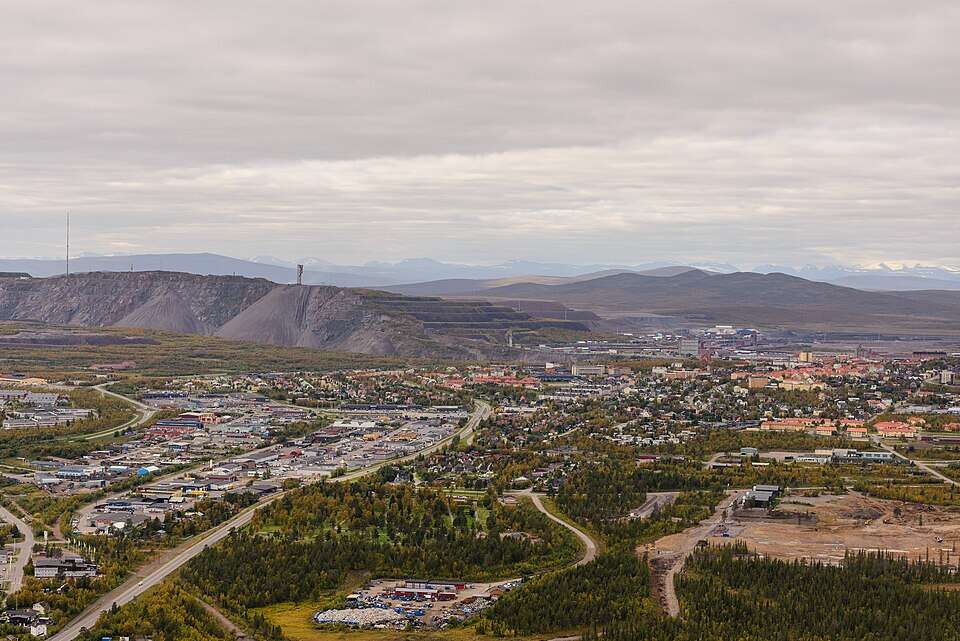
Kiruna and Kiruna Mine seen from the location of Kiruna's new town centre. Image Credits: Wikimedia Commons
Lessons from the world's most ambitious town relocationKiruna demonstrates both the benefits and consequences of relying heavily on natural resource extraction. Iron ore mining has provided employment, economic growth, and raw materials essential for Europe's steel industry for more than a century. At the same time, continued extraction has fundamentally altered the landscape beneath the town, making relocation unavoidable.Urban planners are studying Kiruna because few cities have attempted anything on this scale. The project combines architecture, engineering, geology, environmental science, and social planning in a way rarely seen elsewhere. It also highlights the importance of long-term planning when cities depend on industries that can permanently reshape the environment. Kiruna is becoming an example of adaptation, urban planning, and heritage conservation.
The Swedish approach is to preserve the architectural legacy of the city without leaving people homeless, but ensuring better living conditions for the next generations.At the same time, Kiruna shows that economic growth can come at a cost to the environment and society. Mines are still required to extract materials that will be used to build houses, move cars, produce renewable energy sources, and conduct manufacturing processes.Although unusual, the move reflects a broader pattern of how communities respond when their landscapes change. The example of Kiruna suggests that engineering can cope with many challenges, but preserving community identity and heritage also requires considerable effort. As Kiruna moves slowly, the city illustrates the tension between engineering, nature, and sustainable development. Building by building, Sweden is showing that whole communities can move while preserving their heritage.








 English (US) ·