

 44 minutes ago
3
44 minutes ago
3
ARTICLE AD BOX
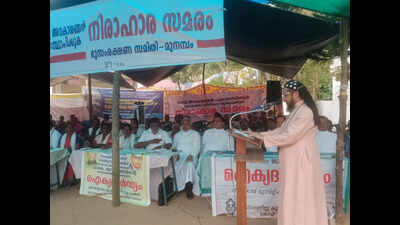
A view of the protest at Munambam
Kochi: Church-run Malayalam daily Deepika made a scathing attack on Wakf Board in its editorial on Monday over its decision to register the disputed land in Munambam as wakf property on Umeed portal. The editorial said that with the move, the Board was not just challenging 610 families or Christians, but secular Kerala itself.The editorial said it was important to remember the destruction caused in this secular country by Wakf Act sections that permit it to take possession of any property it feel belongs to it. Wakf Board’s role in fostering extreme Hindutva in the country will be noted in history, the editorial said.It added that the central govt amended the law to prevent such encroachments in future. However, there was nothing in the amendment to save the residents of Munambam who were caught in this religious law before that.
This helped the board continue its hunt in Munambam. Pinarayi govt made some efforts, but they couldn’t resolve the issue. Since V D Satheesan, when he was the opposition leader, stated that this was a problem that could be resolved in 10 minutes if they came to power, these developments are being brought to his attention, the editorial said.The editorial asked how many people, including those in Munambam, have been made homeless by a law created by Congress for religious appeasement. How many courts have been rendered helpless? How much religious division has it caused?The Wakf Board registered the property on Umeed, declaring itself as the custodian, even though Farook College, the true custodian, declared that the land in Munambam is not wakf property. It added that since the Wakf Board included 404 acres of land belonging to 610 families at Munambam Velankanni beach on Kochi Vypeen Island in its asset details in 2019, the lives of the people of Munambam have been at the mercy of this religious law.
Researchers should investigate how these provisions, impossible in any modern secular-democratic constitutional country, were passed in our country, the editorial said.



 English (US) ·