

 1 hour ago
4
1 hour ago
4
ARTICLE AD BOX
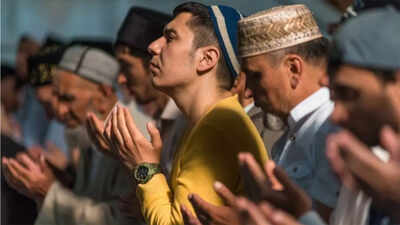
Eid ul Fitr 2026 Confirmed: Morocco, Egypt, Belgium to Celebrate on Friday, March 20
In a rare moment of near-global alignment, countries across North Africa, the Middle East and even Europe have officially announced that Eid ul Fitr 2026 will be celebrated on Friday, March 20, marking the end of Ramadan for millions of Muslims across continents.
From Morocco and Egypt to Belgium, the confirmation of a unified Eid date reveals how religious observances are evolving in an interconnected world.However, even as many nations align, others like India will be observing Eid a day later, highlighting a familiar yet fascinating divide rooted in tradition, astronomy and geography.
A Friday Eid ul Fitr across Morocco, Egypt and Belgium
Authorities in Morocco, Egypt and Belgium have officially declared Friday, March 20, 2026, as Eid Al Fitr, following the completion of 30 days of Ramadan and the non-sighting of the Shawwal crescent moon on Wednesday, March 18 evening. This aligns them with a broader group of countries including Saudi Arabia, the UAE, Qatar and Turkey that also confirmed Friday as Eid.
In Morocco, the announcement carries particular cultural weight, as the country traditionally relies on local moon sightings to determine religious dates. Egypt, meanwhile, combines religious authority with astronomical calculations, while Belgium reflects the growing influence of European Muslim councils in coordinating religious observances for diaspora communities. Despite these differences in approach, the outcome this year is strikingly unified.
Eid dates often vary across countries due to differences in moon-sighting methods. Some nations rely strictly on naked-eye sightings, while others incorporate astronomical calculations. This year, however, a large number of countries have converged on the same date, creating a near-synchronised global celebration.Across continents, North Africa (Morocco, Egypt), Gulf and Middle East nations and parts of Europe (Belgium) are all marking Eid ul Fitr on the same day, which is not common hence, making this moment particularly significant.
For millions of Muslims, it means families across countries celebrating together, shared prayer timings (adjusted for time zones) and a stronger sense of global unity.
Why Eid ul Fitr 2026 dates still differ in some countries
Despite widespread alignment, not all countries are celebrating on Friday. In nations like India, Eid will be observed on Saturday, March 21, due to the non-sighting of the crescent moon locally on Thursday, March 19 evening. This difference highlights a key aspect of Islamic tradition that Eid is not determined by a fixed calendar date but it depends on the actual visibility of the moon.
As a result, geographical differences, cloud cover, horizon visibility and local practices can lead to variations.
While some countries accept global sightings or astronomical predictions, others insist on local confirmation, leading to a split in celebration dates. At the heart of these announcements lies a centuries-old practice of moon sighting. The Islamic calendar is lunar, meaning each month begins with the sighting of the new crescent moon.
Eid ul Fitr marks the first day of Shawwal, the month that follows Ramadan.If the moon is not sighted on the 29th night of Ramadan, the month completes 30 days, automatically pushing Eid to the next day. That is exactly what happened this year across many countries, leading to the widespread confirmation of Friday as Eid.
Eid ul Fitr 2026 celebrations across cultures
While the date may be shared, the way Eid is celebrated varies across regions. In Morocco, Eid is marked by family gatherings, traditional sweets and pastries and visits to relatives.
In Egypt, celebrations often include communal prayers, festive meals and Eidiya (money gifts for children). In Belgium, where Muslims form a diverse diaspora community, Eid becomes a blend of mosque prayers, cultural festivals and multicultural gatherings.
Despite these differences, the core elements remain universal with prayer, charity (Zakat al-Fitr) and community. From Africa to Europe, multiple countries celebrating together is rare and noteworthy.
Every year, debates around moon sighting spark widespread interest. Hashtags like “Eid Friday” and “Same Day Eid” have gone viral. Eid ul Fitr is one of the two most important festivals in Islam, impacting billions globally.Eid ul Fitr 2026 arrives at a time of heightened global tension, particularly in the Middle East given the ongoing Iran vs US-Israel war. For many, the festival carries a mix of joy and celebration, concern for global events and a renewed focus on prayer and peace.
This adds emotional depth to the celebrations, especially for communities with ties to affected regions.Eid ul Fitr 2026 will be celebrated on Friday, March 20, across much of the world, including Morocco, Egypt and Belgium, marking a rare moment of global alignment. Whether celebrated on Friday or Saturday, the essence of Eid ul Fitr remains unchanged as a moment of gratitude, unity and renewal.






 English (US) ·