

 2 days ago
6
2 days ago
6
ARTICLE AD BOX
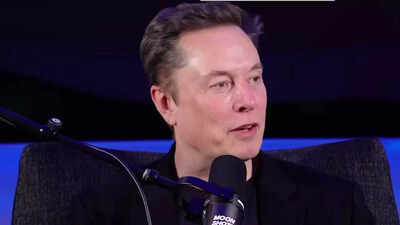
Tesla CEO Elon Musk has repeated his warnings about America’s debt. The tech billionaire has predicted that financial trouble is inevitable without the transformative effects of AI and robotics on the economy.
In an interview with podcaster Dwarkesh Patel and Stripe cofounder and president John Collison, the world’s richest man was asked why he pushed for aggressive spending cuts while leading the Department of Government Efficiency (DOGE), given that technology would increase GDP growth and ease the debt burden. Musk replied that he was concerned about waste and fraud. That's despite reports that many across-the-board staffing cuts included critical employees who had to be hired back.“In the absence of AI and robotics, we're actually totally screwed because the national debt is piling up like crazy. It's the only thing that could solve the national debt. We are 1,000% going to go bankrupt as a country, and fail as a country, without AI and robots. Nothing else will solve the national debt. We just need enough time to build the AI and robots to not go bankrupt before then,”Musk said at the podcast.Musk pointed out that America’s interest payments alone on the $38.5 trillion debt pile are about $1 trillion a year, which exceeds the US military budget. Debt-servicing costs also top spending on social programmes like Medicare. However, US President Donald Trump has vowed to boost annual defence outlays to $1.5 trillion, so the defence budget could overtake interest payments again, at least temporarily.
Reflecting on his work with DOGE, Musk said that he had hoped to slow down the unsustainable financial trajectory the US is on to buy more time for AI and robotics to boost growth.
How deploying AI and robotics 'at very large scale’ can help the US with debt
Last year, Musk made similar comments on Nikhil Kamath's podcast. He said that the deployment of AI and robotics "at very large scale" is the only solution to the US debt crisis. However, he cautioned that the increased output of goods and services resulting from these technologies would likely lead to significant deflation."That seems likely because you simply won't be able to increase the money supply as fast as you increase the output of goods and services," Musk noted.Deflation would worsen the debt burden in real terms, while inflation would initially ease it, though a resulting spike in bond yields would eventually push debt-service payments higher.To be sure, the US has some built-in advantages, given that the dollar remains the world's reserve currency, allowing the Treasury Department to borrow at lower interest rates than it would otherwise.The US government's ability to issue debt in its own currency and the Federal Reserve's bond-buying capacity also reduce the risk of an outright default.Still, the Committee for a Responsible Federal Budget warned last month that the US is on a trajectory that could trigger six distinct types of fiscal crises.While it's difficult to know when disaster will strike, "some form of crisis is almost inevitable" without a course correction, the CRFB said in a report.









 English (US) ·