

 1 hour ago
7
1 hour ago
7
ARTICLE AD BOX

A man can spend an hour in the gym learning how to hold a plank properly.Feet straight. Core tight. Breathe evenly. Don’t arch the back. Don’t collapse the shoulders.People study their bodies carefully now. They know how many grams of protein they need.
They know what kind of workout splits build muscle faster. They know the difference between soreness and injury.But watch what happens when emotions enter the room.Someone gets criticized at work. A partner says something that hits a nerve. A friend cancels plans for the third time. Suddenly the calm, disciplined person disappears.The reaction is instant. Anger, defensiveness, shutting down, overthinking for hours.
No technique. No training. Just reaction.And that’s the strange gap in modern wellness.We have been taught how to be so careful with training our bodies, yet very little on how to be careful with training our emotional reactions.Once you begin to pay attention to it, you see it everywhere.A person would devote years to having a good figure and have no idea how to sit down and feel disappointed without falling into a downward spiral.
One is highly productive yet does not understand how to respond to criticism without taking it personally. Another appears self-assured in all the photos and secretly feels anxious whenever something goes amiss.The emotional muscles were never trained.Emotions long remained a subject as to which one was either in control of or insignificant. In case you were angry, you were advised to relax. In case of anger, you were advised not to create a scene.
If you were overwhelmed, you were told to “be strong.”No one really explained what to do with the feeling itself.So people learned two common habits.Either they bottle things up quietly until it bursts somewhere later.Or they react immediately and regret it afterward.Neither one feels very good.Psychologists sometimes describe emotional regulation the same way athletes describe recovery. It’s not about never feeling stress, anger, or sadness.
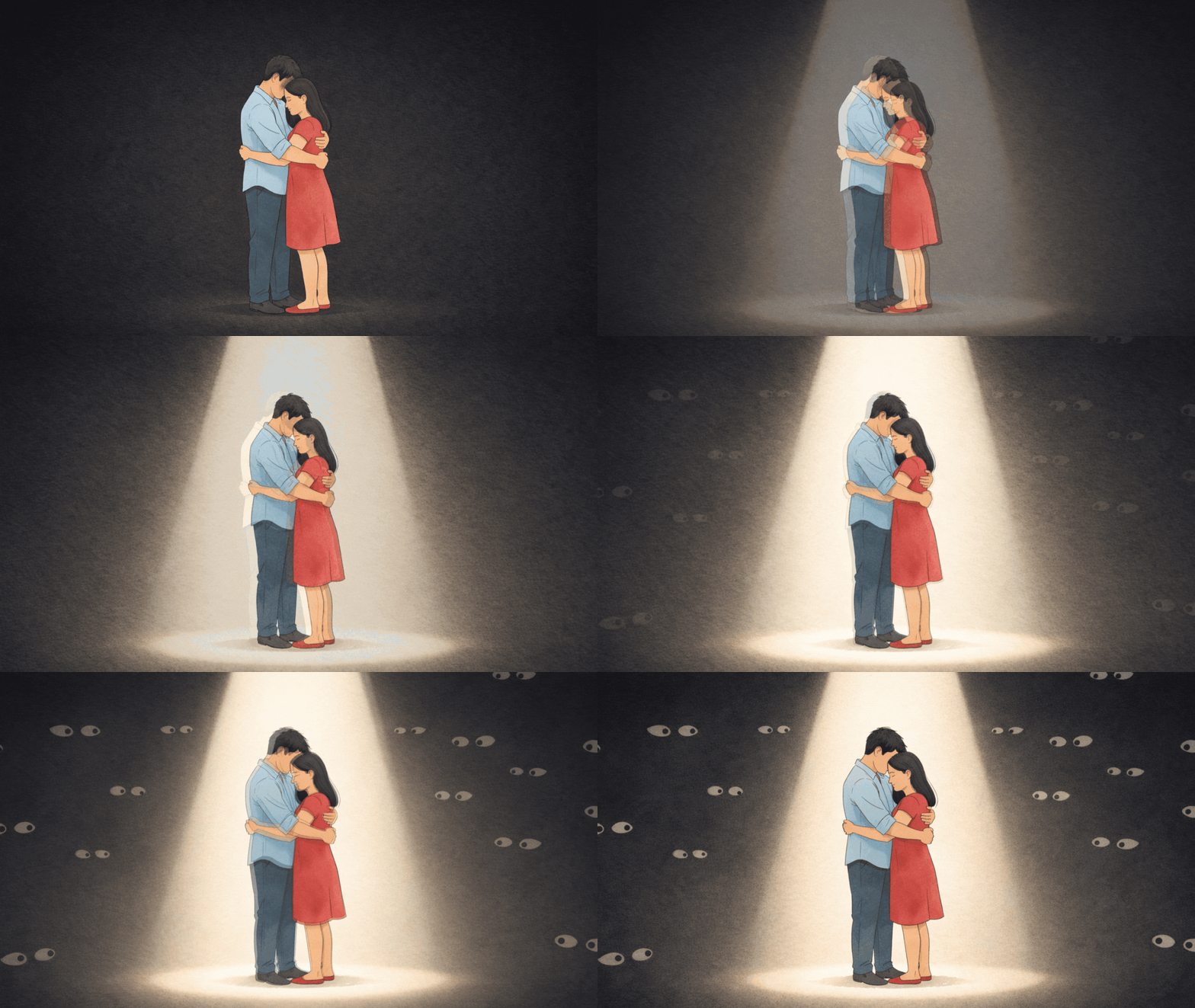
That would be impossible.It’s about how quickly someone can notice what’s happening inside them and regain balance.Think about someone who knows their own emotional patterns well.They recognize when they’re becoming defensive. They notice when anxiety is starting to spiral. They understand when they’re projecting frustration from something else.That awareness alone changes how they respond.Instead of reacting instantly, they pause.Instead of escalating an argument, they slow down the conversation. Instead of letting stress pile up for weeks, they deal with it earlier.None of this looks dramatic from the outside. But it changes the entire emotional climate of a person’s life.A silent cultural shift towards such awakening is underway.There is an increased discussion of therapy. Mental health is no longer as a secret of conversation as it was a decade ago.
Friends are asking more serious questions rather than sweeping things under the rug.Not because people suddenly became fragile.But because many realized they reached adulthood without understanding their own emotional habits.And emotions shape almost everything.They shape how people argue. How they apologize. How they deal with pressure. How they make decisions when things don’t go their way.Ignoring that part of life doesn’t make it disappear.
It just makes reactions more chaotic.That’s why emotional awareness is slowly becoming a real wellness skill.Not something dramatic or performative. The mere power to observe what is going on within you until it overflows into everything around you.Emotional stability is through attention like the same way physical strength is through repetition.Noticing your patterns. Understanding your triggers. Learning how to pause instead of reacting immediately.It’s not something people master overnight.However, when a person begins practicing it, life becomes a bit less reactive.And that could be one of the most valuable things that people can develop, though it will never be on a fitness tracker.





 English (US) ·