

 4 days ago
9
4 days ago
9
ARTICLE AD BOX
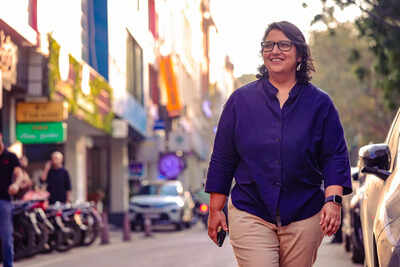
When Bison: Kaalamaadan finally screened in the capital a couple of months back, producer Aditi Anand found herself juggling the familiar chaos of contemporary cinema: shifting schedules, exhibition bottlenecks, and the anxiety of whether a film will find its audience at all.
The screening arrived later than planned. Anand didn’t mind. If anything, it felt apt. Bison Kaalamaadan made it to top 10 action films of 2025 by Letterboxd.“I actually don’t mind that it happened this way,” she said, half-smiling in the theatre lobby. “It reflects the reality we’re in. Everything is over-dated, over-scheduled, over-stretched. That’s kind of the industry right now.”At 40-plus, Anand describes herself without irony as a “cheesy desh bhakt,” a child of the 1990s raised on Mile Sur Mera Tumhara and Ek Chidiya Anek Chidiya. It is a self-definition that captures both sentiment and steel.
For her, cinema has never been separate from politics. It is entertainment, yes, but also an inquiry into power - into who speaks, who is seen, and who is allowed to tell the story.That question - who gets to tell the story?- has indeed shaped one of the most unusual producing careers in Indian cinema today, spanning Mumbai, Chennai and Delhi, mainstream studios and fiercely independent work, activism and art, heartbreak and stubborn hope.
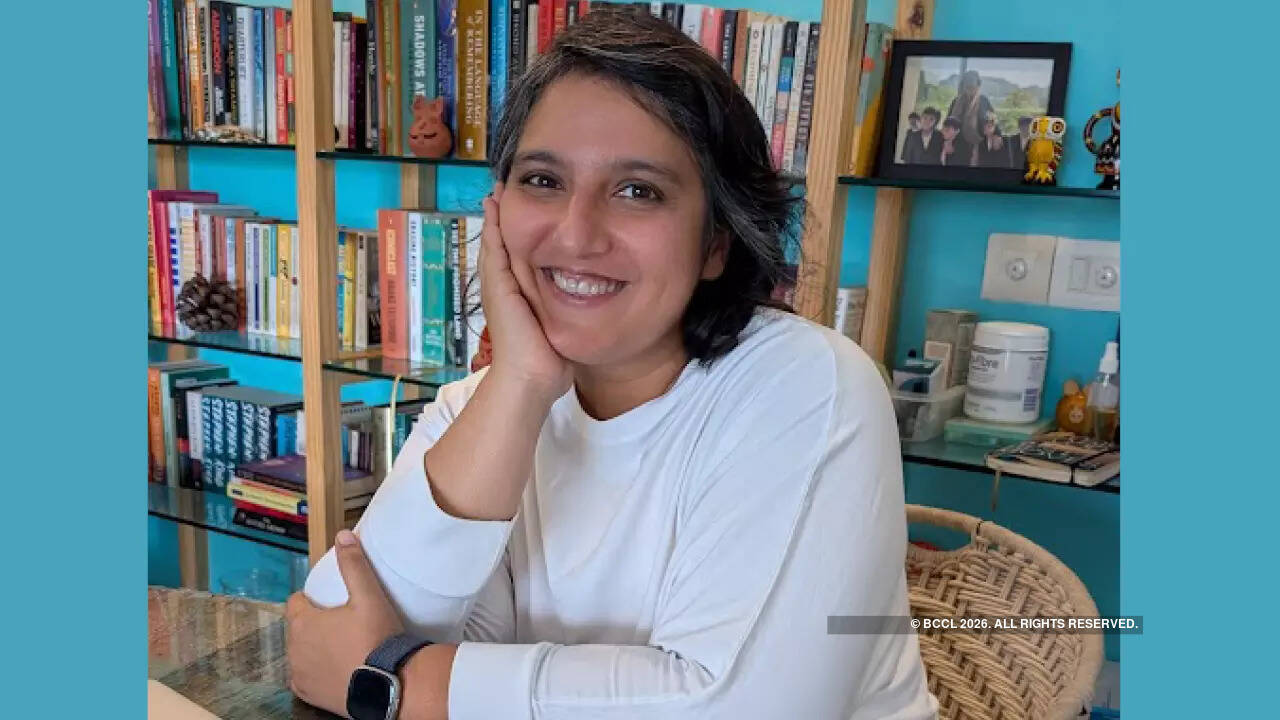
Aditi Anand
Long before cinema entered the frame, Aditi learned the grammar of trade, the art of negotiation, the realities of global businessBorn and raised in Delhi, Anand grew up in a household where patriotism was omnipresent but understated. Movies, curiously, were not. Her parents stopped watching Hindi cinema when Amitabh Bachchan grew older and less angry. As a child, Anand wanted to join the Indian Army. At the time, women were admitted only through technical corps. Science and Anand were never destined to be friends. The uniform dream ended there.Aditis shares how next came her enthusiasm for war journalism. But the 1990s were not exactly overflowing with wars, and journalism, she found, did not feel like home. What did endure were her college professors, who opened doors to histories and political narratives absent from popular culture. That gap - the stories missing from the record - began to pull her elsewhere.Between college and Bombay came a brief but formative detour: working with her father selling agricultural inputs abroad.
Her territory was Myanmar. There, Aditi shares that she learned the grammar of trade, the art of negotiation, the realities of global business. Long before cinema entered the frame, these experiences sharpened her instincts.Film school and the gravitational pull of Bombay completed the transition from history to storytelling.I stumbled into fiction almost by accidentBombay cinema proved both playground and proving ground. Anand began at the Times Group, moved to Walkwater Media (then part of Adlabs), where Tere Bin Laden became her first formal producer credit, and later joined UTV Motion Pictures. Her credits there include No One Killed Jessica, Paan Singh Tomar and Chillar Party - films that combined popular appeal with political and emotional heft.“I didn’t come into films thinking I’d be a producer,” she said. “I wanted to join the army. Then I wanted to be a war journalist. Then a documentary filmmaker. I stumbled into fiction almost by accident.”She went on to found Little Red Car Films (LRCF), a company with a split identity: service production for international non-fiction—projects that would later stream on Netflix and YouTube, including Unreported World, Cooked and The Story of Work—alongside independent features.The company’s most ambitious venture was The Extraordinary Journey of the Fakir, starring Dhanush alongside Erin Moriarty, Bérénice Bejo and Barkhad Abdi. Shot across continents and released in 56 countries, it marked Dhanush’s international debut. Abroad, it found audiences. At home, it faltered.“I was the real Fakir of that journey,” Anand often says. It broke her heart. It also hardened her spine.
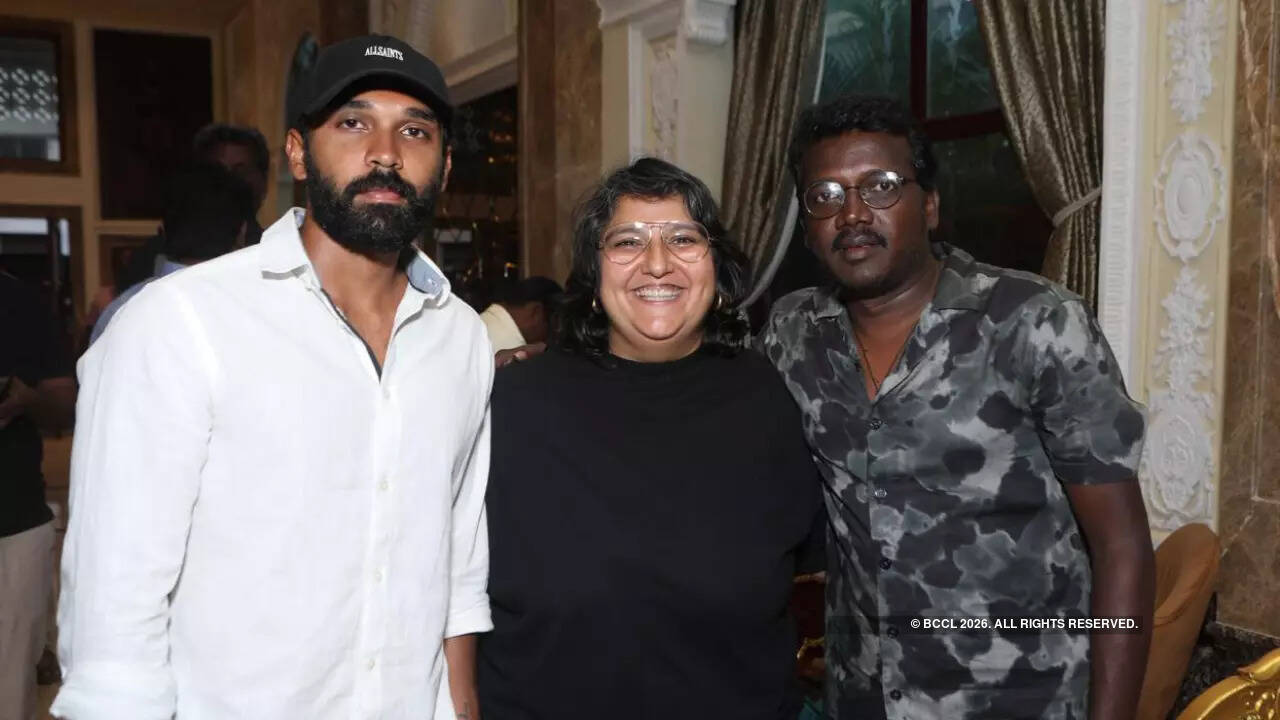
Bison Kaalamaadan made it to top 10 action films of 2025 by Letterboxd.
Kaala restored my faith in cinema as a political forceAs censorship tightened and creative space narrowed, Anand drifted toward cultural activism. Projects like India, My Valentine used pop culture to bridge ideological divides. Then she happened to watch Kaala.Aditi shares,"Directed by Pa. Ranjith, the film restored my faith in cinema as a political force. I first reached out with an emotional message after watching the film’s pre-climax Rajinikanth mask sequence - a five-minute distillation, I felt, of Indian political history. He replied within 20 minutes. A four-hour first meeting followed."Later, together, they co-founded Neelam Studios, a sister company to Ranjith’s Neelam Productions and Anand’s own LRCF. Their slate of Tamil films—Writer, J Baby, Akuva and others - has focused on narrative sovereignty and the power of communities telling their own stories.December 7, 2020, became a hinge in Anand’s life. It marked the start of production on Writer—delayed by the pandemic—and the day she and her partner, Susan, adopted their son. A double beginning.Tamil cinema, she says, became her real film school. It tested her politics, her patience, and her resilience as both an outsider and a woman in a male-dominated industry. Over time, she carved out credibility as a producer who could bridge Bombay’s studio machinery with the South’s deeply rooted storytelling traditions.
She is quick to acknowledge Manind, her business partner and confidant. “Without her, I’d have quit,” Anand admits.'We’ve dropped below 8,000 screens nationally'The Delhi screening of Bison unfolded against a troubling backdrop: shrinking screens, lopsided programming, and a theatrical ecosystem increasingly hostile to mid-size films.“We’ve dropped below 8,000 screens nationally,” Anand said. “And a huge chunk of them are in Andhra Pradesh and Telangana. That’s why Telugu cinema is having a renaissance. They still have density. In North India, a Hindi film releases on 1,000–1,500 screens across massive geography. There’s no buzz density. How does word-of-mouth work like that?”Revenue streams have collapsed. Music rights are nearly gone.
Satellite has shrunk. What remains is theatrical and OTT.Shre shares, “You can’t price fans out of theatres. A blue-collar worker can’t take a family of four to a multiplex. That’s killing the culture.” Entertaining doesn’t mean dumbing down the audienceAnand believes Hindi cinema has misunderstood entertainment itself. “Entertaining doesn’t mean dumbing down the audience,” she said. “People want to feel something.”She worries that the industry has stripped cinema of its magic. Single screens, she insists, are irreplaceable. “They keep the festival feel of cinema alive. Front stalls going crazy - that’s cinema. Multiplexes can’t replicate that.”
Life Beyond the Edit Room
Anand’s work extends far beyond films. She has co-founded or led initiatives including India, My Valentine, To Dharavi With Love and Rabies Mukt Bharat, and lent her time to efforts like Mission Oxygen. On the personal front, she and Susan were among the petitioners in India’s Equal Marriage case before the Supreme Court.They are now raising their son in a large, chaotic, loving joint family. Dogs - especially their beloved Bombil - are ever-present. Her bond with animals informs her advocacy for humane policies for strays across the country.Indian films are already globalDirected by Mari Selvaraj, Bison, a Tamil-language sports drama, is Neelam Studios’ next major release and one of its most ambitious undertakings yet. Anand speaks of it with almost childlike excitement.
“Like touching the sky,” she said.The socio-political drama had erupted into a blockbuster. The film’s success has been read not merely as a commercial triumph but as a cultural one: a story rooted in caste, conflict and the body as a site of resistance, delivered through the muscular grammar of sport.The film’s success suggested a hunger for entertainment, and for stories that interrogate power while remaining emotionally accessible.She remains convinced that India is on the cusp of a cultural breakout.
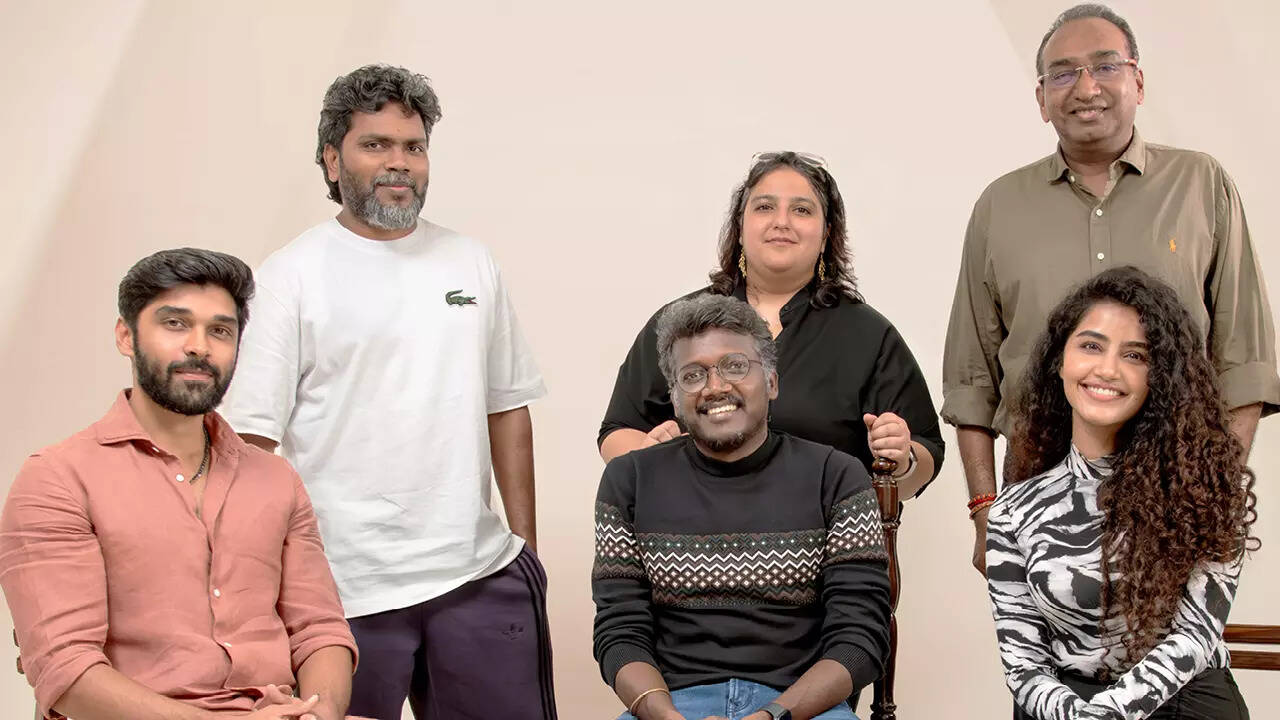
Indian films are already global. Indians are everywhere. Europe isn’t the whole world anymore. Africa, Southeast Asia, the Middle East- these are massive untapped markets.” She also stresses the need to back independent voices with real money and marketing muscle. “Korean cinema didn’t explode by accident. The state and studios backed their auteurs. We need to do the same.”
'When a film works, it’s the director and actor. When it fails, it’s the producer'Producing, she says, is stewardship, not status. “When a film works, it’s the director and actor. When it fails, it’s the producer.” Losing investor money, she admits, is devastating. Still, she persists.“There is nothing more powerful in this country than cinema,” Anand said. “Nothing. That’s why we must fight for theatres. If we don’t respect our fans, they’ll leave. And when they leave, cinema becomes just content. Not culture.”



 English (US) ·