

 1 hour ago
7
1 hour ago
7
ARTICLE AD BOX
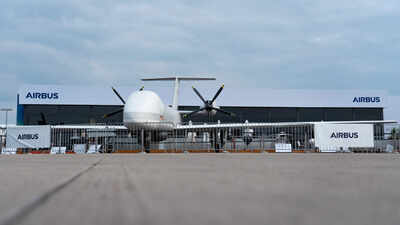
A full-scale mock-up of the Eurodrone equipped with a maritime search radar, sonobuoy dispenser, and lightweight torpedoes. (Image credit: Airbus)
An anti‑submarine warfare version of the Eurodrone has been developed in a joint collaboration between Japan’s Kawasaki and the European consortium Airbus.This move highlights the growing importance of unmanned platforms for maritime surveillance and reconnaissance, and underscores the rising threat posed by submarines.That threat is especially relevant for India, as both Pakistan and China are expanding their submarine fleets.Pakistan is set to induct eight Chinese-origin Hangor-class submarines, while China fields roughly 60 submarines. In the 1971 war, a Pakistani submarine sank the Indian frigate INS Khukri.India already operates advanced maritime assets such as MQ‑9 Sea Guardian drones and the P‑8I Poseidon. These platforms provide long‑range surveillance, but the Eurodrone project shows how unmanned systems can further strengthen India’s layered defences.India currently fields a dozen P‑8Is and in February cleared a deal for six more P‑8Is worth $3 billion, while the navy is due to receive 15 Sea Guardians from the 31 MQ‑9s ordered from the US in October 2024.Three lessons stand out:
- Persistent surveillance: Long‑endurance drones equipped with sonobuoys can patrol vast ocean areas for extended periods, allowing India to monitor Chinese submarine activity more effectively across the Arabian Sea and Bay of Bengal.
- Manned–unmanned teaming: Japan plans to integrate drones with Kawasaki P‑1 maritime patrol aircraft to form a manned‑unmanned system that boosts the effectiveness of manned platforms. India could adopt a similar approach by pairing drones with its P‑8I fleet, letting drones handle wide‑area detection.
- Cost‑effective coverage: Drones reduce the burden on expensive surface vessels and manned aircraft, freeing them for other missions. For India, which must cover both western and eastern seaboards, drones can help fill surveillance gaps without adding pressure on the fleet.
The Navy already operates the IAI Heron and has ordered Drishti‑10 drones, based on the Elbit Hermes 900.The Eurodrone initiative underscores that the future of anti‑submarine warfare will rely on persistent, increasingly autonomous drones working alongside ships and aircraft.









 English (US) ·