

 6 days ago
10
6 days ago
10
ARTICLE AD BOX
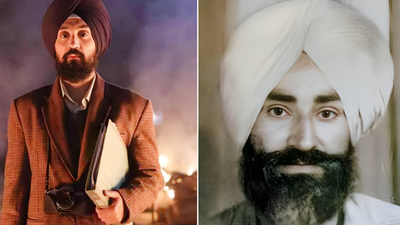
As debate continues over the film Satluj, Rajiv Singh Randhawa believes cinema has the power to carry the activist's story to audiences far beyond what books ever could.
AMRITSAR: Nearly 31 years after human rights activist Jaswant Singh Khalra was abducted outside his residence in Amritsar, the memory remains as vivid as ever for Rajiv Singh Randhawa, who says he witnessed the incident firsthand.As debate continues over the film Satluj, Randhawa believes cinema has the power to carry the activist's story to audiences far beyond what books ever could."The story of Jaswant Singh Khalra has travelled a remarkable journey," Randhawa said. Following Khalra's abduction from his Kabir Park residence on September 6, 1995, the case eventually reached the Supreme Court. A CBI investigation into the alleged illegal cremations in Punjab led to compensation being awarded to the families of more than 2,000 victims.
In 2006, a CBI court in Patiala convicted several police officials in connection with Khalra's abduction and murder.Recalling the morning of September 6, 1995, Randhawa said he had reached Khalra's residence around ten minutes before they were scheduled to leave for Patti cremation ground for a reporting assignment. Khalra had asked him to join because he was familiar with the border belt."At around 9:08 or 9:10 a.m., I heard a commotion outside. When I rushed to the gate, I saw Punjab police personnel forcibly taking Jaswant Singh Khalra away," Randhawa recalled.
"I told the officers that if the Senior Superintendent of Police wanted to question him, we were prepared to accompany them voluntarily. Instead, they pushed me to the ground and bundled him into a sky-blue Maruti van."Randhawa said the image of Khalra being driven away has never left him.He said "Books written on Khalra may have reached 30,000 or 35,000 readers, but a film starring Diljit Dosanjh can reach 30 to 35 lakh, perhaps even millions.
It will create awareness about Khalra's sacrifice and about the importance of human rights," he said.Reflecting on the decades-long legal battle that followed, Randhawa described it as an extraordinarily difficult journey. While he witnessed the abduction, he said it was Khalra's wife, Bibi Paramjit Kaur Khalra, who bore the heaviest burden, pursuing justice relentlessly while raising their two young children after her husband's disappearance.Stating that banning Satluj in India will not erase the horrific memories of police atrocities in Punjab during the militancy era of 1980s-90’s, Dal Khalsa, a Sikh body , spokesperson Kanwar Pal Singh said “The film is based on the life of human rights activist Jaswant Singh Khalra, who became victim of the state sponsored terrorism. The people of Punjab, who have lived through it and who have suffered the brunt of atrocities still live to tell the tales of custody torture, fake encounters and enforced disappearances”.
He said it is shameful that instead of recognizing and acknowledging the truth and facts, the Indian state wants to hide its dirty and deadly face from its people, said he adding that by banning the screening of the film in India to hide the brutal and ugly face of the uniformed cops, the government has by default admitted its own guilt and compliance, said both.In a significant tribute to slain Punjab human rights activist Jaswant Singh Khalra, the Fresno City Council in California renamed Victoria West Park as Shaheed Jaswant Singh Khalra Park on August 31, 2017,. The decision was taken to honour Khalra's courage and his efforts to expose alleged human rights violations and illegal cremations in Punjab during the militancy era. Khalra was abducted and killed in 1995 after documenting the disappearances.






 English (US) ·