

 4 days ago
6
4 days ago
6
ARTICLE AD BOX
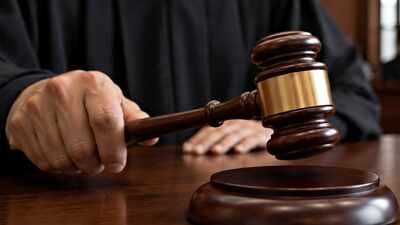
Importantly, the Court left the apportionment of liability undisturbed. (AI image)
In an important ruling on the scope of claims under the Motor Vehicles Act, 1988, the Supreme Court has held that injuries caused by a falling tree branch on a stationary auto-rickshaw do not arise out of the "use of a motor vehicle" so as to attract a claim under Section 166 of the Act.However, invoking its extraordinary powers under Article 142 of the Constitution, the Court enhanced the compensation payable to the injured claimant from Rs.17.10 lakh to Rs.25 lakh, observing that a person who had suffered life-altering injuries could not be left to undertake another round of litigation.A Bench comprising Justice Sanjay Karol and Justice Nongmeikapam Kotiswar Singh held that although the legal issue had to be decided against the claimant, considerations of complete justice warranted enhancement of compensation.Background of the CaseThe case arose from an accident that occurred on June 23, 2007, when respondent K.K. Umesh Kumar was travelling in an auto-rickshaw from Queens Road to Chinnaswamy Stadium in Bengaluru.Owing to heavy rain, he requested the driver to stop by the roadside and wait until the weather improved. While the vehicle was stationary beneath an old roadside tree, a branch detached and fell onto the auto-rickshaw, causing serious injuries to the respondent.
He was subsequently admitted to Mallya Hospital and underwent treatment.Seeking compensation of Rs.50 lakh, the respondent approached the Motor Accident Claims Tribunal.Tribunal And High Court ProceedingsThe Claims Tribunal dismissed the claim in April 2013, holding that the incident was the result of a natural calamity.The Karnataka High Court initially dismissed the matter on the ground of delay. That decision was challenged before the Supreme Court, which remanded the matter for reconsideration.In the second round of proceedings, the High Court awarded compensation of Rs.17.10 lakh.The liability was apportioned in the following manner:
- 50% upon the insurer of the auto-rickshaw;
- 25% upon the Bruhat Bengaluru Mahanagara Palike (BBMP);
- 25% upon the Horticulture Department of the Government of Karnataka.
The BBMP challenged the imposition of liability before the Supreme Court.BBMP And State Invoke 'Act Of God' DefenceThe Municipal Corporation and the Horticulture Department argued that the incident resulted from a natural occurrence beyond their control.The Court therefore examined the doctrine of "Act of God" or "Vis Major" and traced its origins through English and American decisions, including Nichols v. Marsland, Greenock Corporation v. Caledonian Railway Co., and The Majestic.The Bench also referred to Indian decisions including S. Vedantacharya v. Highways Department and Vohra Sadikbhai Rajakbhai v. State of Gujarat, where this Court had considered the exceptions to strict liability based on acts of God.Quoting from Vohra Sadikbhai Rajakbhai, the Court reiterated:“An act of God is that which is a direct, violent, sudden and irresistible act of nature as could not, by any amount of ability, have been foreseen, or if foreseen, could not by any amount of human care and skill have been resisted.”The Court also considered its earlier decision in Rajkot Municipal Corporation v. Manjulben Jayantilal Nakum, which dealt with liability arising from a falling tree. It observed that municipal authorities are under a duty to maintain roadside trees and ensure periodic maintenance.The Bench observed:"Because it is part of the city, the Municipal Corporation does have a duty to ensure that those trees are looked after, from the point of view of not only keeping the trees hale and healthy but also that periodic maintenance thereof is undertaken to ensure that unfortunate incidents such as these do not happen."At the same time, the Court acknowledged practical realities and held that constant vigilance over every tree and branch could not reasonably be expected.The Court observed:"It would be unrealistic to expect that authorities of the Corporation can maintain a constant vigil over each tree/shrub."The Bench added that the prudent solution could not be indiscriminate cutting of branches.The Court emphasized the importance of preserving trees in rapidly expanding cities.It observed:"The importance of trees especially in the ever-expanding concrete jungles that we call cities today cannot be overstated."The Bench noted that the primary responsibility of central and state authorities was to increase green cover and ensure long-term survival of trees through expert consultation.Clarifying its position, the Court stated:"Let it be stated, lest we be misunderstood that we are not even for a moment trivializing the injuries of the respondent or affording any escape to the appellant from its duty of maintaining the trees in the city."The principal issue before the Court was whether the incident could be said to arise out of the "use of a motor vehicle" under Section 165 and Section 166 of the Motor Vehicles Act.Referring to Shivaji Dayanu Patil v. Vatschala Uttam More, the Bench noted that the expression "arising out of" had to receive a liberal interpretation and that "use" of a motor vehicle extended even to situations where the vehicle was stationary.According to the Bench, the auto-rickshaw itself had played no active role in causing the accident.The Court observed:"The motor vehicle itself does not play an active role in the accident. It is not part of the proximate cause of the accident."It further noted that an identical incident could have occurred even if the respondent had been standing under the tree as a pedestrian.Therefore, the Court held:“For that reason, a claim under Section 166 specifically may not be appropriate.”Accordingly, the question of law was settled against the claimant.Despite deciding the legal issue against the respondent, the Court expressed concern that compelling him to initiate fresh proceedings would result in further injustice.Posing a series of questions, the Bench observed:"Will the respondent be forced to contend for compensation in another round of litigation? Is this conclusion in the interest of justice?"The Court answered the question in the negative and remarked:"A person who has suffered such life altering grievous injuries, being left in lurch, without any money to sustain himself, does not appeal to the conscience of justice."The Bench recorded that the respondent had suffered complete paraplegia in both lower limbs along with bladder and bowel incontinence. Therefore, the Supreme Court as the final constitutional court, observed:"It is within our domain, as the final Court of the country to ensure the law, as implemented, specially in cases like these, is humane and in accordance with the salutary principles of the Constitution."The Court further noted that the compensation awarded by the High Court was inadequate and had been determined by adopting a somewhat technical approach.Invoking Article 142 of the Constitution, the Bench enhanced the compensation to Rs.25 lakh together with interest from the date of filing of the claim petition.Importantly, the Court left the apportionment of liability undisturbed.It directed the BBMP, the Insurance Company and the Horticulture Department to deposit their respective shares within four weeks.Case DetailsCase: CIVIL APPEAL NO. __________________ OF 2026 (Arising out of SLP (C.) No. 1039 of 2021 Commissioner, Bruhat Bangalore Mahanagara Palike v. K.K. Umesh Kumar & Ors.Citation: 2026 INSC 637Bench: Justice Sanjay Karol and Justice Nongmeikapam Kotiswar SinghDate of Judgment: 11.06.2026(The author of this article, Vatsal Chandra is a Delhi-based Advocate practicing before the courts of Delhi NCR.)






 English (US) ·