

 58 minutes ago
6
58 minutes ago
6
ARTICLE AD BOX
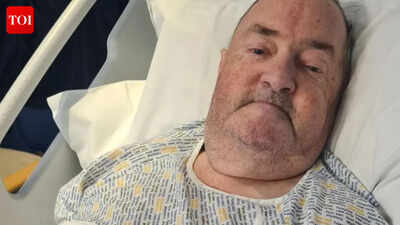
At first, all the signs pointed to dementia or Alzheimer's.Memory problems. Confusion. Changes in how he acted.The whole family worried, as the Flintshire father seemed to be slipping away.But when doctors looked closer, the truth blindsided everyone: not dementia, not something you can fight for years with medication and hope, but an incurable, fast-moving brain cancer.It’s the kind of nightmare that reminds you just how tricky the brain can be. Neurological conditions often wear the same mask, so it’s easy to miss what’s really happening. For Jimmy Glendinning and his family, the mix-up turned their lives upside down.
Jimmy Glendinning’s story
Per Wales Online, Jimmy, 68, retired, a Welsh man who loved walking, music, nature, and his family, started having trouble with his memory in April 2024. It was little things at first. His daughter Naomi, 38, remembers a phone call from her dad while he was in Sainsbury’s.She said, “Dad rang Mum from Sainsbury’s because he couldn’t remember why he was there or what he’d gone in to buy,” adding, “At first, we thought it might have been a mini stroke because he was struggling to get his words out, but the episode passed, and he carried on as normal.”
As the months rolled by, things got worse.Naomi shared, “As the months went on, he became more forgetful and started struggling to find the right words during conversations. Because his own mum had Alzheimer’s disease, my sister Helga was one of the first people to suggest he might be showing the early signs of dementia.” She added, “For months, that was genuinely what our family believed we were dealing with” — after all, their grandmother had it, too.
The thought was terrifying but almost familiar.They braced themselves for one tough diagnosis, not knowing it was about to get much worse.Through the summer of 2024, Jimmy changed.Naomi said, “Dad became more withdrawn and irritable, which wasn’t like him at all. Mum was becoming increasingly worried and kept trying to persuade him to see a doctor, but he kept putting it off,” adding, “By October, he was suffering terrible headaches, and we later discovered he’d been taking increasing amounts of painkillers just to cope.”What was even more surprising is that “He also started having episodes of confusion. One day he tried to make soup in a plastic jug on the hob and genuinely couldn’t understand why that was dangerous,” said Naomi, “That was one of the moments when we realised something was seriously wrong.”Eventually, Jimmy agreed to see the doctor. He was referred for tests, but before anything could happen, his condition tanked.On November 20, 2024, he lost feeling in his legs.
An ambulance rushed him to Glan Clwyd Hospital.Naomi recalled: “I was sitting in my home office when Mum called. At first, she wouldn’t tell me what was wrong and just asked me to come to the hospital. I knew immediately it had to be serious.” She added, “When she finally told me Dad had a brain tumour, I completely broke down. It was the worst news imaginable.”The family had been preparing for dementia, not this. The doctors found Jimmy had glioblastoma, the most aggressive kind of brain tumour.
They called it incurable.
What is glioblastoma?
Glioblastoma, earlier known as glioblastoma multiforme or GBM, is the most common and aggressive type of primary brain cancer in adults.Glioblastoma originates from astrocytes, a type of glial cell that supports nerve cells in the brain and spinal cord. Glioblastoma is classified as a Grade IV tumor, meaning it's highly aggressive, grows rapidly, and infiltrates surrounding brain tissue.
The exact cause of most glioblastomas is unknown. However, it is understood that the disease develops when brain cells undergo DNA mutations that cause them to grow and multiply uncontrollably.The prognosis for glioblastoma is generally poor, with a median survival of about 12-18 months after diagnosis. The five-year survival rate is around 5%, meaning about 5% of patients are still alive five years after their diagnosis.
Glioblastoma almost always recurs despite maximal treatment.
Fighting the incurable condition
Faced with those odds, Jimmy Glendinning chose to fight. He had surgery on December 10th, when surgeons removed as much of the tumour as they could. He made it through Christmas, but his recovery was a mess. He developed a major infection.“Mum woke up one morning and found blood on his pillow,” Naomi said, “What we thought was a minor complication quickly became something much more serious.
The infection spread, and Dad needed emergency surgery. Surgeons had to remove part of his skull, and there was a point where we genuinely thought we might lose him.”Jimmy survived, though. Seven weeks in hospital, then months of rehab. He battled through pulmonary embolisms, more treatment — chemotherapy and radiotherapy. Now, he uses a walker and has lost much of his old independence.Naomi said: “Dad still has the same dry sense of humour and determination that have always defined him,” adding, “Mum and my sister Helga share much of his day-to-day care, and his grandchildren, Nicola and James, give him plenty of reasons to keep fighting.”The Glendinnings have raised over £3,000 for Brain Tumour Research. They’re driven, partly, by the shock of discovering how little funding goes into this kind of cancer compared to others. “Before Dad’s diagnosis, I had no idea how underfunded this disease was,” Naomi says. Their goal now is simple: support research, push for better tests, and give families better odds.Brain Tumour Research’s Letty Greenfield sums it up: “Jimmy’s story proves these tumours can happen to anyone.
We need more awareness, more funding, and stories like the Glendinnings’ to help turn things around.”
Why brain tumours get mistaken for dementia
Doctors have said it for years: brain tumours can look a lot like dementia if they develop in the wrong spot. The brain handles everything from memory to mood, so tumours in certain areas can trigger forgetfulness, confusion, personality shifts, and trouble doing daily tasks. Families often chalk it up to aging or Alzheimer’s when it’s something else entirely.That overlap is dangerous. It delays the right diagnosis. Tumours keep growing while everyone’s focused on the wrong problem.
What’s the lesson?
Jimmy’s case is a harsh reminder of how brain tumours not only threaten your body, but also shift your personality, your ability to talk, and your relationship with your family. That makes things especially tough, and it’s why families living with these diagnoses call for more research and support.Jimmy Glendinning’s story serves as a warning that underlines to never ignore neurological symptoms. If someone shows sudden memory loss, personality changes, confusion, or these things get worse fast, seek professional consultation. It’s not always dementia: it could be a tumour, a stroke, a vitamin problem, bad reactions to meds, or another treatable issue.For the Glendinnings, a scary brush with suspected Alzheimer’s set them on a completely different path, one that’s forced them to rethink everything. Their message is clear: neurological symptoms deserve urgent, thorough medical attention. Sometimes, looking for Alzheimer’s leads to a completely different, deadly discovery.








 English (US) ·