

 1 week ago
7
1 week ago
7
ARTICLE AD BOX
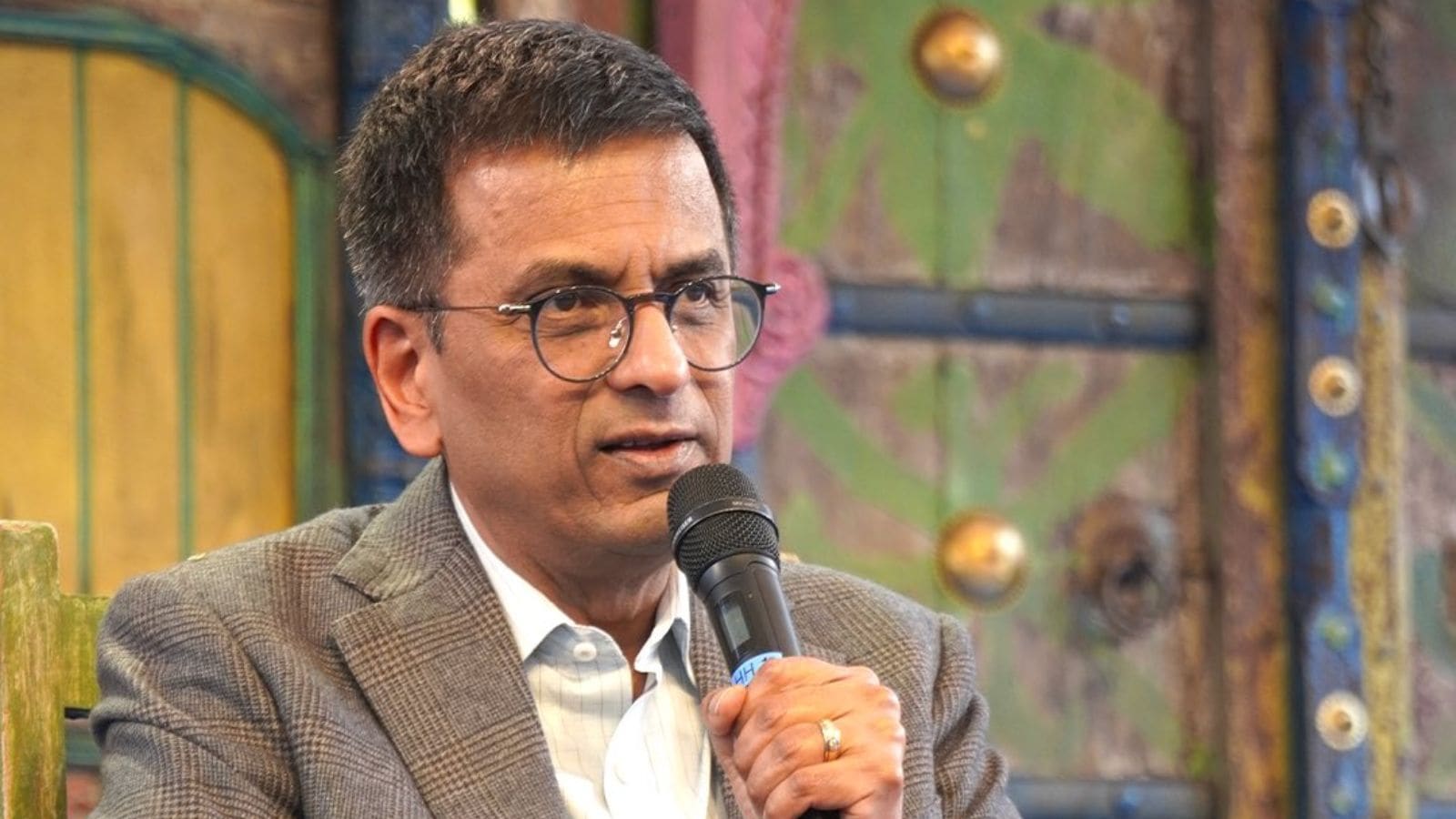 Speaking about bail pleas reaching the Supreme Court after being denied by sessions and district courts, Justice Chandrachud said that judges often fear their integrity might be questioned, calling it a matter of concern. (Jaipur Literature Festival/Facebook)
Almost two weeks after activists Umar Khalid and Sharjeel Imam were denied bail by the Supreme Court of India in the 2020 Delhi riots conspiracy case, former Chief Justice of India D Y Chandrachud remarked that bail before conviction should be a matter of right. He, however, stressed that it is a court’s duty to examine a case in depth, especially where national security is involved, before granting such relief.
Responding to a question by senior journalist Vir Sanghvi during a session titled “Ideas of Justice” at the ongoing Jaipur Literature Festival, Chandrachud said: “Bail before conviction should be a matter of right. Our law is based on a presumption, and that presumption is that everyone is innocent until proven guilty.” Speaking further about the time lost by undertrial prisoners, he added, “If someone remains an undertrial prisoner for five or seven years and is finally proven innocent, how will you compensate for the time lost?”
What court said while denying Umar Khalid bail?
While denying them bail, the court had described Khalid and Imam as the “ideological drivers” and “masterminds”, who formulated the strategy of converting protests against the Citizenship (Amendment) Act into “disruptive chakka jams or road blockades to paralyse Delhi”. The Bench of Justices Aravind Kumar and NV Anjaria granted relief to five other accused—Gulfisha Fatima, Meeran Haider, Shifa Ur Rehman, Mohd Saleem Khan, and Shadab Ahmed.
In its ruling, the top court had created a framework of differentiated roles among the alleged conspirators, distinguishing between the “architects” of the conspiracy and its “facilitators”. The Supreme Court held that in an alleged conspiracy of this magnitude, the “ideological drivers” cannot claim parity with those accused of merely executing orders on the ground.
Khalid and the other accused were booked under Section 15 of the stringent Unlawful Activities (Prevention) Act (UAPA), which defines a terrorist act and criminalises actions carried out with intent to threaten, or likely to threaten, the unity, integrity, security, economic security, or sovereignty of India, or to strike terror among the people or any section of the population.
When can bail be denied? Chandrachud answers
Chandrachud said that bail can be denied if there is a possibility of the accused returning to society and committing the crime again, tampering with evidence, or using bail to evade the law. “If these three grounds are not present, then bail must be granted. I think that where national security is involved, it is the court’s duty to examine the case in depth. Otherwise, what happens is that people remain imprisoned for years,” he said.
Speaking about bail pleas reaching the Supreme Court after being denied by sessions and district courts, Justice Chandrachud termed it a matter of concern and added that judges often fear their integrity might be questioned “This is the reason why bail cases reach the Supreme Court,” he said.




 English (US) ·