

 1 week ago
11
1 week ago
11
ARTICLE AD BOX
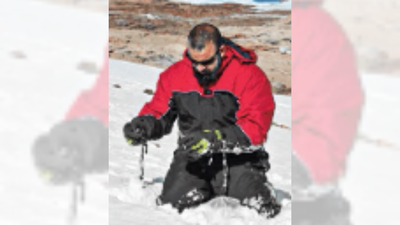
Scientists from the National Centre for Cell Science (NCCS) in Pune have identified a previously unknown species of bacterium collected from the ice-cold sediments of an Antarctic lake — a microbe so tough it can survive 85 minutes of direct ultraviolet radiation that would kill most living cells.The sample containing the organism, now named Deinococcus pantiae, was collected in 2019 during India’s 38th scientific expedition to Antarctica, from a lake in the Schirmacher Oasis, Queen Maud Land, where temperatures plunge below zero, nutrients are almost non-existent, and UV radiation is intense.The microbe’s name honours Aditi Pant, the first Indian woman scientist to visit Antarctica, in 1983. The bacterium’s genome revealed biological pathways that could produce vitamins, generate natural antioxidants, and break down pollutants — capabilities with potential in medicine, manufacturing, and environment cleanup.
“Naming the organism after Pant is an important way to acknowledge and celebrate women in science,” said Avinash Sharma, senior scientist, NCCS, who led the research.”The bacterium is a tiny redpigmented sphere, less than 1.3 micrometres across. “It carries a sophisticated biological toolkit. We found multiple overlapping defense systems that explain how it endures conditions fatal to most other life forms,” said Sharma.
The red pigment comes from carotenoids — natural antioxidants that shield the cell from UV damage. Beneath it is a full arsenal of DNA repair genes, internal production of glutathione — one of nature’s most powerful antioxidants — and pathways for trehalose, a sugar known to protect cells against freezing, desiccation, and radiation.The genome also contained pathways for producing folic acid (vitamin B9) internally — valuable for sustainable bio-based vitamin manufacturing — and the ability to break down benzoate compounds, a class of aromatic pollutants common in industrial waste.“That last capability raises the possibility of using the bacterium or its enzymes in environmental cleanup operations,” Sharma said. “Climate change is reshaping polar habitats faster than science can document them, and some microbes which are suited only for the old conditions may vanish before they are found.”The research, funded by the Science and Engineering Research Board of the Union govt, has been published in the International Journal of Systematic and Evolutionary Microbiology. The research team includes Namrata Jiya, Wormirin Khudai, Bhavuk Gupta, along with Dr Sharma at BRIC-NCCS, Pune, in collaboration with CSIR-Institute of Microbial Technology, Chandigarh.









 English (US) ·