

 6 days ago
8
6 days ago
8
ARTICLE AD BOX
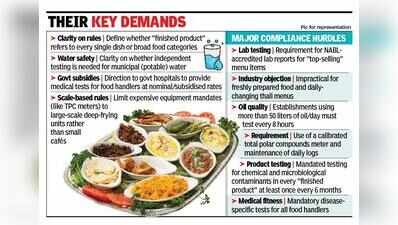
Pune: Restaurant operators in the city have raised concerns over new compliance requirements introduced by the Maharashtra Food and Drug Administration (FDA), stating they are impractical for day-to-day operations—particularly for establishments serving freshly prepared meals.The statewide drive, conducted by the FDA as part of its “safe food, healthy Maharashtra” campaign, has already led to a wave of inspections, closures, and legal actions. However, restaurant owners argue that the line between food safety and logistical impossibility is being blurred.A primary point of contention is the requirement to maintain NABL-accredited laboratory test reports for popular menu items. A source from the National Restaurant Association of India (NRAI), speaking on condition of anonymity, said, “Testing makes sense for packaged or frozen products with a long shelf life.
However, in restaurants, dishes are prepared fresh and consumed immediately. A lab report on one batch cannot represent every freshly cooked serving.
”The source cited thali restaurants as an example, where menus change daily. “A dish served today might not be prepared again for weeks. Testing every such item has little practical value and creates an immense financial burden,” they added.Operators are also struggling with updated medical certification rules.
While fitness certificates for food handlers have long been standard, establishments are now reportedly being asked to conduct multiple disease-specific tests for every employee.“Medical tests can cost between Rs8,000 and Rs10,000 per person,” said a restaurant owner in Pune’s Camp area. “The industry has high staff turnover; spending this much on a worker who may leave in a few months is difficult. We are currently waiting for slots at govt hospitals because private labs are prohibitively expensive.”In response, an NRAI legal representative urged the state to intervene: “We request the govt to direct state hospitals to conduct these mandatory tests at nominal rates, as they are currently unavailable at subsidised rates in the public sector.”The FDA also mandates that businesses using more than 50 litres of oil a day must test cooking oil every eight hours using a calibrated total polar compounds (TPC) meter.“A TPC meter costs at least Rs50,000,” said a restaurant owner from NIBM.
“While large chains can absorb this cost, it is a significant burden for small cafés. This requirement should be scaled based on the actual volume of frying an establishment performs.”The industry has also questioned requirements relating to water testing. “Where restaurants use municipal potable water, operators feel there should be greater clarity on whether repeated independent testing is required,” another restaurateur said.The FDA remains firm on the necessity of the drive. “It is the duty of restaurants to test high-risk food items and conduct water testing,” a senior FDA official said. “They must identify items at risk of contamination and ensure they are safe for public consumption.”The “safe food, healthy Maharashtra” order covers a wide range of operational requirements, including hygiene, storage, waste management, and labeling. While the industry maintains that it supports food safety, owners are calling for a meeting with authorities to draft guidelines based on “ground realities.”







 English (US) ·