

 1 week ago
12
1 week ago
12
ARTICLE AD BOX
4 min readNew DelhiUpdated: Apr 14, 2026 06:33 PM IST
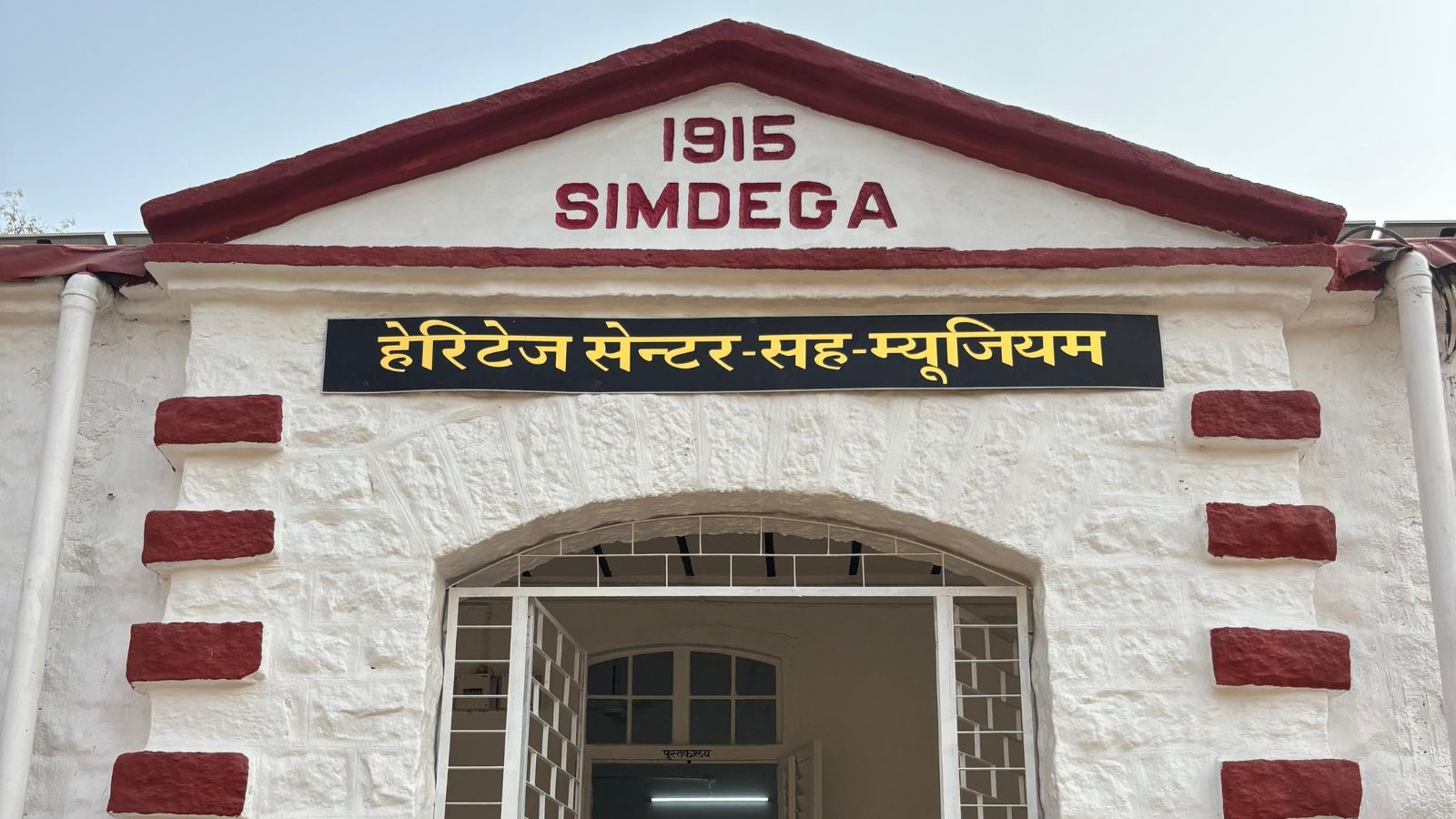 The Simdega museum brings together colonial records and objects from everyday tribal life. (Express photo)
In Jharkhand’s Simdega, near the borders of Odisha and Chhattisgarh, a colonial-era administrative building has been turned into a museum, transforming a site once tied to authority into a space for memory, learning, and community engagement.
Reopened on March 7, 2026, it now houses the Simdega Heritage Centre cum Museum.
Located in the forested southwestern part of the district, the building carries a layered history. A photograph from 1947 shows it as one of the earliest sites in the region where the Indian tricolour was hoisted, marking the end of colonial rule.
“The districts of India are not merely administrative units shaped by governments,” said Dipankar Choudhary, secretary of the museum’s management committee, during the inauguration. “They embody distinct cultural and historical identities. In a country where local cultures are rapidly eroding, institutions like district museums become essential,” Choudhary added.
Where histories meet
Today, its rooms tell a different story.
The museum brings together colonial records and objects from everyday tribal life. Visitors can see bamboo tools, fishing traps, oil-pressing devices, and hunting instruments alongside archival documents. Curated with inputs from local communities, these artefacts reflect knowledge systems passed down through generations.
A recreated British-era courtroom offers a glimpse into colonial justice, while a small library provides space for reading and reflection. Together, these elements shift the building’s role—from administration to interpretation.
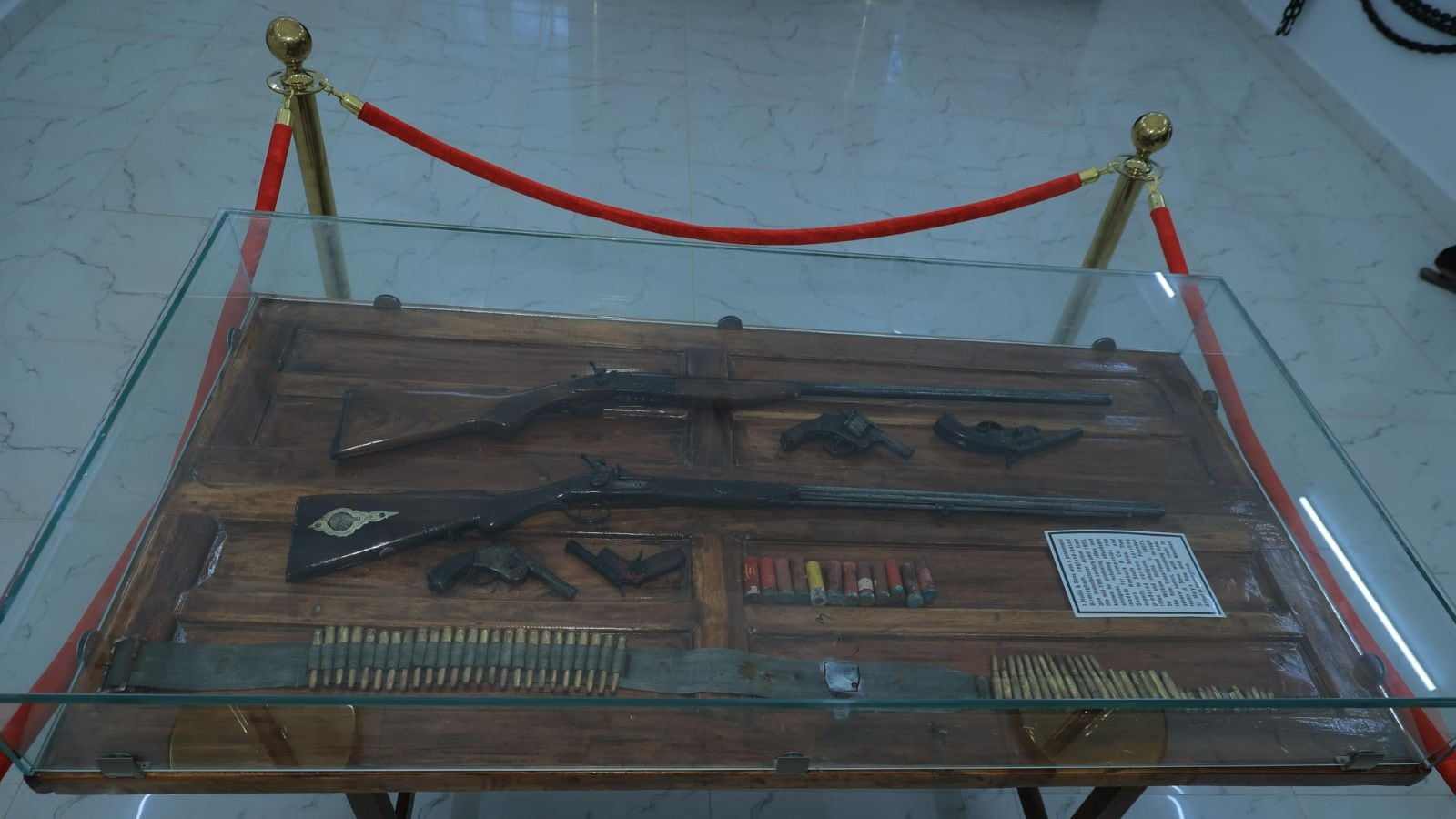 The Simdega museum has interesting exhibits such as guns, cartridges and a lot more from the colonial era. (Express photo)
This contrast is deliberate. On one side are official records and correspondence from the colonial period; on the other are the tools and traditions of the communities that lived through it. By placing these narratives side by side, the museum presents a fuller account of the region’s past.
Story continues below this ad
What sets the initiative apart is its community-led model. Local women from self-help groups manage the museum, with support from the Jharkhand State Livelihood Promotion Society. They guide visitors, maintain exhibits, and run a small café, making the space both a cultural centre and a source of livelihood.
The museum also encourages intergenerational exchange. Older residents explain traditional tools such as Sunum Patta and Kumni to younger visitors, many of whom are seeing them for the first time. These interactions help ensure that cultural knowledge is not only preserved but also understood.
Difficult past, remembered
The building’s history also reflects more difficult and painful memories.
Archival records from 1917 show that British officials stationed here coordinated the recruitment of tribal labourers during World War I. A letter dated May 28, 1917, attributed to E H Johnston, an Indian Civil Service officer and an Indologist, refers to funds requested for this effort.
Story continues below this ad
Many of these men were sent to Europe as labourers, tasked with digging trenches, laying tracks, and supporting wartime logistics. For many, it was their first time leaving home, and for families, their absence left lasting scars.
While colonial records document numbers and movement, they say little about lived experience. That history survives largely through oral traditions.
The museum displays a Mundari song that describes France not as a land of opportunity but of sorrow: “People who went to France say it is a very prosperous land, but there is no happiness there. Streams of blood have flowed from all sides.”
These songs, which are passed down over generations, preserve emotional truths absent from official archives.
Story continues below this ad
For decades, these parallel histories, archival and oral, remained separate. The reopening of this building begins to bridge that gap. Today, the building stands both as a reminder of the past and a space where history is reclaimed and retold. By bringing together official records and community memory, it allows both to coexist.
In doing so, it changes how history is experienced, making it lived, shared, and still unfolding rather than distant.

Manas Srivastava leads the UPSC Essentials section of The Indian Express (digital). He majorly writes on UPSC, other competitive exams and education-related projects. In the past, Manas has represented India at the G-20 Youth Summit in Mexico. He is a former member of the Youth Council, GOI. A two-time topper/gold medallist in History (both in graduation and post-graduation) from Delhi University, he has mentored and taught UPSC aspirants for more than five years. His diverse role in The Indian Express consists of writing, editing, anchoring/ hosting, interviewing experts, and curating and simplifying news for the benefit of students. He hosts the YouTube talk show called ‘Art and Culture with Devdutt Pattanaik’ and a LIVE series on Instagram and YouTube called ‘LIVE with Manas’.His talks on ‘How to read a newspaper’ focus on newspaper reading as an essential habit for students. His articles and videos aim at finding solutions to the general queries of students and hence he believes in being students' editor, preparing them not just for any exam but helping them to become informed citizens. This is where he makes his teaching profession meet journalism. He is also the editor of UPSC Essentials' monthly magazine for the aspirants. He is a recipient of the Dip Chand Memorial Award, the Lala Ram Mohan Prize and Prof. Papiya Ghosh Memorial Prize for academic excellence. He was also awarded the University’s Post-Graduate Scholarship for pursuing M.A. in History where he chose to specialise in Ancient India due to his keen interest in Archaeology. He has also successfully completed a Certificate course on Women’s Studies by the Women’s Studies Development Centre, DU. As a part of N.S.S in the past, Manas has worked with national and international organisations and has shown keen interest and active participation in Social Service. He has led and been a part of projects involving areas such as gender sensitisation, persons with disability, helping slum dwellers, environment, adopting our heritage programme. He has also presented a case study on ‘Psychological stress among students’ at ICSQCC- Sri Lanka. As a compere for seminars and other events he likes to keep his orating hobby alive. His interests also lie in International Relations, Governance, Social issues, Essays and poetry. ... Read More
Stay updated with the latest - Click here to follow us on Instagram
© The Indian Express Pvt Ltd



 English (US) ·