

 1 hour ago
5
1 hour ago
5
ARTICLE AD BOX
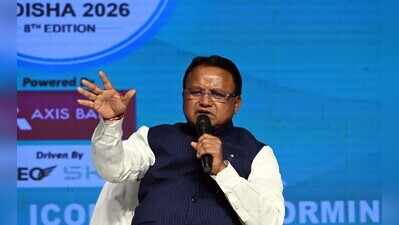
CM Mohan Charan Majhi during an event in Bhubaneswar on Thursday
Your govt has completed 2 years in office. What are the most visible changes on the ground that set your administration apart from the previous govt?The biggest change people have experienced over the last two years is the accessibility of the govt.
Ours is a people’s govt. Earlier, there was widespread perception that common citizens could not easily approach or meet the chief minister.
Today, that gap has been removed.People can directly meet me, share their grievances and expect a prompt response. The Chief Minister’s Grievance Cell is functioning actively, with ministers and senior officials also present to listen to citizens and resolve their concerns.
In many cases, issues are addressed on the spot.What distinguishes our govt is this direct connection with the people. Governance is no longer distant or inaccessible. Citizens can now see, feel and experience a govt that is responsive, approachable and accountable.You recently said your govt has been working “as if there is no tomorrow.” Has governing Odisha made you more impatient about results? More importantly, are people seeing tangible outcomes on the ground?When I say we are working “as if there is no tomorrow,” I mean that our govt is focused on delivering results in real time rather than postponing decisions.
We are committed to acting with urgency and ensuring that promises translate into outcomes.Over the past two years, we have implemented several major schemes and initiatives while working tirelessly to accelerate Odisha’s development. Unlike the past, our emphasis has been on execution and timely delivery.One of the clearest indicators of this approach is the growing investor confidence in Odisha. The state has attracted significant investments across 16 sectors, and many of these commitments are now being translated into projects on the ground.With a BJP govt in West Bengal, do you see competition emerging within the same political ecosystem for attracting large investments and infrastructure projects? How does Odisha plan to maintain its edge?Healthy competition among states is natural and beneficial for the country’s growth. Today, several BJP and BJP-supported govts are working to attract investments, but Odisha has unique strengths that make it an attractive destination for industry.We are endowed with abundant natural resources, including coal and iron ore, a long coastline, strong infrastructure and a progressive industrial policy framework.
Our investor-friendly policies, incentives and focus on speedy execution have helped us attract project intentions worth over Rs 20 lakh crore. These inherent advantages give Odisha a strong competitive position.Every state will make its own efforts to attract investors, but Odisha’s ability to provide resources, connectivity, policy stability and quick decision-making sets us apart. Investors today are looking not just at policy announcements but also at how fast projects are grounded, and that is where Odisha has shown significant progress.The results are visible on the ground. Companies such as Page Industries have expanded their presence in Odisha, creating thousands of jobs, particularly for women. I recently interacted with a young woman working at a Page Industries facility who had returned to Odisha from Coimbatore for employment. For us, that is a powerful symbol of change.The threat of El Niño is often linked to irregular rainfall and pressure on agriculture. How prepared is Odisha to ensure that its Vision 2036 and Vision 2047 goals stay on track despite such climate-related challenges?Odisha’s Vision 2036 and Vision 2047 are ambitious but achievable. We are fully aware that climate-related events such as El Niño can affect rainfall patterns, agricultural output and, consequently, economic growth.
To address these risks, the govt is strengthening preparedness and building resilience across the agriculture sector. Agriculture remains a key pillar of Odisha’s economy, and we are taking proactive measures to minimise disruptions.
Our focus is on ensuring that climate uncertainties do not derail the state’s long-term development agenda and growth trajectory.Tensions in West Asia have created concerns over energy prices and global economic stability. How do you see these developments impacting Odisha’s growth, including its goal of becoming a $500 billion economy?The conflict in West Asia has led to volatility in global oil and gas prices, creating economic pressures across countries, including India. However, under the leadership of Prime Minister Narendra Modi, India’s diplomatic outreach and efforts to diversify energy sources have helped manage these challenges effectively. Odisha continues to record strong economic growth, attract large-scale investments and create new opportunities across sectors.
Our goal of transforming Odisha into a $500-billion economy is ambitious, but we are moving in the right direction.






 English (US) ·