

 1 hour ago
4
1 hour ago
4
ARTICLE AD BOX

The spotlight only tells half the story. For every red carpet appearance, film credit or viral music video, there are dozens of auditions that never convert, roles that slip away without explanation, and internal battles no one sees.
The Hindi film industry may appear glamorous from the outside, but beneath that sheen lies a system built on relentless evaluation — where talent, timing, temperament and luck intersect in unpredictable ways.In candid conversations with ETimes, actor Alankrita Sahai, actor Naira Shah, and casting director-actor Piyush Raina open up about what it truly takes to survive and grow in Bollywood. From the anxiety of a first audition to the quiet recalibration that follows rejection, their journeys reveal that the real test of an actor isn’t fame — it’s resilience.
The first audition: Fear dressed as hope
For Alankrita Sahai, the memory of her first audition is cinematic in itself — but not in the way audiences imagine.“My very first audition was a cocktail of emotions, dominated predominantly by fear,” she recalls. “It was a moment steeped in uncertainty, as I stood on the precipice of my dreams, heart racing and palms clammy.”In the ten minutes before entering the audition room, her mind was “a tempest” — swinging between hope and doubt.
She reminded herself that every actor before her had stood in similar shoes. “This was merely a step in my journey, not the defining moment.”That distinction — between a step and a verdict — becomes a survival skill.For Naira Shah, the first audition wasn’t poetic. It was disorienting.“I was clearly very anxious and very underconfident. I didn’t know what to do because I was just thrown into it. I had no experience, no expertise — I was simply there to give an audition.”There is something brutally democratic about the audition room. It strips away glamour. It reveals vulnerability. And it equalises everyone — whether they come from privilege or not.Over time, Naira says, repetition became training. “By giving so many auditions, I trained myself. There came a point when I started feeling comfortable.”Comfort, however, doesn’t eliminate fear. It coexists with it.
When ‘no’ feels like identity
Rejection in acting is not occasional. It is constant. Actors may audition 25 to 50 times and be shortlisted only twice — with no guarantee of selection.“Initially, I used to think that maybe I was lacking something,” Naira admits. “But in a way, that mindset helped me.”In an industry that rarely offers feedback, silence becomes its own teacher. “Nobody is going to sit you down and say, ‘You didn’t do well because of this.’ Most of the time, you’re simply rejected.”This forces actors into self-analysis. Reflection becomes routine. Growth becomes self-driven.Alankrita speaks of a pivotal shift — the moment rejection stopped feeling like a verdict on her worth.

“There came a pivotal moment when I grasped that rejection in this industry is not a reflection of my worth as a person.”But before that realisation, she too felt suffocated. And like many actors, she experienced a phase where she felt pushed into a mould — a specific look, a specific archetype.That pressure led to introspection rather than compliance. “It prompted a profound commitment to carve my own path.”The emotional recalibration from “I am not enough” to “I am not the fit for this” is subtle — but transformative.
Is the industry trying to fit actors into a box?
Interestingly, Naira offers a different perspective.“Honestly, no. I feel the industry has changed. It embraces how you project yourself.”

Her struggle, she says, was internal rather than structural.“For nearly seven years, I wasn’t comfortable in my own skin.”She believed losing weight would unlock opportunities. When it didn’t, she chased “perfection.” Only later did she realise: “There is nothing like perfection in acting.
The more imperfect you are, the more relaxed you are in your skin, the better actor you become.”Self-doubt, she notes, is visible on camera. “Once you let go of that doubt, you become more confident and clear.”In an industry obsessed with image, authenticity has quietly become currency.
Lessons from the audition room
The audition process teaches a brutal lesson in power dynamics. Actors often feel powerless when they are not selected.“I believe you feel powerless when you don’t get selected,” Naira says.
“But it is patience that keeps you going.”Patience, in this context, is not passive waiting. It is active endurance — showing up again and again despite uncertainty.Alankrita reframes power differently.

“Power lies not in placing myself in the industry’s hands but in owning my narrative and decisions.”This distinction is critical. The industry may control selection. But the actor controls preparation, self-perception and persistence.Both women converge on one truth: self-worth cannot be outsourced to casting results.
The struggle years: Necessary rite or avoidable hardship?
There is a romanticised myth in Bollywood that struggle builds character. But does it need to be this harsh?Alankrita believes her challenges were essential. “Each challenge forged resilience and an unwavering commitment to my art.”Yet she wonders whether the industry could be kinder without losing its depth — whether talent can be nurtured rather than tested through fire.Naira, coming from a middle-class family, describes entering the industry as a “huge deal.” The outside world sees glamour. The insider sees unpredictability.“I feel I’m still in the process. I’ve just taken step one.”Her belief in luck and timing is pragmatic rather than naïve. “There are so many talented people doing their best, but not everyone gets opportunities. I believe in destiny and timing.”Struggle, in this sense, becomes both unavoidable and uneven.
It shapes actors — but not always fairly.
What casting directors actually see
From the other side of the camera, Piyush Raina offers clarity.
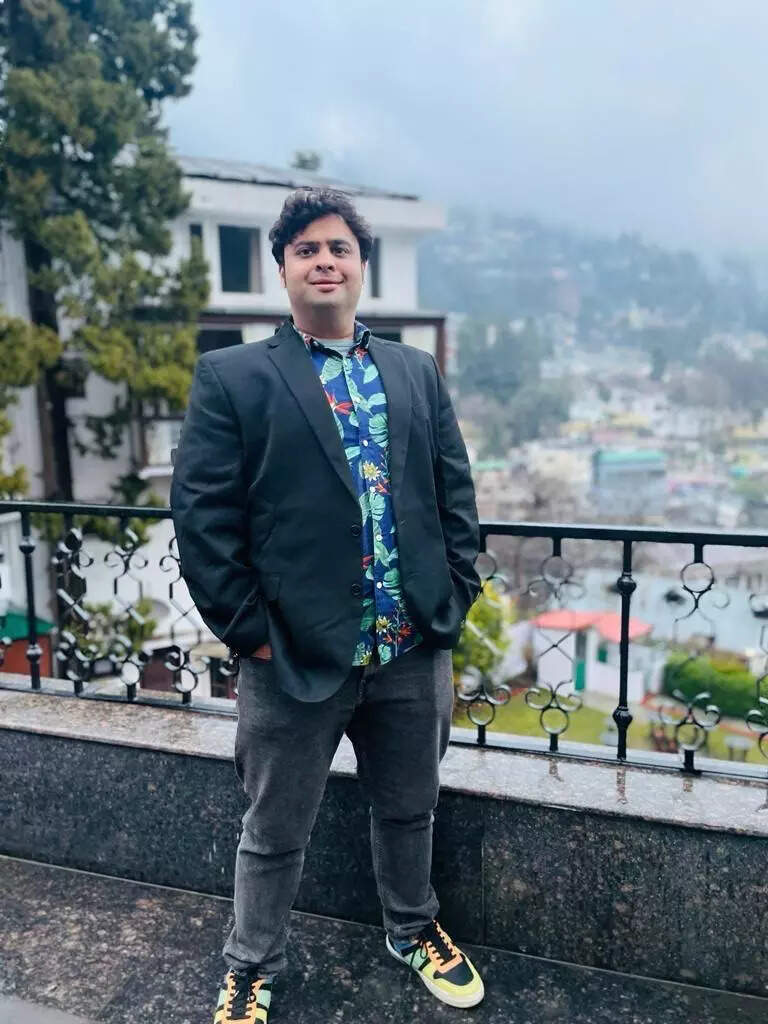
“When I watch an audition, in the first few seconds I just ask myself — do I believe this person?”Not performance. Not glamour. Not theatrics. Believability.“If I feel like they’re ‘acting,’ I’m already disconnected.”This reveals an important tension: actors fear rejection as a commentary on talent, while casting decisions may hinge on something far more specific — chemistry, alignment, client vision, even a 5% difference in imagination.“The biggest misconception actors have?” he says. “They think rejection means they weren’t good.”Most of the time, he explains, it’s not personal. It’s alignment.He also emphasises attitude. “I’d take a good actor who listens over a brilliant actor who’s difficult.”Filmmaking is collaboration, not a solo act. Emotional intelligence can outweigh raw ability.
Is Bollywood becoming more inclusive?
Raina believes the landscape is shifting — slowly.“OTT has changed a lot. Real faces, real stories — they connect.”Authenticity is beginning to outrank glamour. But mainstream advertising and big-budget films still often play safe.The democratization of storytelling is gradual. The hunger for relatability is growing.For actors like Naira and Alankrita, this shift means something profound: the industry may finally be catching up with individuality.
Hunger vs freedom: What drives an actor today?
There comes a phase when the hunger to prove oneself softens into something quieter — creative freedom.“Today, my motivation is anchored more in the freedom to explore my art than the hunger to prove myself,” Alankrita says.Naira echoes a similar evolution.

“What drives me now is the desire to truly enjoy the journey.”Earlier, she says, stress about work worked against her. Now, she focuses on staying in the moment. “If you’re good at what you do and honest about your craft, people will eventually notice you.”This shift — from validation to exploration — marks emotional maturity.It does not eliminate ambition. It redefines it.
Beyond the spotlight
What emerges from these conversations is not a fairy tale — but a psychological blueprint.Auditions test vulnerability. Rejection tests ego. Struggle tests endurance. Success tests humility.The actor’s journey in Bollywood is less about becoming famous and more about becoming internally steady.As Naira puts it simply, “It still feels like step one. I’m just going to keep taking baby steps.”And perhaps that is the most honest description of the craft:Not a destination.Not a breakthrough moment.But a continuous negotiation between fear and faith — played out long before the camera ever rolls.







 English (US) ·