

 54 minutes ago
5
54 minutes ago
5
ARTICLE AD BOX
Last Updated:July 10, 2026, 11:30 IST
Open-source assessments tracking militant violence estimate that more than 150 Pakistani security personnel have been killed in Balochistan over the past eight weeks


The organisation has also developed specialised units such as the Majeed Brigade, known for carrying out suicide attacks. (Shutterstock)
Pakistan’s security situation in Balochistan has deteriorated sharply over the past two months, with a series of coordinated attacks by the banned Balochistan Liberation Army (BLA) and other separatist groups exposing what analysts describe as serious intelligence and operational shortcomings within the country’s security establishment.
The escalating violence has reportedly prompted Pakistan’s top civilian and military leadership to visit the provincial capital, Quetta, amid growing concerns over the state’s ability to contain the insurgency.
The latest wave of attacks has reignited debate over whether Islamabad is steadily losing its grip over Pakistan’s largest and resource-rich province.
Sharp Rise In Attacks
The recent offensive has seen insurgents launch coordinated attacks across multiple districts, including Quetta, Gwadar, Mastung, Kalat, Nushki and Kharan.
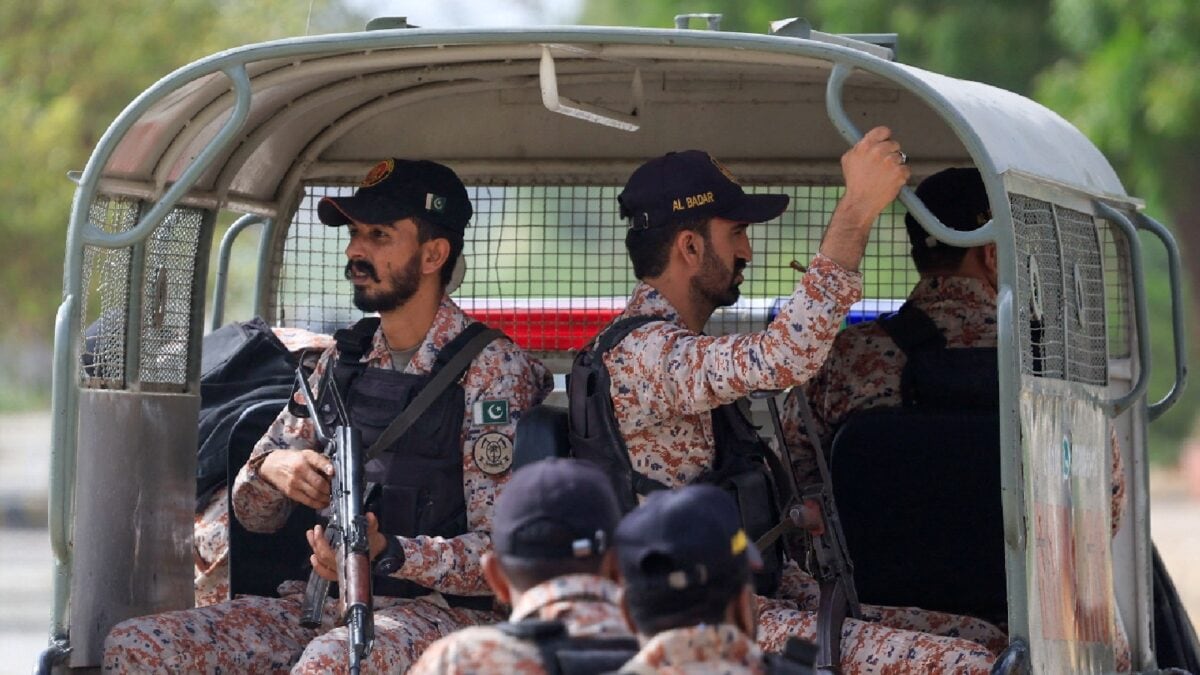
According to Pakistan’s military spokesperson, Lt Gen Ahmad Sharif Chaudhry, at least 38 security personnel, 27 policemen and 11 soldiers, were killed between July 5 and July 8 during clashes with militants.
Officials have also acknowledged that security forces have been engaged in operations to regain control of key highways and areas affected by militant attacks.
The latest violence comes weeks after a deadly attack targeting Pakistani security personnel travelling by train, one of several major strikes carried out in recent months.
Heavy Security Force Losses
Open-source assessments tracking militant violence estimate that more than 150 Pakistani security personnel have been killed in Balochistan over the past eight weeks, although these figures have not been independently verified.
The attacks include ambushes on military convoys, assaults on police stations and checkpoints, highway blockades, and strikes targeting government infrastructure.
How The BLA Has Changed
Security analysts say the BLA has evolved considerably over the past decade. Once viewed largely as a guerrilla outfit conducting hit-and-run attacks, the group is now capable of launching coordinated operations across multiple locations simultaneously.
The organisation has also developed specialised units such as the Majeed Brigade, known for carrying out suicide attacks.
Analysts say militants are increasingly using sophisticated tactics, including improvised explosive devices, vehicle-borne bombs and, in some instances, commercially available drones. Pakistani authorities have also claimed that militants possess modern weapons, including equipment believed to have originated from Afghanistan after the Taliban takeover, though the exact scale remains contested.
Why The Military Is Under Pressure
Analysts argue that Pakistan’s military has long relied on conventional force and kinetic operations in Balochistan, while the insurgency has adapted through decentralised networks and local intelligence.
Human rights organisations, including Amnesty International and Human Rights Watch, have for years documented allegations of enforced disappearances, arbitrary detentions and extrajudicial killings in Balochistan. Pakistani authorities have denied systematic wrongdoing.
Critics argue that these allegations have fuelled resentment among sections of the local population, providing militant groups with fresh recruits and making counter-insurgency operations more difficult.
Strategic Importance Of Balochistan
Balochistan accounts for nearly 44 per cent of Pakistan’s land area but remains its least populated province.
It is strategically important because it borders Iran and Afghanistan and hosts the deep-water Gwadar Port, a flagship project under the China-Pakistan Economic Corridor (CPEC).
The province is also rich in natural gas, copper, gold and other minerals, making stability there critical for Pakistan’s economy and China’s regional investments.
What Happens Next?
Despite repeated military operations over the years, the insurgency has shown little sign of fading.
While Pakistani security forces continue to conduct clearance operations across affected districts, analysts say the conflict is no longer just a military challenge. They argue that without addressing long-standing political grievances and socio-economic concerns in Balochistan, security operations alone may struggle to produce lasting stability.
The latest attacks underscore the growing complexity of the insurgency and the mounting pressure on Pakistan’s military leadership as it seeks to restore order in one of the country’s most volatile regions.
Handpicked stories, in your inbox
A newsletter with the best of our journalism
About the Author
Group Editor, Investigations & Security Affairs, Network18
Location :
Islamabad, Pakistan
News world From Guerrillas To A Lethal Force: How The BLA Is Challenging Pakistan's Military Grip | Exclusive
Disclaimer: Comments reflect users’ views, not News18’s. Please keep discussions respectful and constructive. Abusive, defamatory, or illegal comments will be removed. News18 may disable any comment at its discretion. By posting, you agree to our Terms of Use and Privacy Policy.
Read More








 English (US) ·