

 1 hour ago
3
1 hour ago
3
ARTICLE AD BOX
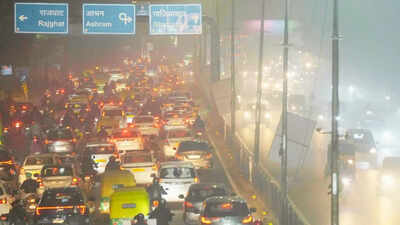
Image Used For Representational Purpose Only
NEW DELHI: Entry of goods vehicles into Delhi will be restricted to those compliant with BS-VI norms or CNG and electricity from Nov 1 onwards. Non-essential traffic inflow will also be regulated.This decision came as chief minister Rekha Gupta on Friday unveiled the Air Pollution Mitigation Action Plan, 2026.In periods of severe pollution, govt may introduce staggered office timings, announce work-from-home directives and more restrictions on polluting vehicles, Delhi govt said.Govt last year had also tried to enforce the restrictions on the entry of polluting goods vehicles but later stepped back on it for a year.
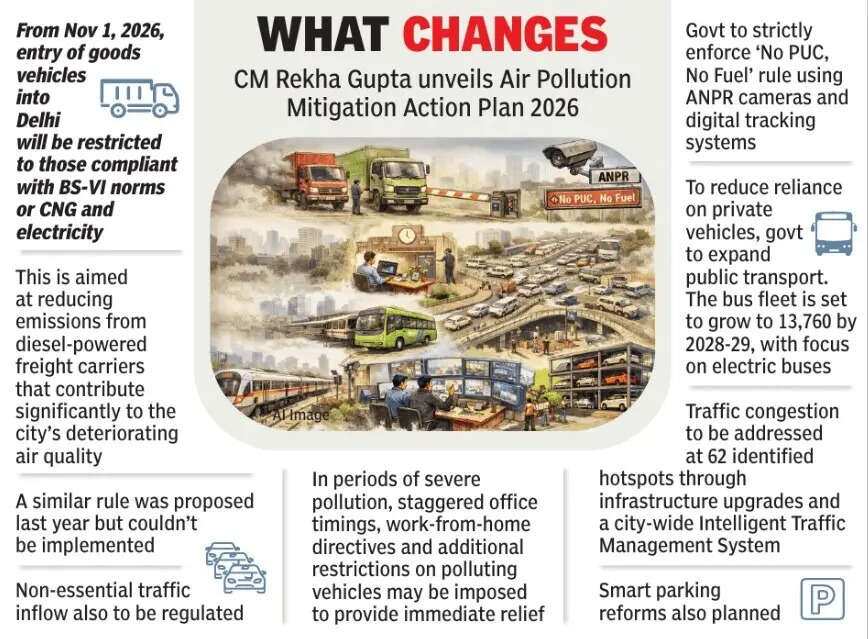
The plan lays out a structured and science-backed roadmap targeting major pollution sources, including vehicular emissions, road dust, construction, industrial discharge and biomass burning.It identifies 11 priority sectors, each with defined responsibilities, timelines and real-time monitoring mechanisms. “This is not just a policy announcement. It’s an enforcement-driven campaign powered by resources, technology and strict oversight,” Gupta said after a high-level review meeting at the Mukhyamantri Janseva Sadan, attended by senior ministers, bureaucrats and officials from transport and enforcement agencies.
Govt will enforce the ‘No PUC, No Fuel’ rule using ANPR cameras and digital tracking systems. Authorities are also preparing measures for high-pollution days to reduce emissions, govt said.To reduce reliance on private vehicles, govt is significantly expanding public transport. The bus fleet is set to grow to 13,760 by 2028-29, with a focus on electric buses. Integration between metro networks, regional transit systems and last-mile services like e-autos and feeder buses, govt said in a statement.Delhi will also see a push towards electric mobility, with plans to install 32,000 EV charging points over the next four years. The upcoming EV Policy will prioritise two-wheelers and commercial vehicles while transitioning govt fleets to cleaner fuels.Congestion, another contributor to pollution, will be addressed at 62 identified hotspots through infrastructure upgrades and an intelligent traffic management system, supported by smart parking reforms, it said.The plan also targets dust pollution through large-scale deployment of mechanical road sweepers, water sprinklers and anti-smog guns, all monitored via GPS and centralised dashboards. Construction will be tracked using the AI-enabled C&D Portal 2.0.On waste management, govt has set deadlines to clear landfill sites — Okhla by July 2026, Bhalswa by Dec 2026 and Ghazipur by Dec 2027. Industrial units will face stringent monitoring through mandatory online emission systems. Non-compliance could lead to closures.A centralised green war room and expanded air quality monitoring network will be established.






 English (US) ·