

 1 hour ago
4
1 hour ago
4
ARTICLE AD BOX
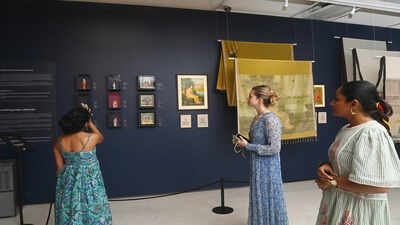
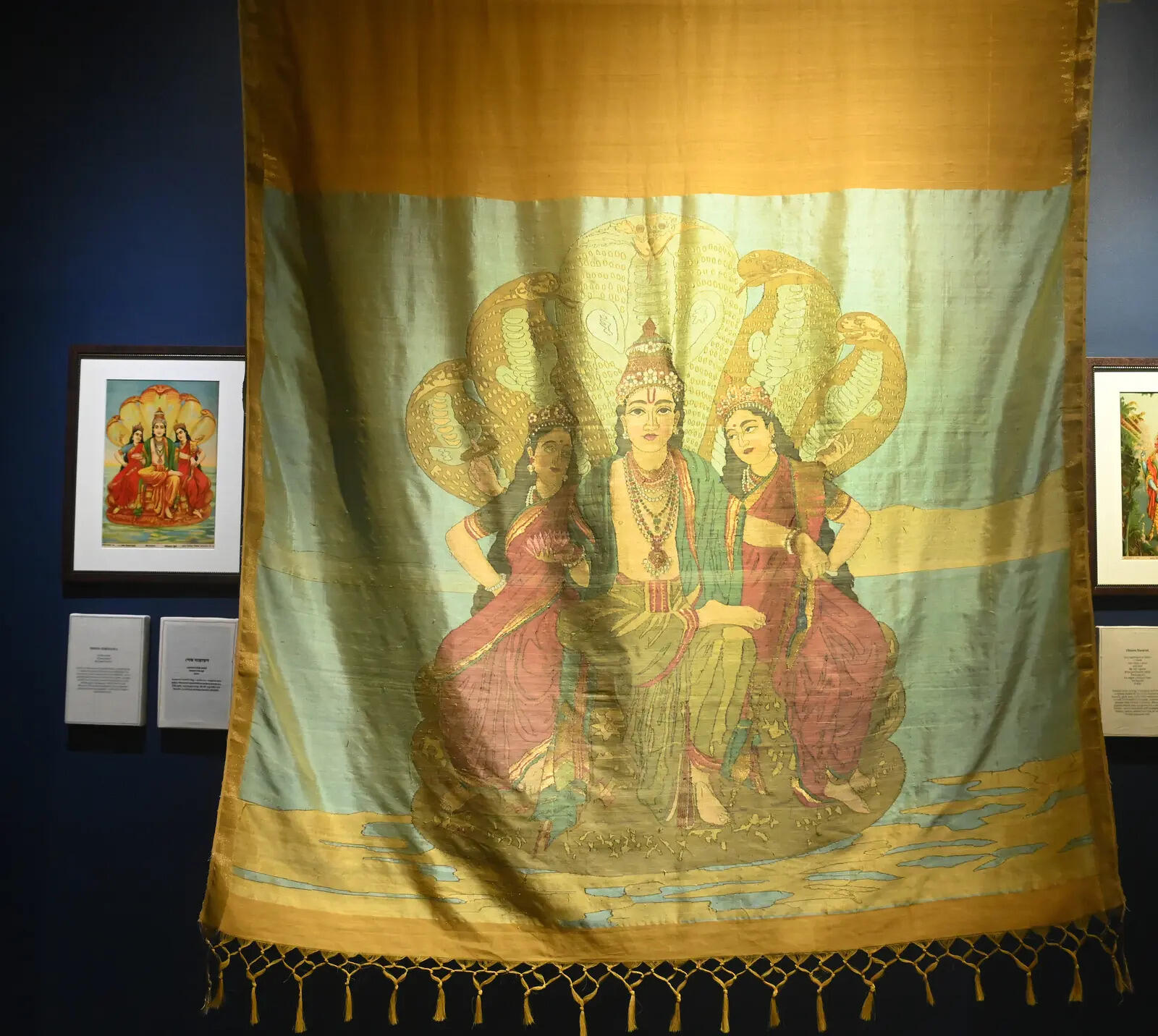
Textile artist Gaurang Shah’s latest exhibition at TRI Art & Culture brings together craft, history and questions of access through an unusual collaboration. At its centre are 18 pure khadi saris, handwoven with imagery inspired by the works of Raja Ravi Varma—created by 40 tribal women from Srikakulam, many of whom had no prior experience in weaving before being trained for the project.The exhibition draws on two parallel ideas of democratisation. Mahatma Gandhi’s khadi movement positioned cloth as a tool of self-reliance and mass participation, while Ravi Varma’s lithographic press enabled wider access to art that was once limited to elite patrons. Bringing these histories together, the show examines how access to both making and owning art has evolved.“From a curatorial perspective, this idea of democratisation still holds, though it has undoubtedly become more layered and complex in the present moment,” says Muskan K Sukarchakia, Curatorial Associate at TRI Art & Culture.
“If the lithographic press expanded the reach of images, and Gandhi’s khadi movement called for self-reliant production, Jamdani represents a living continuation of those ideals.”At the same time, she points to a tension. “Craft today can often be positioned within elite spaces… yet the exhibition re-centers the maker, drawing attention back to the hand, the time, and the skill involved in weaving each piece,” she says, referring to the inclusion of a working loom and process documentation within the display.
The translation of painted imagery into handwoven khadi also shifts how the work is experienced. “What is gained is a renewed awareness of medium… shaped by touch, time, technique, and the hand of the maker,” she notes. At the same time, “the immediacy and illusionism of the painted image give way to the constraints and possibilities of weaving,” making the work slower and more tactile.
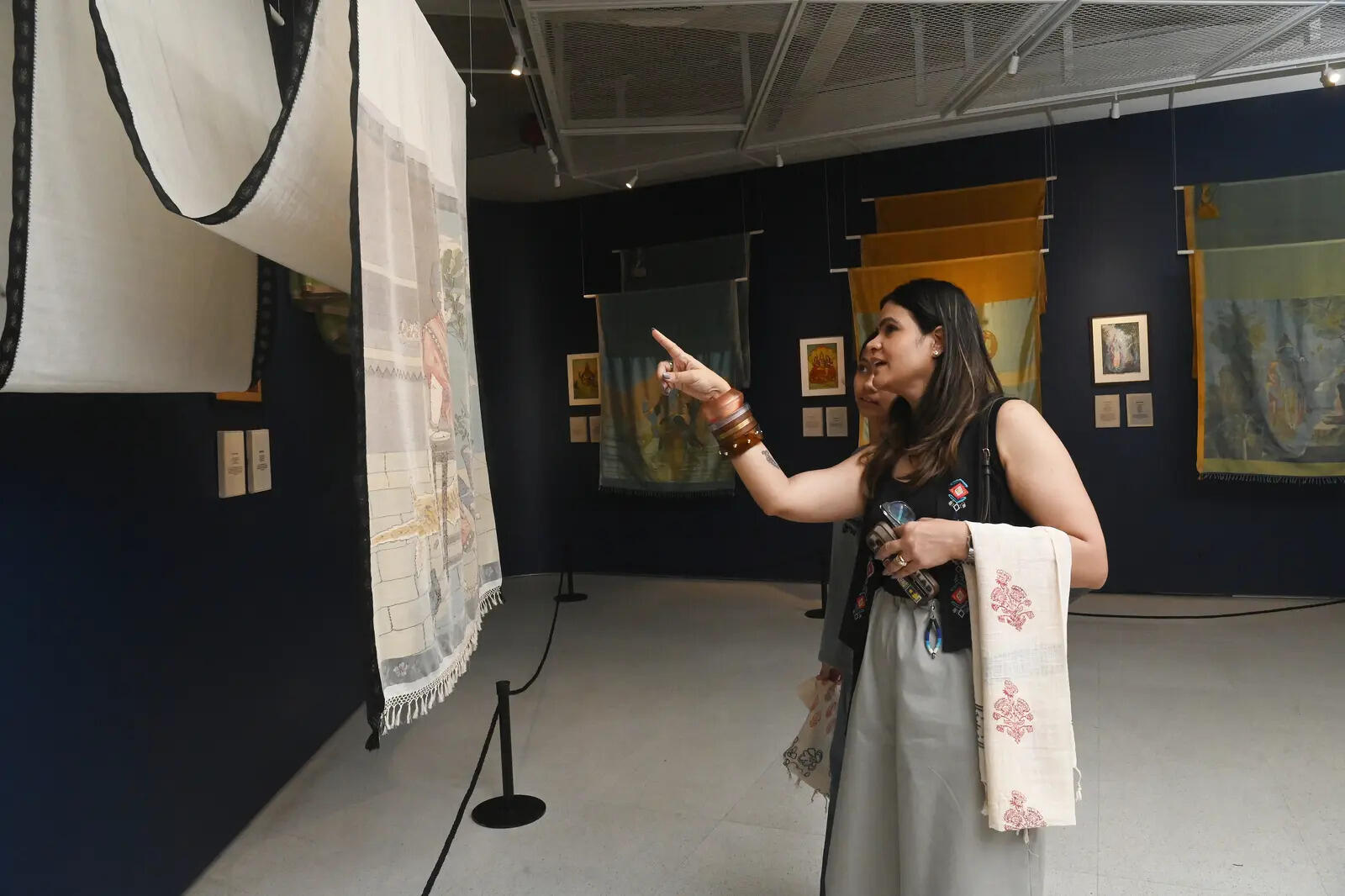
Situating this within Ravi Varma’s legacy, she adds that the movement of his imagery—from paintings to lithographs to everyday objects—marked “a shift in how images are held, interpreted, and owned,” with authorship gradually extending beyond the artist to the public.That shift continues here. “Through his mentorship… weaving skills have been encouraged among artisans… including women who are not traditionally from weaving communities,” she says. “The project is not only about producing a Jamdani sari, but also about fostering self-sufficiency, access, and confidence.”Visitors, too, are responding to this intersection of art and labour. “You don’t just see the artwork, you feel the time and effort behind it.
It makes you rethink what we value as ‘art’,” says visitor Riya Sen Gupta. Another attendee, Arjun Mehta, adds, “It’s fascinating to see something so familiar like Raja Ravi Varma’s work take on a completely new life through weaving. It feels both traditional and contemporary at the same time.
”For the curatorial team, the exhibition sits at the intersection of art and intervention. “Khadi, A Canvas exists at a compelling intersection of art and social intervention… as much about creating opportunities as it is about creating objects,” Sukarchakia says.“The exhibition… ultimately reflects on how art becomes truly democratic,” she adds, “when people are not only invited to view it, but to reinterpret it, remake it, and integrate it into the fabric of their lives.”
pics Rashbehari Das





 English (US) ·