

 1 week ago
8
1 week ago
8
ARTICLE AD BOX
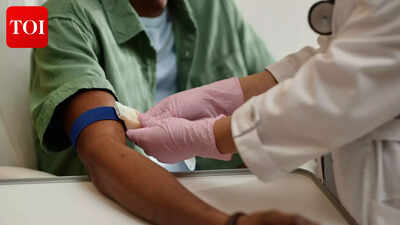
In India, prompt access to medical tests is a necessity, not a privilege—especially when dealing with rapidly progressing infections such as sepsis. Specialists stress that accurate, targeted diagnostics matter more than mere speed, as they help avoid complications, cut down on hospital stays, and slow the spread of antimicrobial resistance.
A fever, a cough, unexplained fatigue. Many people wait. They hope it will pass. Sometimes it does. But sometimes that delay changes everything. The space between the first symptom and a confirmed diagnosis is not just time passing.
It is a critical window. The right test, done at the right moment, can prevent complications, reduce hospital stays, and even save a life.In a country like India, where infections and lifestyle diseases coexist at scale, testing is not a luxury. It is the frontline of care.
When minutes matter: Infections that move fast
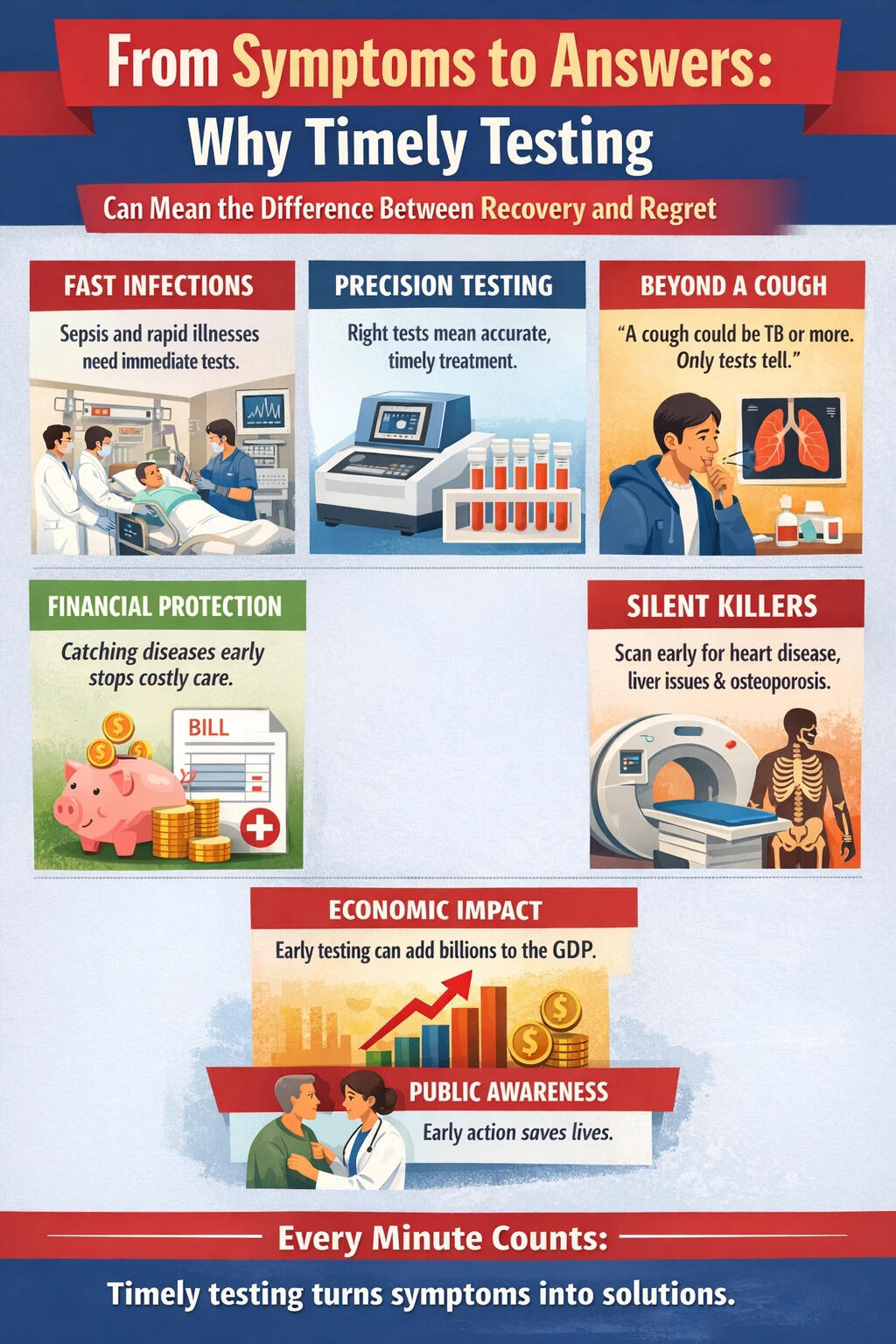
Serious infections do not wait politely. They escalate. One of the most dangerous examples is sepsis, a life-threatening response to infection.We spoke to Dr Sandeep S. Reddy, Consultant Lead, Department of Infectious Diseases at Ramaiah Memorial Hospital, who explained how narrow the margin can be, “As an infectious disease specialist, I encounter on each day how the moments between the first symptom and a confirmed diagnosis can define a patient’s outcome. Infectious illnesses—especially sepsis—moves fast, and so must we.”Emergency medicine now follows what doctors call the “2-hour sepsis bundle.” This includes blood cultures, lactate measurement, and antibiotics within a tight window.
D Reddy said, “Completing these steps swiftly can reduce mortality and prevent the cascade of organ failure that follows unchecked infection.”This is not about rushing blindly. It is about acting early with evidence.

Precision, not panic: The real goal of testing
Speed without accuracy can harm. Testing must be precise.Dr Reddy puts it clearly, “Timely diagnostics aren’t about speed alone, they are about precision.”Rapid molecular tests and point-of-care devices now identify bacteria and viruses in hours instead of days.
That changes treatment plans immediately.He adds, “Advances in rapid molecular and point-of-care testing now make it possible to identify causative pathogens in hours rather than days. This allows targeted therapy, sparing unnecessary antibiotic use while improving outcomes.”This matters deeply in a country facing antimicrobial resistance. The Indian Council of Medical Research (ICMR) regularly reports rising resistance patterns across major pathogens, underlining why correct testing before treatment is essential.
Wrong antibiotics do not just fail. They fuel resistance.
A cough is not always “just a cough”
India continues to battle respiratory infections, including tuberculosis. A simple cough may hide something more serious.Dr Sameer Bhati, Public Health Analyst, stresses that symptoms alone cannot guide treatment, “Waiting for physical pain is a dangerous mistake; by the time symptoms scream, the window for easy recovery has often closed.”He warns, “Today, even common symptoms are confusing. With the rise in respiratory infections, a simple cough could be anything from a cold to drug-resistant TB.
Only testing can differentiate and prevent wrong treatments.”Diagnosis guides the right drug. Guesswork spreads disease.
Testing as financial protection
Illness is not only physical. It affects income, savings, and stability.Dr Bhati offers a strong perspective, “Timely testing is essentially ‘poverty prevention.’ Catching a condition at Stage 1 instead of Stage 4 is the difference between a simple cure and financial ruin.”Early-stage treatment costs far less than advanced care. A small outpatient procedure is not the same as intensive care.Hospitalisation for advanced conditions carries significantly higher financial burden compared to early intervention. Preventive and early diagnostics reduce catastrophic health expenditure, especially for lower-income families. A timely blood test can protect more than health. It can protect a household.
Silent killers need silent screens
Not all diseases announce themselves. Many grow quietly.Dr Bhati points to tools that detect risk before symptoms appear, “We must move toward advanced tools that find ‘silent’ killers: CAC and CT Angio for heart disease, Fibroscans for fatty liver, and DEXA for lifestyle-related osteoporosis.”Heart disease remains the leading cause of death in India. A coronary artery calcium (CAC) score can detect plaque before a heart attack occurs. A Fibroscan identifies fatty liver before cirrhosis develops. A DEXA scan detects bone loss before fractures happen.Testing shifts care from damage control to risk control.
The economic case for early diagnosis
Healthcare is also an economic engine.Dr Bhati highlights industry data, “The EY-Parthenon Healthcare Sector Update reports that India's diagnostics industry is experiencing substantial growth which exceeds 10 percent.”He continues, “A report on digital healthcare further estimates that AI-enabled healthcare solutions could contribute USD 25–30 billion to India’s GDP by 2025, underscoring how early, accurate diagnostics are both a health safeguard and an economic imperative.”Growth in diagnostics reflects rising awareness. More people are choosing preventive health packages, genetic testing, and early scans. Testing is no longer reactive.
It is proactive.
Public awareness: The missing link
Doctors can act quickly only if patients arrive early.Dr Reddy reminds, “Public awareness also matters because patients who seek help early, give their healthcare teams the crucial time needed to act.”Many still delay testing due to fear, stigma, or cost concerns. But hesitation narrows the treatment window.Every fever does not need panic. But persistent, unexplained, or worsening symptoms deserve evaluation.
That small decision to get tested can change outcomes completely.
Every minute counts
Dr Reddy’s words stay with us, “Ultimately, moving from symptoms to answers quickly saves lives and curb antimicrobial resistance. As clinicians, our duty is clear: every minute counts, and every precise and appropriate test ordered on time is not just about answers, it is about survival.”Testing is not about anxiety. It is about clarity. It replaces doubt with direction.
It turns confusion into a plan. Health hinges on timing. And timing begins with awareness.Medical experts consulted This article includes expert inputs shared with TOI Health by: Dr Sandeep S. Reddy, Consultant Lead, Department of Infectious Diseases at Ramaiah Memorial HospitalDr Sameer Bhati, Public Health AnalystInputs were used to explain why supplement overdose is a big health risk and why one should consult doctor before taking natural alternatives.







 English (US) ·