

 1 hour ago
4
1 hour ago
4
ARTICLE AD BOX
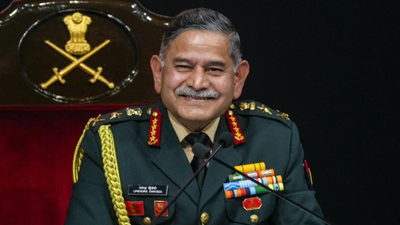
'The strength of an army lies not merely in the weapons it possesses, but in its ability to anticipate the next war before it begins.'
When General Upendra Dwivedi assumed office as the 30th Chief of the Army Staff on 30 June 2024, the Indian Army was at an important inflection point. It was simultaneously confronting an aggressive China along the Line of Actual Control, a persistently hostile Pakistan along the Line of Control, and an increasingly technology-driven character of warfare shaped by artificial intelligence, drones, cyber operations and space-based capabilities.
His tenure has therefore been defined less by large-scale structural upheaval than by accelerating the Army's transition from a manpower-intensive force to a technology-enabled, network-centric fighting organisation. Unlike many of his predecessors whose tenures were dominated by either counterinsurgency or border crises, General Dwivedi inherited simultaneous challenges on multiple fronts. The Army had to retain conventional superiority over Pakistan while developing sufficient deterrence against China without unsustainable expansion in manpower.
Simultaneously, fiscal constraints meant that every modernization programme had to produce greater combat effectiveness per rupee spent.
A commander prepared for the new battlefield
.
General Dwivedi's operational experience across Kashmir, the Northeast, the deserts of Rajasthan and the Northern Command provided him with a rare understanding of India's entire threat spectrum. His previous assignments as Deputy Chief responsible for Information Systems and later as GOC-in-C Northern Command exposed him to digital transformation, indigenous capability development and theatre-wide operational integration.
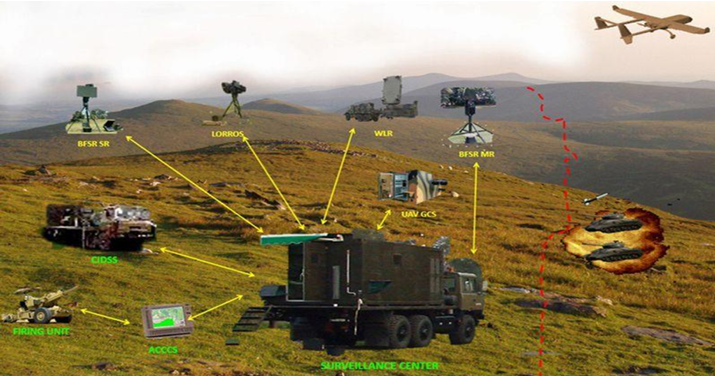
This background significantly influenced his priorities as Army Chief. Rather than concentrating solely upon acquisition of additional platforms, he repeatedly emphasised integration of sensors, shooters, artificial intelligence, networking, cyber capabilities and precision strike systems into one operational ecosystem. His public speeches consistently reflected one recurring theme—the next war would not merely be fought on land but simultaneously across cyber space, outer space, information networks and the electromagnetic spectrum.
Learning from contemporary wars
Perhaps the greatest strength of General Dwivedi's tenure has been his willingness to absorb operational lessons emerging from conflicts around the world. The war in Ukraine demonstrated the dominance of drones, electronic warfare and precision artillery. The conflict in Gaza illustrated urban warfare integrated with artificial intelligence. The Red Sea crisis highlighted missile and unmanned maritime threats.
Operation Sindoor further reinforced the importance of tri-service integration, precision engagement and rapid decision-making, leading General Dwivedi to describe it as a demonstration of India's progress toward "domain jointness." Instead of treating these conflicts as isolated events, the Indian Army increasingly incorporated their lessons into doctrine, training and procurement. Technology becomes the centrepiece
The Army expanded induction of unmanned aerial systems across formations. Artificial intelligence began supporting intelligence analysis. Digital battlefield management systems received greater emphasis. Secure communications networks expanded. Greater attention was devoted to cyber resilience and electronic warfare.
The Army also accelerated development of specialised drone formations, precision fire units and technology-enabled combat organisations intended to reduce response times and increase battlefield transparency.
His vision moved beyond purchasing drones toward integrating unmanned systems into routine military operations at tactical, operational and strategic levels.
Indigenous capability as strategic necessity
General Dwivedi consistently promoted indigenous defence manufacturing not merely as an economic policy but as an operational imperative. The prolonged Russia-Ukraine war exposed vulnerabilities associated with foreign dependence for ammunition, electronics and spare parts. Consequently, the Army accelerated induction of indigenous surveillance systems, communications equipment, drones, loitering munitions, artillery systems and battlefield software. This approach sought to reduce external supply vulnerabilities while shortening maintenance cycles and improving long-term sustainability.
Building the Army of Tomorrow: New Combat Formations for Multi-Domain Warfare
General Dwivedi's vision of future warfare was translated into organisational reforms through the operationalisation of a series of specialised combat formations designed to meet the demands of technology-driven conflict.
Recognising that future wars would be characterised by compressed decision cycles, autonomous systems, precision fires, electronic warfare and seamless integration across domains, the Indian Army began restructuring selected formations to enhance agility, lethality and survivability.
This philosophy drove the operationalisation of Bhairav Battalions, Ashni Platoons, Rudra All Arms Brigades, Shaktibaan Regiments, Divyastra Batteries, alongside the continuing evolution of Integrated Battle Groups (IBGs).
Rather than simply adding new units, these initiatives reflected a doctrinal transformation from platform-centric warfare—where tanks, artillery and infantry operated largely within their traditional roles—to capability-centric warfare, in which sensors, shooters, electronic warfare, cyber capabilities, drones and precision weapons are integrated into a single operational network.
The Bhairav Battalions are envisaged as highly agile assault formations equipped with loitering munitions, First-Person View (FPV) attack drones, artificial intelligence-enabled surveillance systems and enhanced situational awareness tools.
Their purpose is to conduct rapid offensive operations, precision raids and anti-armour missions while minimising exposure of soldiers to enemy fire. Lessons from the Russia–Ukraine conflict, where inexpensive drones have repeatedly neutralised expensive armoured platforms, heavily influenced their conceptualisation. Complementing these units are the Ashni Platoons, specialised counter-unmanned aerial system (C-UAS) detachments tasked with defending troops and critical military infrastructure against the growing threat posed by hostile drones.
Equipped with electronic jammers, radiofrequency detectors, electro-optical sensors, anti-drone radars and kinetic interception systems, these platoons are intended to create an integrated protective shield against the increasingly sophisticated drone capabilities being fielded by India's adversaries.
.
The establishment of Rudra All Arms Brigades marks another significant departure from conventional force structuring.
These formations integrate infantry, armour, artillery, aviation assets, engineers, air defence, electronic warfare and unmanned systems under a unified command, enabling commanders to execute combined-arms operations with greater speed and flexibility. By reducing dependence on higher headquarters for force aggregation, these brigades are expected to improve responsiveness in fast-moving battlefield conditions, particularly along both the northern and Western Fronts.
Precision long-range engagement has similarly received renewed emphasis through the creation of Shaktibaan Regiments, which are intended to employ advanced rocket artillery, long-range precision strike systems and networked targeting capabilities. Supported by drones and real-time intelligence, these regiments significantly reduce the sensor-to-shooter cycle, allowing high-value enemy targets to be engaged with greater speed and accuracy.
Supporting these precision strike capabilities are the Divyastra Batteries, which focus on the employment of loitering munitions and other precision-guided systems capable of conducting deep strikes against enemy headquarters, logistics nodes, radar installations, air defence systems and other critical assets. By combining persistent surveillance with precision attack, these batteries offer commanders an economical means of neutralising high-value targets without committing conventional aviation assets.
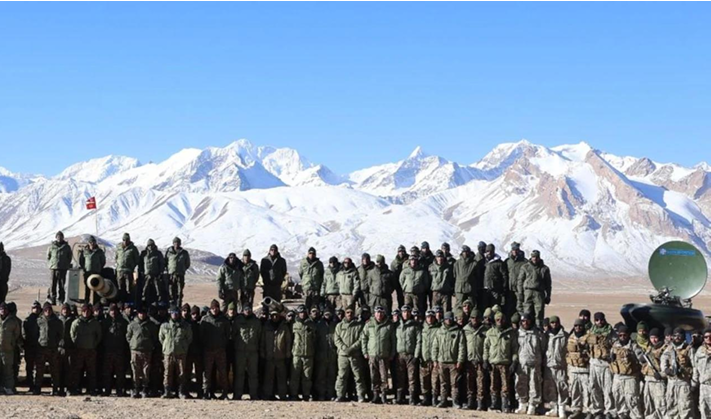
Parallel to these developments, General Dwivedi continued to advance the concept of Integrated Battle Groups (IBGs). Conceived as lean, self-contained, brigade-sized combined-arms formations tailored to specific operational tasks, IBGs are designed for rapid mobilisation and swift offensive action. Their structure enables commanders to respond quickly to emerging threats while maintaining the flexibility to operate across diverse terrain ranging from the deserts of Rajasthan to the high-altitude sectors of Ladakh.
Collectively, these initiatives demonstrate General Dwivedi's conviction that future wars will be decided less by numerical superiority and more by information dominance, rapid decisionmaking, precision engagement and seamless integration across multiple domains. The emphasis is no longer on deploying individual platforms in isolation but on creating interconnected combat systems in which every sensor is linked to every shooter through secure digital networks. This transformation reflects the Indian Army's shift towards a force capable of fighting and winning in an era defined by artificial intelligence, autonomous systems, electronic warfare and multi-domain operations—a legacy that is likely to shape India's land warfare doctrine for decades to come.
Drone warfare: General Dwivedi's push towards an unmanned battlefield
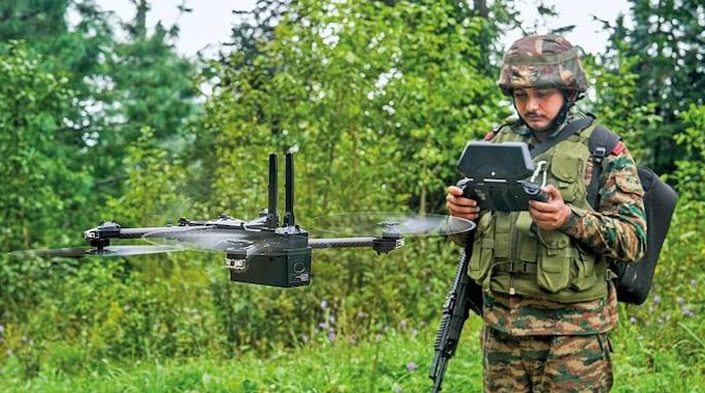
'The future soldier will not fight alone. He will fight alongside autonomous systems, artificial intelligence and precision-guided networks.'
If one capability came to symbolise General Upendra Dwivedi's vision for the future battlefield, it was drone warfare.
While unmanned aerial systems had been introduced into the Indian Army over the past decade, their employment was largely confined to surveillance, reconnaissance and intelligence gathering. General Dwivedi recognised that developments in the Russia-Ukraine conflict, the Armenia-Azerbaijan war, and the Israel-Hamas conflict had fundamentally altered the character of land warfare.
Drones had evolved from niche intelligence assets into decisive combat multipliers capable of shaping tactical engagements and influencing operational outcomes at a fraction of the cost of conventional platforms.
General Dwivedi therefore sought to transform the Indian Army's approach from merely possessing drones to institutionalising drone-centric warfare across all levels of command. Under his leadership, the Army accelerated the induction of a wide spectrum of unmanned systems, including nano drones for infantry platoons, tactical surveillance drones for battalion and brigade headquarters, long-endurance unmanned aerial vehicles for operational surveillance, loitering munitions capable of precision strikes, and swarm drones designed to overwhelm enemy air defences and command posts.
The emphasis shifted from isolated drone units to embedding unmanned systems into the operational architecture of every formation. A defining feature of his approach was the integration of drones with artillery, missile forces, infantry, armoured formations and special forces. Instead of functioning independently, drones became part of a real-time sensor-to-shooter network. Live imagery transmitted by unmanned platforms enabled artillery units to engage targets with greater accuracy while simultaneously conducting battle damage assessment.
This substantially compressed the decision-making cycle and enhanced the effectiveness of precision fires. General Dwivedi also placed significant emphasis on counter-drone capabilities. The extensive employment of inexpensive First-Person View (FPV) drones in Ukraine demonstrated that even technologically advanced armies remained vulnerable to massed unmanned attacks. Consequently, the Indian Army accelerated the induction of electronic warfare systems, radio-frequency jammers, anti-drone radars, electro-optical sensors and directed-energy technologies intended to detect, track and neutralise hostile drones before they could threaten troops or critical infrastructure.
Counter-UAS drills increasingly became a routine feature of major military exercises. Today the Indian Army has over 50,000 drones and possesses more than 25 drone and counter drone hubs. Equally important was his support for indigenous drone development under the Government of India's Atmanirbhar Bharat initiative. Recognising that drones have relatively short technological life cycles and require rapid innovation, General Dwivedi encouraged close collaboration between the Army, the Defence Research and Development Organisation (DRDO), private defence manufacturers and India's expanding start-up ecosystem.
Indigenous companies were increasingly involved in developing surveillance drones, loitering munitions, logistics drones, autonomous navigation systems and artificial intelligence-enabled mission software tailored to Indian operational requirements.
This reduced dependence on imported systems while enabling faster adaptation to evolving battlefield needs. The Army's doctrinal evolution under General Dwivedi also reflected a broader conceptual shift.
Drones were no longer viewed merely as reconnaissance assets but as integral components of multi-domain operations. Their employment increasingly encompassed intelligence, surveillance, target acquisition, precision engagement, electronic warfare, communications relay, logistics support and psychological operations.
The experience of recent conflicts underscored that information dominance often precedes firepower dominance, and unmanned systems became indispensable to achieving this advantage.
The operational validation of this transformation became evident during Operation Sindoor, where unmanned systems supported intelligence collection, target identification and precision engagement in coordination with other combat arms. Although many operational details remain classified, official statements indicate that the operation demonstrated the growing maturity of India's network-enabled and technology-driven approach to warfare.
General Dwivedi subsequently described the campaign as evidence of India's progression towards "domain jointness," where land, air, cyber, electronic and information capabilities operate as an integrated whole rather than as separate entities.
General Dwivedi's emphasis on drone warfare has arguably left one of the most enduring institutional legacies of his tenure. Much as mechanisation transformed armies in the twentieth century and precision-guided munitions reshaped operations in the early twenty-first, unmanned systems are poised to redefine future battlefields. By embedding drone capabilities into doctrine, training, force structure and procurement, he ensured that the Indian Army is transitioning from being a force that merely employs drones to one that is progressively adapting to an era in which unmanned and autonomous systems will be central to combat effectiveness. For his successor, the challenge will be to build upon this foundation by integrating artificial intelligence, autonomous swarming technologies, human-machine teaming and next-generation counter-drone systems into a fully networked battlefield capable of meeting the demands of future high-intensity conflicts against technologically sophisticated adversaries such as China and Pakistan.
Operation Sindoor: A defining operational test
No assessment of General Dwivedi's tenure can ignore Operation Sindoor. The operation became a practical demonstration of several reforms initiated during his leadership. Intelligence fusion improved. Joint planning among the services became more visible. Precision engagement reduced collateral damage. Information operations received greater importance. General Dwivedi later described the campaign as evidence that India was moving toward genuine multi-domain integration rather than merely conducting parallel service operations. Whether historians eventually regard Operation Sindoor as transformational will depend upon its long-term strategic consequences, but operationally it validated many modernization initiatives
Addressing long-standing shortcomings
General Dwivedi inherited several structural weaknesses.
The Army continued to possess large quantities of vintage equipment. Air defence against mass drone attacks required enhancement. Logistics required digitisation. Stockpiles for prolonged highintensity conflict demanded strengthening. Communication systems needed greater interoperability. Electronic warfare capabilities required expansion.
His tenure witnessed measurable progress in many of these areas through accelerated modernization, network integration and indigenous procurement.
Particular attention was devoted to improving battlefield surveillance and shortening sensor-toshooter timelines.
Multi-domain operations become institutional
Perhaps the most enduring conceptual change has been institutional acceptance of multi-domain operations. Earlier, cyber, information warfare, electronic warfare and conventional combat often functioned as separate specialisations. General Dwivedi increasingly promoted integration.
His repeated emphasis upon "domain jointness" reflected an understanding that future campaigns would involve simultaneous action across physical, digital and cognitive domains.
Human resource modernisation
Beyond technology, emphasis was placed upon preparing soldiers for technologically intensive warfare. Training increasingly incorporated drone operations, data analysis, electronic warfare awareness and network-enabled command systems.
The Army also sought greater agility by restructuring formations for faster mobilisation and more flexible employment.
Strengthening the northern front
Given General Dwivedi's extensive experience in Northern Command, particular attention continued to be devoted to preparedness against China. Infrastructure improvements along border regions continued. Enhanced surveillance reduced intelligence gaps. Greater deployment of indigenous technologies improved persistent monitoring.
Operational readiness remained focused upon deterring limited Chinese military adventurism without unnecessary escalation.
How does the Indian army compare with Pakistan army today?
Measured against Pakistan, the Indian Army today enjoys a substantial qualitative advantage in several critical domains. India possesses superior economic capacity to sustain prolonged military modernization. Its indigenous defence industry is expanding faster. Its surveillance architecture is broader.
Precision strike capability has improved significantly. Electronic warfare capabilities have strengthened.
The integration of drones, AI-enabled intelligence and digital command systems has accelerated. Pakistan nevertheless retains strengths that cannot be underestimated. Its Army remains highly professional. Its deployment along shorter internal lines permits rapid concentration of forces. It has accumulated significant experience employing tactical drones. Chinese military assistance continues to provide access to advanced air defence systems, sensors and unmanned platforms. Pakistan's close strategic partnership with China creates the possibility of technological leapfrogging in selected domains. Consequently, India's advantage lies not merely in equipment but increasingly in its ability to integrate land, air, cyber and intelligence assets into unified campaigns.
Areas where more progress is needed
Despite notable achievements, several important issues remain unresolved. The first concerns theatre commands. Although progress toward jointness accelerated, complete integration of operational commands remains unfinished. Second, ammunition reserves for prolonged conventional conflict continue to require strengthening. Third, procurement timelines remain slower than operational necessity demands.
Fourth, many legacy armoured vehicles, artillery systems and air defence platforms await replacement. Fifth, logistical automation has improved but is still evolving. Finally, artificial intelligence remains unevenly distributed across operational formations.
Financial and budgetary constraints
Modern warfare is becoming increasingly expensive. Every drone swarm requires electronic protection. Every communication network requires cyber security.
Every precision weapon demands resilient supply chains. The Army therefore continues to balance modernization against budgetary realities. General Dwivedi consistently argued that technological superiority, rather than numerical expansion, offered the most sustainable path forward.
The challenges awaiting the next army chief
Foremost will be institutionalising integrated theatre commands and deepening triservice operational integration. The rapid evolution of artificial intelligence, autonomous systems, quantum technologies and electronic warfare will require continuous adaptation.
The Army must also develop resilient logistics capable of sustaining simultaneous contingencies involving China and Pakistan. Managing manpower costs while funding modernization will remain a persistent challenge.
Border infrastructure along the northern frontier will require further expansion. Counter-drone systems must evolve continuously as unmanned threats become cheaper and more sophisticated. Finally, information warfare and cognitive operations will demand capabilities extending beyond traditional military planning.
Strategic assessment
General Upendra Dwivedi's tenure is likely to be remembered less for dramatic organisational restructuring than for accelerating the Indian Army's intellectual transition toward future warfare.
His emphasis on technology, indigenous capability, multi-domain operations, drone integration, cyber resilience and jointness reflects recognition that future conflicts will reward speed of decision, information superiority and network integration as much as firepower.
Not every challenge was resolved. Structural procurement delays, unfinished theatre reforms and resource constraints remain. Yet the Army that emerges from his tenure is better prepared for the evolving character of warfare than the one he inherited. As General Dwivedi himself has argued, future wars will extend "beyond conventional battlefields" into cyber, space and cognitive domains, requiring integrated national power rather than isolated military excellence. His enduring legacy may therefore not be a single weapon system or organisational reform, but a shift in strategic mindset: from preparing for yesterday's wars to building an Army capable of prevailing in the complex, technology-driven conflicts of the twenty-first century.








 English (US) ·