

 1 hour ago
4
1 hour ago
4
ARTICLE AD BOX
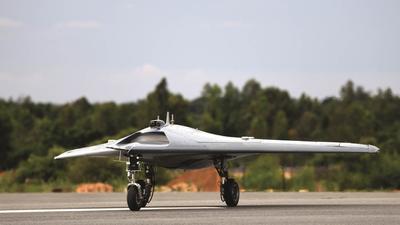
NEW DELHI: India has moved closer to deploying its first indigenous stealth unmanned combat aerial vehicle (UCAV) — Ghatak.On March 27, the Defence Acquisition Council (DAC) cleared the purchase of ‘Remotely Piloted Strike Aircraft’ — UCAVs come under this category — for the IAF.
The council approved procurement of four squadrons of indigenous stealth combat drones — with reports suggesting around 60 to 80 units in total.The ‘Ghatak’ flying-wing drone, with a striking resemblance to the US’s B-2 ‘Spirit’ stealth bomber, has been designed and developed by DRDO’s Aeronautical Development Establishment as part of a long-term force development under the Vision 2047 roadmap for deep strike missions, air defence suppression, and coordinated operations with fighter jets such as LCA Tejas.The programme was earlier known as AURA (Autonomous Unmanned Research Aircraft) and represents India’s effort to develop a next-generation stealth combat drone domestically.The UCAV is a 13-tonne class jet-powered pilotless aircraft. Its outer shell is expected to be 80–90% carbon-fibre prepreg composites, enhancing its radar-evading capabilities.Powered by the domestically-developed dry Kaveri engine, the aircraft is built with a low-observability design, allowing it to operate effectively in contested airspace while minimising detection. Ghatak is not built like a normal fighter jet. It uses a tailless flying-wing shape. That shape is made to help it stay hidden from enemy radar.The indigenous UCAV is designed to carry a payload of up to 1.5 tonnes of armaments stored in internal weapon bays for stealth.








 English (US) ·