

 1 hour ago
4
1 hour ago
4
ARTICLE AD BOX
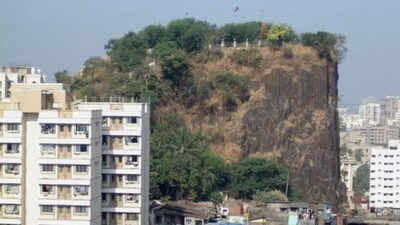
Gilbert Hill (Image source: Wikipedia)
Mumbai is a city that is always changing, with tall buildings and a fast pace. It's easy to forget that it also has a history that goes back much further. This land was shaped by powerful volcanic forces long before there were skyscrapers, traffic, and suburban sprawl.
One of the most striking reminders of that ancient era still stands quietly in Andheri. Gilbert Hill, a massive basalt rock formation dating back nearly 66 million years, has recently returned to public attention after industrialist Anand Mahindra highlighted its significance on social media.Gilbert Hill belongs to the same geological period that marked the end of the dinosaur age. Formed during massive volcanic eruptions that created the Deccan Traps, the structure is a rare example of a volcanic column.
What makes it exceptional is its scarcity. According to geological records, only three such columnar basalt formations exist in the world. The other two are located in the United States and Northern Ireland.Despite this global rarity, Gilbert Hill remains relatively unknown even among Mumbai residents. The rock formation fits in with the cityscape because it is surrounded by apartment buildings, narrow roads, and busy markets.
Anand Mahindra's recent mention of it has sparked new interest in a site that is one of the oldest surviving witnesses to the region's geological history.
How Gilbert Hill was formed millions of years ago
Gilbert Hill was formed when there was a lot of volcanic activity and molten lava spread over a lot of western and central India. Geologists call the Deccan Traps one of the biggest volcanic features on Earth. These eruptions made them. When lava cooled and shrank, it broke into vertical hexagonal columns made of basalt rock.These columns have been shaped by erosion over millions of years into the tall structure we see today. Standing close to 200 feet tall, Gilbert Hill rises sharply from the surrounding land. Its steep sides and flat summit clearly reflect its volcanic origin.Geologists think these kinds of formations are important because they give us information about the Earth's past climate, tectonic activity, and volcanic behaviour.
The survival of Gilbert Hill within a dense urban environment makes it even more unusual.
From quarry threat to protected monument
Gilbert Hill was not always protected. In the early and mid 20th century, parts of the rock were threatened by quarrying activities. Basalt rock was in demand for construction, and the hill faced gradual damage.Recognising its scientific and historical importance, authorities intervened. Gilbert Hill was made a national monument in 1952.
This status helped stop quarrying and made sure the site was safe from the law. In 2007, the Brihanmumbai Municipal Corporation named the site a heritage structure, adding another level of protection.These choices were very important for keeping the hill safe for future generations. Without this protection, urban development could have destroyed one of the world's rarest volcanic formations.
Reaching the summit and its cultural presence
Visitors to Gilbert Hill can climb a steep staircase carved into the rock face.
The climb leads to a flat plateau at the top, where two temples stand. One is for Goddess Gaodevi and the other is for Goddess Durgamata.From the top, you can see all of Andheri at once. From this point of view, you can see homes, roads, and businesses spreading out in all directions. It's amazing how different the ancient rock is from the modern city below.The hill has become a place of regular worship for people who live nearby because there are temples there.
Religious activity has coexisted with the site’s geological significance for decades, giving Gilbert Hill both cultural and scientific value.
Anand Mahindra’s X post brings fresh attention
Gilbert Hill returned to public discussion after Anand Mahindra shared a post on X that drew attention to its rarity. In his post, he wrote:“Travel bucket-list items can be right in your hometown. A quick check showed that Gilbert Hill is one of only 3 volcanic columns in the world, yet I had no clue it was here in Mumbai. How do we make this a more visited destination?”The post quickly became popular, with people saying they were surprised that such a rare geological feature could be found in Mumbai.
Many people sent in pictures, came to the site in person, and asked why it isn't more well-known.Mahindra's post didn't add any new facts, but it did help spread information that was already out there to a much larger audience. It also got people talking about urban awareness, heritage tourism, and how important it is to have better signs and more educational outreach.
Why Gilbert Hill remains unfamiliar to many
Gilbert Hill is protected, but it doesn't show up on many mainstream tourism lists.
The site doesn't get as much attention as beaches, colonial landmarks, or famous temples.Its low visibility is also due to the fact that it is in a busy suburb. A lot of people walk by without knowing that there is a prehistoric structure in the middle of a neighbourhood. The lack of detailed information displays makes it even harder for people to understand how important it is.Experts say that urban geological sites often have a hard time getting attention compared to wildlife parks or archaeological sites.
Gilbert Hill is a clear example of this problem.
A link between ancient Earth and modern Mumbai
Gilbert Hill is a physical connection between Mumbai's past and present. The rock was made when dinosaurs were still alive, long before people moved to the area. Today, it is in the middle of one of the most populated cities in the world.Its continued presence shows how much history is hidden beneath cityscapes. People often think of Mumbai in terms of money, movies, and migration, but Gilbert Hill reminds people that the city's story began millions of years ago.The structure also teaches people something. For students, researchers, and visitors, it is a rare chance to see a volcanic formation without leaving the city.
Renewed conversations around awareness and access
After social media brought Gilbert Hill back into the public eye, people have started talking about how to raise awareness of him. These include better informational boards, guided tours, and being a part of educational programs.Any such efforts would have to find a balance between access and preservation.
The hill is a national monument and heritage site, so it needs to be carefully managed to keep it safe while still letting people enjoy its significance.Gilbert Hill's new visibility shows how digital platforms can bring back interest in forgotten landmarks. The rock itself hasn't changed in millions of years, but people's awareness of it keeps changing.
A rare geological survivor in a modern metropolis
Gilbert Hill is still one of the most unusual landmarks in Mumbai.
It is a rare volcanic column, a protected monument, a place of worship, and a silent witness to the history of the Earth.As more people talk about heritage and urban identity, the hill is a reminder that amazing stories can happen in places we know well. Gilbert Hill is more than just a rock formation for Mumbai. It is a piece of a world that existed long before the city was built.








 English (US) ·