

 1 hour ago
5
1 hour ago
5
ARTICLE AD BOX
FSSAI documents, import rules and global residue standards raise questions about whether India's approach to glyphosate in imported pulses and soybeans adequately protects consumers from potential long-term health risks.
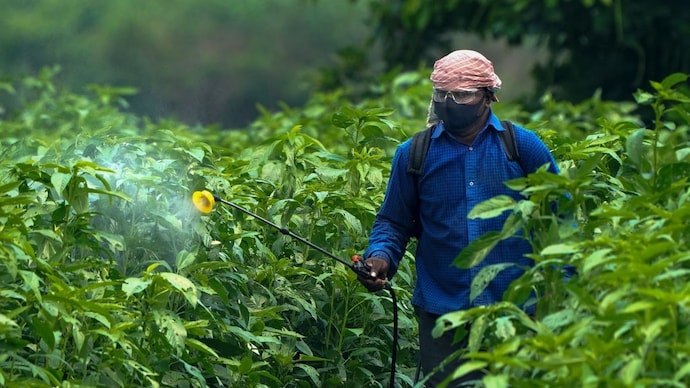
India's glyphosate debate has reignited concerns over whether food safety is being compromised to facilitate imports. (Photo: PTI)
New Delhi,UPDATED: Jun 12, 2026 12:56 IST
Is the health of ordinary Indians less important than international trade agreements and corporate profits? This question arises from examining official documents of the Food Safety and Standards Authority of India (FSSAI).
A double standard appears to exist in international food trade. While many developed countries enforce stringent residue standards on Indian exports, India has relaxed regulations to permit higher levels of glyphosate residues in imported pulses and soybeans. Glyphosate is the same herbicide that the World Health Organisation's International Agency for Research on Cancer (IARC) classified as a "probable carcinogen".
Government records suggest that regulators were aware of the concerns. Documents from the FSSAI's import division state that "imported pulses are suspected to contain high levels of the herbicide glyphosate, which could have a serious health impact on Indian consumers."
Despite this warning, India adopted residue limits that allowed imports containing higher levels of the chemical.
Why the leniency on glyphosate?
India's default rule states that any pesticide without a specified residue limit is subject to a threshold of 0.01 mg/kg. In practical terms, even one gram of a chemical in a tonne of pulses could constitute a violation.
However, glyphosate was treated differently. India adopted the maximum residue limits (MRLs) recommended by Codex, the international food standards body. These limits permit glyphosate residues of up to 5 mg/kg in lentils and peas, and up to 20 mg/kg in soybeans.
Critics argue that this represents a significant departure from India's otherwise stringent approach to pesticide residues.
Experts warn of long-term exposure
Experts say that because pulses are consumed daily across India, even low-level exposure over long periods could become a public health concern.
A key question arises: if India has imposed strict restrictions on the use of glyphosate by domestic farmers, why is the same level of scrutiny not applied to imported pulses?
According to regulations issued by the Central Insecticides Board and Registration Committee (CIB&RC), glyphosate is not legally approved for use on food crops such as rice, wheat and pulses. It is permitted only in tea plantations and non-crop areas, including fallow land and field bunds, for weed control.
However, reports from several states suggest that the herbicide is being used illegally in crops such as cotton, sugarcane, maize and fruit plantations.
The international trade paradox
The controversy also highlights broader questions about international trade standards.
Countries such as those in the European Union and Canada apply extremely strict residue standards when importing products like tea and rice from India. Shipments can be rejected if residue levels exceed prescribed limits.
At the same time, exporters from countries such as Canada and Australia are able to sell pulses to India under the higher glyphosate residue limits adopted by New Delhi.
Some countries, including Saudi Arabia and the UAE, have imposed restrictions on glyphosate-contaminated pulses to protect consumers. Critics argue that India should adopt a similarly precautionary approach.
Global scrutiny intensifies
The debate over glyphosate is not limited to India.
In the United States, legal challenges have been mounted against companies over the presence of glyphosate in food products. Texas Attorney General Ken Paxton has accused major firms of endangering public health by failing to adequately disclose risks associated with glyphosate residues.
Investigations in the US have focused on the practice of spraying glyphosate shortly before harvest to accelerate crop drying. Critics say this can result in elevated residue levels in harvested produce.
Glyphosate has also been linked in various studies to concerns ranging from cancer and hormonal disruption to kidney disease and reproductive health issues, although scientific debate over the extent of these risks continues.
Is trade more important than public health?
Government officials argue that imports are necessary to bridge India's pulse deficit and that international trade obligations require adherence to globally accepted standards.
Critics counter that public health considerations should take precedence when there is uncertainty over long-term exposure risks.
As countries around the world tighten food safety regulations, questions continue to be raised about whether India's current approach adequately protects consumers.
Why are Indians exposed to glyphosate?
Experts say that inadequate awareness among farmers and weak enforcement of regulations have contributed to the widespread misuse of glyphosate.
Although approved only for tea plantations and non-crop areas, the herbicide is reportedly used in a variety of agricultural settings.
Farm workers often spray pesticides without adequate protective equipment, increasing the risk of direct exposure through the skin and respiratory system.
Illegal use on crops can also result in residues entering the food chain through cereals, pulses, vegetables and fruits.
The monitoring gap
Critics argue that glyphosate has become a source of growing concern not only because of its agricultural use but also because of weaknesses in monitoring and enforcement.
While programmes such as the National Pesticide Residue Monitoring Scheme exist, there is no mandatory system for routine daily testing of grains and vegetables sold in retail markets.
As a result, questions remain about the effectiveness of India's food safety oversight mechanisms.
Critics point out that the same rigorous testing applied to export consignments is often absent in domestic markets. Until a transparent and robust monitoring system is established, concerns over glyphosate residues in food are likely to persist.
- Ends
Published By:
Akshat Trivedi
Published On:
Jun 12, 2026 12:56 IST








 English (US) ·