

 1 hour ago
3
1 hour ago
3
ARTICLE AD BOX
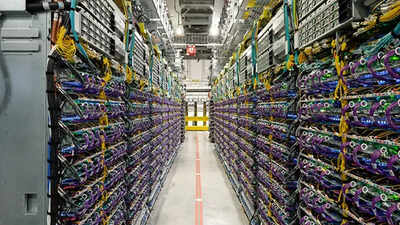
Google has announced that it is developing a new data centre complex south of Minneapolis. The data centre will run on wind and solar energy and will also be supported by what the tech giant describes as the “world’s largest battery storage system.” The project will use long-duration battery technology designed to supply electricity for up to 100 hours.The battery system will be built using Form Energy's iron-air technology. Unlike most battery storage projects, which typically provide 4 to 8 hours of power, this system is intended to deliver electricity for multiple days. The technology is designed to maintain supply during extended severe weather events, periods of high summer demand, or stretches of low solar generation.
Google said the approach combines renewable energy with both short- and long-duration storage to address reliability concerns. The aim is to provide a steady power supply comparable to traditional baseload sources, such as fossil fuel and nuclear generation.
What Google’s battery builder Form Energy said about the project
Form has signed deals with Google and Xcel Energy for the Pine Island data centre project, making Google the first hyperscale company to contract for its long-duration battery technology.
The project includes 1.4 gigawatts of wind, 200 megawatts of solar, and a 300-megawatt iron-air battery system scheduled for 2028, capable of powering over 200,000 homes when deployed.Form’s iron-air batteries, which operate through a reversible rusting process, are designed for multi-day storage at about one-tenth the cost of lithium-ion systems, though they are not suited for electric vehicles. The project operates under Minnesota’s Clean Energy Accelerator Charge, allowing Google to choose its renewable energy mix without passing costs to residents.
Form is expected to receive close to $1 billion for its role.In a statement to Fortune, Form cofounder and CEO Mateo Jaramillo said, “This is the largest announced energy storage project in the world. It definitively confirms the business case for what we call multiday-duration storage.”Form is opening its Form Factory 1 facility in West Virginia this year and plans to scale operations, with Jaramillo saying the company aims to go public on a “relatively near-term horizon,” likely next year. “For the scale of company that we are becoming, for the kinds of deals that we’re doing with our customers, it is beneficial to us to be a public company,” he added.
How Form’s battery will work in Google’s data centre
Mateo Jaramillo, a battery storage expert and former Tesla VP, left Tesla in 2017, saying he had completed his arc there, wanted to remain on the “frontier edge” of technology, and sought a healthier family life. “You may have heard, it’s a relatively intense place to work,” he noted.He and his colleagues began exploring iron-air battery concepts, aiming to build systems capable of operating at a scale comparable to gas-fired peaker plants used to meet peak electricity demand.
This led to the formation of Form, with a focus on longer-duration storage rather than the incremental shift from 15-minute to four- and eight-hour battery systems.“We never subscribed to that perspective. We started the company with the premise that, if you could identify a chemistry that’s cheap enough, you could have a much longer duration, roughly four or five days,” Jaramillo said.Form’s batteries are designed to complement renewable energy and address multi-day weather or demand events that short-duration lithium-ion systems cannot cover. Citing extreme weather events that typically span four to five days, Jaramillo said, “That 100 hours sounds simple and like a nice, appealing round number, but it is actually very much supported by the math. They are spread out over a few events over the course of the year—more or less 100-hour chunks.”He said pairing renewables with 100-hour batteries could help data centre projects gain approval more quickly by reducing concerns about grid reliability. “That 100-hour duration is what’s required to provide true, firm capacity into the system,” Jaramillo said, adding that without it, developers would need excess renewables and short-duration storage to compensate.Form’s West Virginia factory is set to open later this year and is expected to scale up to 500 megawatts of annual manufacturing capacity by the end of 2028. The company began installing its first 100-hour battery system in a 1.5-megawatt project with Great River Energy in Minnesota.Additional projects planned through 2028 include installations with Xcel Energy in Minnesota and Colorado, PG&E in California, Georgia Power, Dominion Energy in Virginia, projects in New York, and an 85-megawatt project in Maine.“In parallel, we knew the market would take as long to develop as the technology,” Jaramillo said, adding that demand, technology, and manufacturing capacity are now aligning.








 English (US) ·