

 1 hour ago
6
1 hour ago
6
ARTICLE AD BOX
A Government panel reviewing “Satluj”, which was pulled from OTT platform ZEE5 for viewers in India two days after its release on July 3, has recommended to the Information and Broadcasting (I&B) Ministry that the movie remain blocked from public access in the country, The Indian Express has learnt.
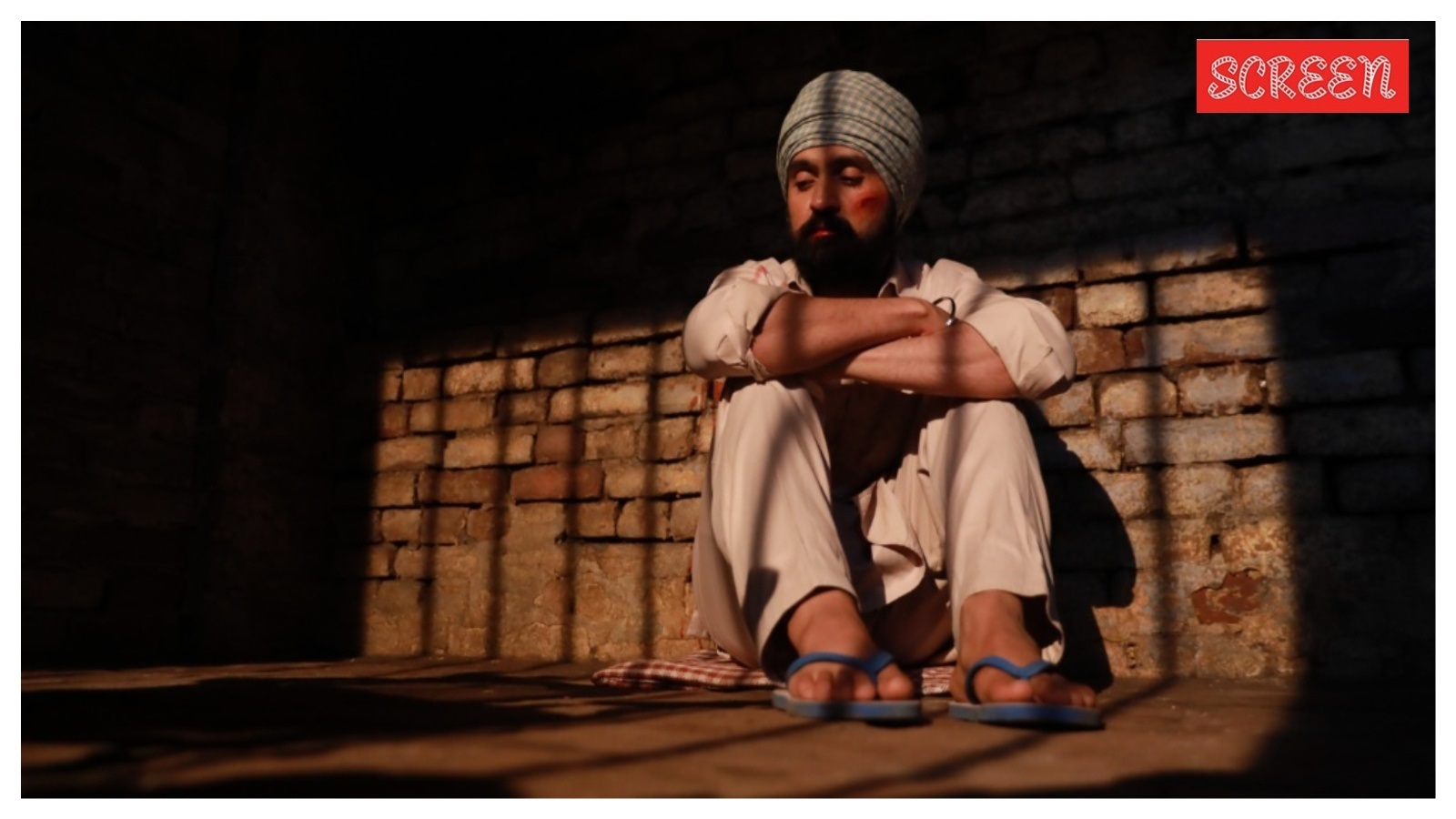
The film, directed by Honey Trehan and starring Diljit Dosanjh, is set in Punjab during the tumultuous insurgency in the 1990s and is based on the life of human rights activist Jaswant Singh Khalra, and shows his death in police custody in the wake of his campaign to probe hundreds of disappearances during the militancy years.
Sources said that the panel, the Inter-Departmental Committee (IDC), has invoked national security and told the Ministry that the film has the potential to threaten the security of the state. It is learnt that the IDC has said the film is appropriately covered under Section 69A of the IT Act.
It is learnt that the committee contended that the film goes against the country’s sovereignty and integrity, and provides fodder to hostile elements. The committee is learnt to have recommended that ZEE5 and the makers of the film take steps to identify and remove pirated versions of the film circulating online.
Trehan was not available for comment.
The IDC is a Government oversight panel under the Information Technology (Intermediary Guidelines and Digital Media Ethics Code) Rules, 2021, which investigates public complaints and content violations on streaming and digital news platforms, and makes related recommendations to the I&B ministry.
It comprises representatives from the ministries of I&B; Home Affairs; Electronics and Information Technology; Women and Child Development; External Affairs; Defence; and Law and Justice, or other ministries and domain experts according to the requirement.
Story continues below this ad
Khalra, who had been documenting the alleged illegal cremation of “unclaimed” bodies during Punjab’s militancy years, was killed in police custody after weeks of torture. His investigation had earlier estimated that around 25,000 people had been secretly cremated across Punjab.
Khalra’s disappearance prompted a Supreme Court-ordered CBI probe into his abduction and the alleged illegal cremations. In 2011, the Supreme Court upheld life imprisonment for five policemen for his murder.
The Indian Express had reported that the I&B Ministry had issued an interim order to ZEE5, invoking Section 69A of the IT Act, asking the OTT platform to take down the film, citing security concerns. Subsequently, ZEE5 complied with the order.
The Government had, meanwhile, referred the film to the IDC. According to sources, the IDC met at least twice this week before finalising its recommendation.
Story continues below this ad
The panel is learnt to have noted that the film was based on true stories and real events, which nullifies the disclaimer by the makers that it is a work of fiction especially when the issue is related to national security.
Sources said this was also pointed out by the Central Board of Film Certification (CBFC) when it had reviewed the film about four years ago.
Sources said the IDC felt the film presented a biased view of events in Punjab during the period depicted. The committee was of the view that the film omits the portrayal of insurgents and terrorism while depicting counterinsurgency action as state excesses and brutality, not as a lawful response to terrorism, and showcasing state agencies in a negative light.
Sources indicated that the IDC also objected to a scene depicting a government official making statements that lend credibility to allegations of mass atrocities against a community — thereby providing fodder to hostile elements to fuel and spread separatist campaigns, ideology and secessionist propaganda.
Story continues below this ad
The IDC has observed that the film portrays the assassination of a Chief Minister as a retaliatory act in response to extrajudicial killings by the police.
This depiction, the IDC is learnt to have noted, suggests a moral justification for the assassination, rather than associating it with a terrorist act linked to the Khalistani militant movement, and fails to acknowledge the involvement of known terrorist organisations.
The IDC noted that such a portrayal undermines state security and public order — and that such content can be misused by various non-state actors and extremist organisations based abroad. The panel is learnt to have decided against the option of editing certain parts of the film before its release.
Before the ZEE5 release, the makers of “Satluj” had applied for CBFC certification in 2022 under a different title, “Punjab 95”. However, the makers did not comply with the 127 cuts and title change suggested by the censor board, and mounted a legal challenge in the Bombay High Court before withdrawing the plea.
Story continues below this ad
ZEE5’s takedown of the film had triggered widespread debate with political parties and the Shiromani Gurdwara Parbandhak Committee (SGPC) pushing for screening to be resumed and Dosanjh stating that he “had a feeling that something like this would happen”.
OTT content is not regulated by the CBFC but covered under the provisions of the Information Technology (Intermediary Guidelines and Digital Media Ethics Code) Rules, 2021. A code of ethics, which is part of the IT Rules, requires OTT platforms to avoid publishing content prohibited by law and to undertake age-based classification of content.
The Bombay High Court has placed an interim pan-India stay on Rules 9(1) and 9(3) of the IT Rules 2021, which required digital news media and online publishers to adhere to the “code of ethics” and a three-tier grievance redressal mechanism.
Section 69A of the IT Act has generated debate over the years about free speech and censorship, given its increasing use. While the Government has underlined its necessity for national security, critics say the process is opaque, heavily executive-driven, and prone to excessive censorship.
Story continues below this ad
Under this section, data provided by the Government in Parliament shows, as many as 36,838 URLs were blocked between January 2018 and October 2023.
The operative language of the section states that the Centre may issue directions for blocking when it is “necessary or expedient” to do so in the interest of sovereignty and integrity of India, defence of India, security of the State, friendly relations with foreign States, public order, or to prevent incitement to cognizable offences — the rules under it require reasons in writing and a defined procedure.





 English (US) ·