

 1 day ago
4
1 day ago
4
ARTICLE AD BOX
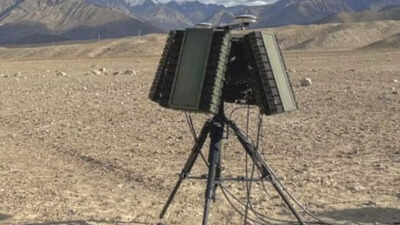
(Photo credit: Defence Decode)
NEW DELHI: The government has initiated the process to procure 30 low-level light-weight radars (LLLRs) to strengthen the Indian Army’s air defence network, with a request for proposal (RFP) issued on Friday.The radars will be procured through a "fast-track procurement process", an Army source said told news agency PTI.According to the RFP uploaded on the Indian Army’s website, the defence ministry "intends to procure quantity 30 (Thirty) LLLR (I) and two (2) CRVs of LLLR (I) under 'Buy (Indian)' category and seeks participation in the procurement process from prospective bidders subject to requirements in succeeding paragraphs".
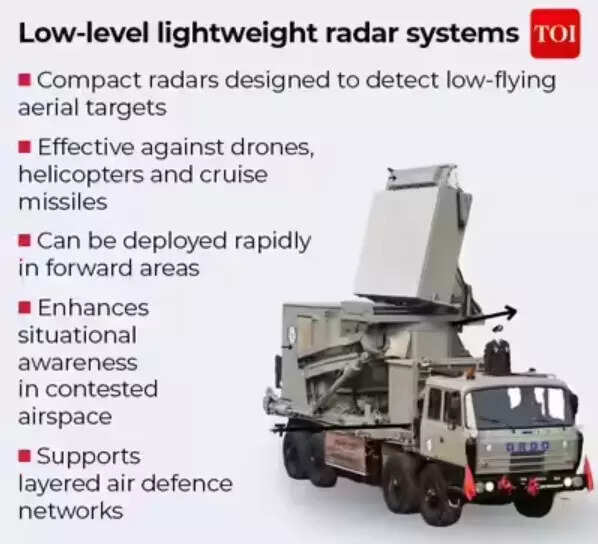
LLLR (I) refers to Low Level Light Weight Radar (Improved), while CRV stands for classroom variant.The RFP covers the procurement of 30 LLLRs "for an amount, approximately Rs 725 crore", the source told the agency further adding that the purchase will be made under the fast-track route.The radars are envisaged as "a surveillance system for scanning the air space" and for detecting and tracking targets, including those with very low radar cross section (RCS), based on threat perception, the RFP document said.
The vendor will be required to "ensure integration of LLLR (I) with existing Air Defence Control and Reporting (AD (C&R)) System", it added.The defence ministry has invited responses only from original equipment manufacturers (OEMs) or authorised vendors. The RFP specifies that if more than one entity offers the same equipment, preference will be given to the OEM.The document states that the end user of the equipment will be the Indian Army.The search radar of the LLLR (I) "should provide continuous 3D surveillance of friendly and hostile aerial targets in the area of responsibility", the RFP stated.The radar system should be capable of detecting all types of aerial targets at a range of up to 50 km, with wide elevation beam coverage, it added.









 English (US) ·