

 1 hour ago
5
1 hour ago
5
ARTICLE AD BOX
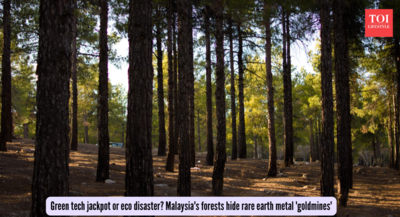
Malaysia's forests harbor significant rare earth element deposits, confirmed beneath protected areas. A pilot project in Perak demonstrated clean extraction via in-situ leaching, but scaling up faces challenges due to a midstream processing gap and potential for hazardous illegal mining.
Malaysia’s lush forests are no less than treasures; they are biodiversity hotspots well known for their ancient trees and wildlife. But recent discoveries reveal another kind of wealth underground in the form of rare earth elements, the invisible power behind smartphones, EVs, and wind turbines.These minerals are important for the world's green technical progress, yet finding them under protected lands creates a tough balancing act.
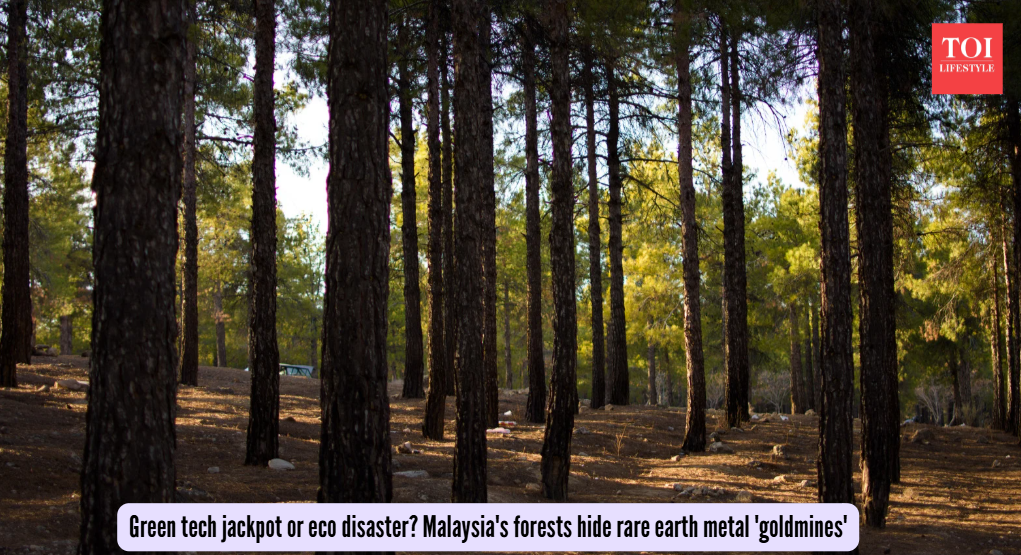
Green tech jackpot or eco disaster? Malaysia's forests hide rare earth metal 'goldmines'
Scientists find rare mineral deposits under Malaysia’s forests
Scientists confirmed Malaysia’s ion-adsorption clays hold extensive non-radioactive rare-earth elements beneath permanent forest reserves, according to analysis from The Asean Frontier. Across Peninsular Malaysia, weathered clay layers under forested areas contain significant concentrations, overlapping with strict conservation zones mapped by the Ministry of Natural Resources and Environmental Sustainability (NRES).
This places the country’s prime resources in legally protected landscapes.
Perak Pilot project performs a careful test
Perak’s pilot mine project used in-situ leaching, a process of injecting solutions to pull ions from clays without open-pit digging, to produce usable material cleanly, according to The Asean Frontier. Regulators monitored water quality closely and found no major contamination, placing it as a strong example but fueling pressure to grow operations before midstream processing catches up.
The NRES set a moratorium on raw rare-earth exports starting January 1, 2024, to develop local value chains, with reviews every six months. Officials want to prevent low-value sales, though miners warn that pausing injections mid-process leads to lingering environmental problems.Results like that made the pilot attractive, but they also raised pressure to scale before Malaysia has midstream capacity.
What is a midstream processing gap?
Malaysia lacks scale in cracking and separation for high-purity outputs, relying on China’s dominance, per recent reviews.
Lynas, the local non-China processor, has an extension until March 2026, acting as a key outlet but risking new dependencies.
This could lead to hazardous forest mining
Most potential lies in reserves, prompting pilot exceptions or low-impact methods, though illegal operations copy the techniques without safeguards. Laws require immediate radioactive reporting, but enforcement challenges persist.




 English (US) ·